Covid-19-Tips for Eye Care During Working from Home

Covid-19: Tips for Eye Care During Working from Home

The coronavirus pandemic has brought unprecedented changes in all of our lifestyles. People who used to travel to offices every day are now confined to their homes. Similarly, an alien term for many called “Work from Home” has now become the new norm. Most of us now spend hours on the computer screen doing video conferencing or work thus causing unusual strain on the eyes.
In this blog, I would be covering all the information regarding taking care of your eyes while working from home, along with some very simple but useful tips to keep the eyesight healthy and sharp.

How can coronavirus affect your eyes?

Coronavirus is a contagious disease and spreads through fluids coming out of the nose and mouth. The virus can enter a healthy person’s body through eyes, nose, and mouth.
In some cases, coronavirus can also cause pink eyes or conjunctivitis although it is a very rare case scenario. It is advised to visit the doctor immediately to understand the exact cause of conjunctivitis.

If you look at Screen all day while working from home

Apart from coronavirus affecting your eyes, there are other lifestyle changes that this pandemic has brought. One of which is working from home. A recent study concluded that employees end up working more hours working from home compared to the office.

This additional work has brought more stress to the eyes as the majority of the work is done through a computer/laptop. Hence it is important to take all the preventive measures to take care of your eyes. Below mentioned are some tips that you can follow to have a healthy work from home lifestyle.

Blink more often
Recent research concluded that people blink only about one third as often as they generally do when they are in front of a computer or laptop screen. This less blinking increases the strain on the eyes as it loses moisture and becomes dry.
Hence it is advised that you should blink more often to reduce stress on your eyes. This can be done by training your eyes to blink after reading 2-3 paragraphs on the digital screen. You can also keep a bottle of artificial tears handy and use it whenever you feel dryness in your eyes.

Use proper lighting of surroundings
Sometimes you might experience eye strain not due to the light coming out of the computer but due to the surrounding lights. Any type of harsh light is bad for eyes, so if you have high-intensity lights then it is advised to replace it with soft white LED light bulbs with a color temperature of 2700 k. Also if your room has windows then ideally your computer should be placed by the side of it. It should not be placed either in front of the window or opposite to it as the light will fall directly on your eyes or reflect from the computer screen. You can also use soft colored thin curtains to reduce the intensity of light.

Minimize glare
Any surface be it computer or walls should not reflect too much light as it can again cause strain to your eyes. Install an anti-glare screen on your computer to reduce the reflection. If the walls have bright colors then you need to either repaint it with soft colors or use soft color wallpaper to cover it.

Read more: How to Take Care of Your Eyes During Coronavirus Pandemic

Wear the right glasses
You can use computer glasses that are specifically made to use while working long hours in front of the screen. These glasses help in reducing the strain on your eyes. You can also use photochromatic lenses that reduce the exposure of harmful blue light emitted from the computer screen.

Also, people wearing lenses should use computer glasses while working on the computer as it is much more comfortable. Also, prolonged use of lenses during work can sometimes dry out causing irritation in eyes.

Adjust your computer display settings

Most of the time we use the computer and laptop at their default display settings which sometimes could be too bright or too dark for your eyes. Hence it is advised to change the display settings to suit your surrounding well.

To start change the brightness of the screen to match your surrounding. To judge the surrounding light consider this white screen on which you are reading, if it is emitting light then it is too bright and if it looks dim then it is too dark. Change the setting until the brightness blends with the surrounding.

Maintain an appropriate distance from the monitor
All the digital screens are made up of LCD or LED that emit light. This light is essential to show what’s on the screen but a prolonged exposure adversely affects your eyes if the screen is too close. Hence it is very important to maintain sufficient distance from the monitor. Ideally, your laptop should be 50 centimetres away from you.

Adjust text size, colors, and fonts
If you read or type a lot on your computer then it is advised to have a text size that does not strain your eyes. In terms of color, the ideal combination would be black text on a white background.

Eat well
Food also plays a very important role in the overall health of your eyes. One of the best food to eat is carrots that are super rich in vitamin A and lutein which are great for your eyes. Green leafy vegetables, eggs, salmon, and citrus fruits also help keep your eyesight sharp and healthy.

Read more: Best Eye Care Tips for Kids During Covid-19

Exercise your eyes
Just like your body, your eyes need exercise to keep it sharp and healthy. The most simple exercise you can follow is “20:20:20” which is every 20 minutes, spend 20 secs looking at something that is 20 meters away. This reduces fatigue and relaxes the focusing muscle present in your eyes.

Take frequent breaks
Due to the high workload given during the pandemic lockdown, we often spend hours at a stretch working and staring at the computer screen. This habit can have an irreversible impact on your eyes causing weak vision and eye strain. Hence you need to take regular breaks from your computer work.
Stretch your arms, legs, back, neck, and shoulders to reduce muscle fatigue and tension.

Get a comprehensive eye exam
A comprehensive eye exam at least once a year is advised for everyone to check the eyes and take timely measures in case of any issues. Also if you are facing any issues like headache, neck pain, eye strain, blurry vision then you should immediately go for a comprehensive eye check-up.

To conclude although work from home has become a new norm, you still have to make sure you maintain a healthy lifestyle and take care of your eyes by following the tips mentioned above.

Best Eye Care Tips for Kids During Covid-19

Best Eye Care Tips for Kids During Covid-19

Living with coronavirus has become the new norm today as scientists are yet to develop an effective vaccine for it. Until it is developed you need to take all the precautions necessary. The most vulnerable population in this pandemic are children and aged people.

In this blog, I will share details on how to take care of your kids and specifically their eyes. I will share how coronavirus can affect the eyes, different types of eye strain and what can you do as a parent to make sure your children have healthy eyes as they grow up.

How Can Corona Virus Affect Your Eyes?

Coronavirus is a contagious disease and spreads through fluid coming out of the nose and mouth of the COVID-19 patient when he/she sneezes or coughs. This fluid can enter a healthy person’s body through the nose, mouth, and eyes.

Hence it is very important to cover your eyes, nose, and mouth whenever you are in a public space and avoid touching your eyes without washing or sanitizing your hands. Coronavirus can also cause pink eyes (conjunctivitis ) but the percentage is very less. In case you get those sore eyes, do not panic as it does not necessarily mean you have coronavirus. Get the eyes checked by your doctor to understand the exact cause.

Increase in Screen Time

The lockdown has kept the children away from school and confined to their homes which is good for family bonding but bad for the kids if they are spending a lot of time on the computer screen or TV.

The increased screen time adversely affects the children’s eyes due to lights emitting from the TV and computer screen. It also can weaken the children’s vision which could lead to wearing spectacles.

What is digital eye strain?

Digital eye strain is another side effect of prolonged exposure of eyes to digital devices like computers, laptops, tablets, and smartphones.

When a person sits in front of a computer or any other digital device every day for a longtime then his/her eyes might start showing digital strain symptoms like blurry vision, headache, neck, and shoulder pain.

The digital eye strain can be reduced by following a simple 20-20-20 rule which is after every 20 minutes of digital screen time, the person should spend 20 seconds looking at something that is atleast 20 feet away. This helps the vision to relax and remove the strain caused by the digital screen.

If the eye strain persists, then you need to visit an ophthalmologist who can advise you on the right solution.

10 Most Effective Eye Care Tips for Children

Below mentioned are 10 most simple and effective eye care tips that every parent should follow to make sure their children have great eyesight as they grow.

Here is 10 most effective eye care tips for children.

  • Prevention Should Be the First Line of Defence

As a parent, you need to focus on preventive measures rather than reactive measures. So whenever your kid is involved in activities that have even a 1% chance of injury, it is better to take all the precautions. For example, if the child is playing any outdoor sport then he/she should wear safety goggles. Similarly, during swimming, the child should wear swimming goggles as the pool water contains chlorine that can affect the eyes.

  • Avoid Using Hard and Sharp Toys

Kids love their toys but sometimes these toys can also harm them. The toys that have sharp edges are especially dangerous as they can cause accidental injuries, especially to eyes. Hence whenever you buy toys, make sure they are soft and do not have any sharp edges.

  • Don’t Apply Eye Cosmetics on Your Child

In Indian tradition,it is normal to apply kajal/soorma on your child’s eyes. This had a cultural and medical significance in the past as the kajal/soorma was made from natural ingredients. Today however the kajal/soorma or eyeliner for that matter hasharmful chemicals. So it is highly advised to refrain from using any cosmetics on your child’s eyes.

  • Teach Your Kid to Stop Rubbing the Eyes Constantly

Whenever a child gets a feeling of itchiness in his/her eyes, the first response is always rubbing the eyes with hands. This does more harm than good as rubbing it causes the irritation to increase and in case of a foreign element in the eyes, it can scratch the surface of retina causing serious damage. Also if the kid’s hands are dirty, then those harmful bacteria can enter his/her eyes. So it is important to teach the kids to refrain from using hands to rub the eyes. Instead, they should be trained to wash theirhands andeyes with water which is the safest solution.

  • Reduce Continued Exposure to Digital Devices

Kids love video games and they tend to play for a long time. This is again very harmful to their eyes as the light-emitting out of the digital devices like smartphones, tabletsare not good. Also during the process of playing games or watching cartoons, the eyes are constantly focused on certain points which can cause degradation in eyesight. This could lead to vision problems in the future.

  • Keep a Good Distance from the Screen while Watching Television

Apart from games, kids also love to watch cartoons on television. In the process of getting a better experience, they tend to sit very close to the television set which can cause serious harm. To avoid this make the kids sit on a couch that is kept at a sufficient distance from the Tv. Also, make sure the room is well lit and the TV is not the only source of light as that can also harm the eyesight.

  • Maintain a Balanced Diet that Supports Eye Development

Just like the body, a healthy diet helps in the improvement of eyesight. Include fruits like papaya, mangoes, and other fruits in your kid’s diet. These fruits are high in beta-carotene which plays an important role in the development of eyesight. Similarly, leafy vegetables and iron-rich foods help in developing sharp eyesight.

  • Give the Eyes a Break and Get Enough Rest

Today kids spend around 6 hours in school looking at the blackboard and when they come home they are glued to TV or computer screen. This creates stress on their eyes which could lead to dark circles and weak vision in the long run. To avoid this make sure their eyes get sufficient rest. An evening walk in the park is better than a TV or computer screen. Also, make sure they sleep for atleast 8 hours at night.

  • Make Use of Sunglasses When Stepping Out of the House

In summer kids like to go outdoors like the beach, park, etc. The UV lights emitting from the sun are at a higher level in summer which can affect your child’s eyesight. So wearing a sunglass protects them from UV light and also makes them look stylish.

  • Undertake Regular Checkup of Eyes

It is suggested that you need to visit an ophthalmologist atleast once a year and get your kids eye checked. In case the child is complaining of blurry vision or irritation in eyes, you need to get it checked immediately to take corrective measures.

To conclude, children are very delicate while growing up and it is our duty as a parent to protect them during this time. If you follow the tips mentioned above along with a routine that is a mix of digital and outdoor activities with all the safety gear and precaution then your child will have healthy eyesight.

Eye Safety and Eye Care is Crucial in COVID-19 Spread

Eye Safety and Eye Care is Crucial in COVID-19 Spread

In the presence of COVID-19, one of the most feared viruses of the 21st century, the World Health Organization is instructing people not to touch their faces if they don’t want to get the virus into the body. The reasons are quite simple – coronavirus or COVID-19 spreads via eyes, nose, and mouth; remember, your eyes are the source by which you can see the world with a crystal-clear vision and its safety cannot be compromised during COVID-19 pandemic.

So, before getting into more details, let us first see what coronavirus or COVID-19 is?

What is COVID-19?

The novel coronavirus is a type of common virus that has the potential to cause infection in your sinuses, nose, and upper throat. You might be enthralled to know that most coronaviruses aren’t dangerous at all.

In early 2020, just after the December 2019 outbreak in Wuhan province, China, hence the name COVID-19 (COronaVIrus Diseases-19) the WHO or World Health Organization identified a new type of world, i.e. the world hasn’t seen before (hence, novel coronavirus) known as SARS-CoV-2. This spread too quickly around the world as we all know quite well.

COVID-19 can start-off respiratory tract infection and it has the power to affect your upper respiratory tract, especially – nose and throat and lower respiratory tract including lungs and windpipe.

It spreads via – human-to-human contact and the droplets produced when a person sneeze or cough.

In this blog, we will see – how coronavirus can affect your eyes, 8 easiest tips for eye care, and more. So, let the journey begin…

How can coronavirus affect your eyes?

First of all, we all must understand that coronavirus does spread via eyes so it is our utmost duty to protect our eyes at all times. When a person is infected with coronavirus; if he/she sneeze or cough in front of you chances are almost 100% that the virus will enter your body via nose or mouth while breathing. This is also the same with the eyes! If your eyes are not protected or covered, the virus can enter via our eyes.

You can get infected to coronavirus via your eyes – if you touch them too frequently. For example, if you touch a fomite and then your eyes without using precautions like washing hands or using an alcohol-based hand sanitizer then the virus will enter your body and you will get affected. Coronavirus can cause pink eyes or conjunctivitis in your eyes but don’t get scared if somehow you have pink eyes that can be cured easily via eye drops and proper consultation with your ophthalmologist.

Now, if you have pink eyes, contact your eye specialist without any delay. With their experience, they will give you proper advice on how to take care of your eyes. Keep a point in mind – it doesn’t matter that the pink eye is caused via bacteria or virus; other people can easily get affected if they somehow come in close contact with you. How? Via sticky or watery discharge that is running from the infected person’s eyes.

Read more about – How to Take Care of Your Eyes During Coronavirus Pandemic

Eye Care Tips to Protect Yourself from COVID-19

Taking care of your eyes is pivotal amidst the coronavirus pandemic. Avoid close contact with others by maintaining social distance. Wash your hands frequently and avoid touching your face too often as we have seen that the virus can spread via nose, eyes, and mouth.

Now, let us see how to take care of your eyes to protect it from COVID-19. The below 8 essential pointers will help you stay away from coronavirus blues and will lead you to better and healthier vision than ever.

Top 8 Tips to take care your eyes during COVID-19:

  1. Avoid Wearing Contact Lenses: Managing your contact lenses can be a tiresome job during the prevalence of COVID-19. Your contact lenses can act as a fomite and the virus can easily enter your eyes via the use of contact lenses.
  2. Use Glasses: Using glasses is highly beneficial during the coronavirus pandemic as if someone sneezes or coughs in front of you, the water droplets from the infected person won’t enter your eyes directly as your eyes are protected with spectacles.
  3. Frequently Disinfect All Sets of Spectacles: If you have to go out from your home for some work; remember to use an alcohol-based sanitizer or soap water to regularly disinfect all sets of glasses. This will help you stay away from COVID-19.
  4. Stock up on Eye Medicines: Always keep a backup of all necessary medicines at your home. Avoid going outside unless and until it is an emergency. Visit your nearby drug store and stock up eye medicines as other people will also do the same and there might be a scarcity of eye medicines.
  5. Avoid Rubbing Your Eyes: Avoid rubbing your eyes as we have seen that the virus may enter your body via eyes and cause pink eyes or conjunctivitis. If you feel irritation in your eyes and an urge to rub, wash your hands with soap water or an alcohol-based sanitizer.
  6. Practice Safe Hygiene: Maintain social distancing, wash your hands, and cover your mouth while coughing or sneezing in front of others Remember, it is us who can put an end to the spreading of COVID-19. Let us be responsible and keep ourselves and others safe.
  7. Rinse Your Eyes Regularly: It is crucial to wash your hands properly. However, rinsing your eyes with a saline solution or even plain water can also help keep them clean and free of any harmful particles nearby.
  8. Differentiate between COVID-19 and Seasonal Allergies: The coronavirus pandemic can easily make you fret if somehow you are experiencing typical symptoms like runny nose, eye irritations, increase in body temperature, or sneezing. What you should do is maintain your calm and not rush for emergency medical help. The common COVID-19 symptoms are – shortness of breath, caught, sore throat, chest pain, tiredness, etc. So, if you don’t have these aforementioned symptoms you’re safe!

So, now you know how to take care of your eyes and the importance of eye safety during COVID-19. Follow all the aforementioned pointers to stay away from coronavirus and vision blues. Take care of your eyes and they are the ones responsible to make you see this beautiful world. Don’t touch your eyes too frequently, maintain social distance, rinse your eyes, and wash your hands properly to avoid COVID-19 entering your body. Happy Vision!

How to Take Care of Your Eyes During Coronavirus Pandemic

How to Take Care of Your Eyes During Coronavirus Pandemic

Taking care of your eyes is a must in the 21st century’s one of the most feared virus-spread pandemic – COVID- 19. Although COVID-19 is a novel disease; thousands of experts around the globe are doing relentless work to understand why it spreads so quickly along with other vital questions including – how it spreads? We have yet known that touching a surface or an object that has any virus on it can act as a potential carrier also known as fomites. We also comprehend that touching own mouth, nose, and eyes can cause the virus to enter your body.

Before delving deeper into the main topic, let us first see what coronavirus is?

What is coronavirus or COVID-19?

The novel coronavirus is a type of common virus that has the potential to cause infection in your sinuses, nose, and upper throat. You might be enthralled to know that most coronaviruses aren’t dangerous at all.

In early 2020, just after the December 2019 outbreak in Wuhan province, China, hence the name COVID-19 (COronaVIrus Diseases-19) the WHO or World Health Organization identified a new type of world, i.e. the world hasn’t seen before (hence, novel coronavirus) known as SARS-CoV-2. This spread too quickly around the world as we all know quite well.

COVID-19 can start-off respiratory tract infection and it has the power to affect your upper respiratory tract, especially – nose and throat and lower respiratory tract including lungs and windpipe.

It spreads via – human-to-human contact and the droplets that are produced when a person cough or sneeze.

How can coronavirus affect your eyes?

Firstly, you must understand that yes, coronavirus does spread via your eyes so it is our utmost duty to protect our eyes at all times. When a person is infected with coronavirus; if he/she sneeze or cough in front of you chances are almost 100% that the virus will enter your body via nose or mouth while breathing. This is also the same with the eyes! If your eyes are not protected or covered, the virus can enter via our eyes.

You can also become infected by touching your eyes after touching any surfaced or fomite that has the virus on it. FYI, coronavirus can cause pink eye or conjunctivitis but chances are slim to none; but we have to be careful at all times. If somehow, you got pink eye – don’t panic! It can be cured easily.

You should call your ophthalmologist or eye specialist without any delay. They will give you proper instructions on how to take care of your eyes. Remember, whether the pink eye is caused by viruses or bacteria, some other people can also get affected if they come in contact with the watery or sticky discharge that is running from the infected person’s eyes.

Eye care during the COVID-19 outbreak

  1. Wear glasses at home and outside.
  2. Always keep your glasses clean.
  3. Don’t rub your eyes.
  4. Have critical eye care medications and supplies at home all the time.
  5. Contact your ophthalmologist for all upcoming appointments.

Use the following precautions if you have an appointment:

  • Call the eye specialists’ office ahead of time if you have a cough or fever. If the appointment is not an emergency, you may need to stay home.
  • If you need to cough or sneeze during your exam, move away from the microscope.
  • If you arrive at the doctor’s office sick, it is best to wear a protective covering or mask and stay away from fellow patients at all times.
  1. Practice safe hygiene and social distancing:
  • Wash your hands often with soap and water or alcohol-based hand sanitizer.
  • Avoid touching your face, especially – nose, eyes, and mouth.
  • If you cough or sneeze, cover your face with the inside of your arm or a tissue.
  • Avoid close contact with sick people.
  • Try to stay at home when you are sick.
  • Disinfect commonly touched surfaces like doorknobs and countertops to stop spreading the disease.

How to protect your eyes and health?

  1. If you wear contact lenses, switch to glasses for some time: Spectacles or glasses give you better protection from coronavirus than a regular contact lens. It is because contact lens wearers touch their eyes or face more often than spectacles wearer.
  2. Wearing glasses add extra protection: Corrective sunglasses and eyeglasses protect your eye by shielding them from the infected respiratory droplets. But remember one thing, they are not 100% safe and there is still a chance to get infected.
  3. Make an eye-approved grocery list: Buy the following food items to keep your eyes and body healthy.
  • Foods with omega-3: Fish such as salmon, mackerel, herring and tuna, flax seeds, and flaxseed oil.
  • Foods with antioxidants: Dark chocolate, blueberries, and artichokes.
  • Foods with vitamin E: Spinach, whole-grain cereal products, hazelnuts, and almonds.
  1. Allow your eyes to rest: Don’t strain much on your eyes. We understand that when you stay at home your eyes don’t get natural light as much as when you go outside. Also, staying at home means more usage of social media and watching videos, so always try to give rest to your eyes.
  2. Follow the 20-20-20 rule: For every 20 minutes of screen time you must look away from the screen and focus on any object that is situated 20 feet away from you for a minimum of 20 seconds.
  3. Use blue-light-blocking spectacles: Try your best to use computer glasses or blue-light blocking glasses whenever you are using a laptop or a PC for work. You will be glad to know that using blocking-blue glasses at nighttime can help you improve and regulate the normal sleep cycles, as the brain will confuse screen light as the natural sunlight.

Use common sense to stay healthy

Common sense will help you a lot to stay away from coronavirus and maintain healthy eyes. Follow these to keep a good distance from COVID-19.

  • Wash your hands frequently after touching any surface.
  • Don’t panic
  • Have face masks at your home
  • Don’t travel unnecessarily
  • Avoid crowded place
  • Don’t listen to and spread rumors
  • Always follow good hygiene rules for contact lens and spectacles wearing.
  • Avoid rubbing and touching your eyes, nose, and mouth.

So, now you know everything about how to take care of your eyes during coronavirus pandemic. Follow the aforementioned points to stay healthy and away from coronavirus. Take care of eyes properly and if you feel something is wrong with your eyes, don’t hesitate and reach out to your eye specialist or ophthalmologist as soon as you can.

Stay home, stay safe, and keep your eyes healthy all the time.

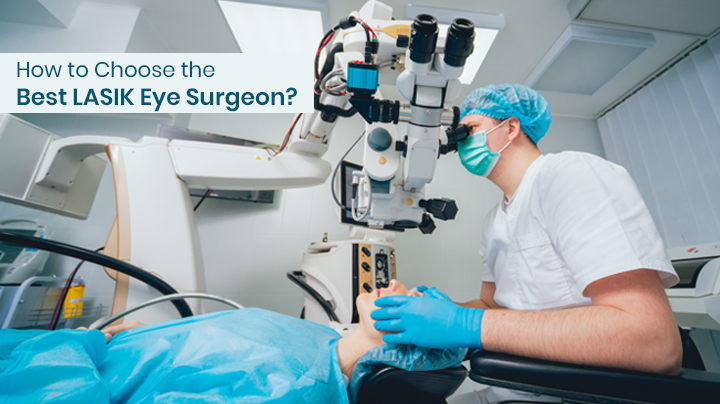
How to Choose the Best LASIK Eye Surgeon

How to Choose the Best LASIK Eye Surgeon?

LASIK or Laser-Assisted in Situ Keratomileusis is a type of advanced refractive laser eye surgery that is performed on a patient so that they can get rid of spectacles. LASIK is performed by an ophthalmologist on the affected eye(s) with the help of lasers. The lasers are used to create a 3D map of the eye and after that; a small hole is made in the retina so that light can enter through the eyes properly.

The best part of LASIK is that the entire procedure is painless, bladeless, stitchless, and flapless. There is no usage of any handheld device like a diamond-shaped blade in this procedure so it is ultra-safe. Myriads of eye patients rely on LASIK and even highly experienced eye surgeons say LASIK is the best way to stay away from astigmatism, hyperopia, and myopia.

Numerous eye patients suffering from aforementioned vision blues think that LASIK cannot be performed on dye eyes but that’s not the scenario; LASIK is perfectly suitable for dry eyes and is safe too. Another great factor about LASIK is that the time taken for surgery is very less as compared to any other form of surgery. For both eyes, it takes a maximum of 30 minutes and after 7-8 days of surgery, an eye patient can perform outdoor activities including cycling, exercising, and working from office including sitting in front of computers.

In this blog we will see everything about LASIK surgery including one of the most persisting questions is laser surgery – How to Choose the Best LASIK Eye Surgeon? We will be covering every point that will help you answer this question so that you can get what you deserve – a perfect vision!

The Checklist to Choose the Best LASIK Eye Surgeon:

Long Term LASIK Fellowship Training

For the best attainable results make sure before booking any appointments your eye surgeon or ophthalmologist has a long term Fellowship training in LASIK surgery. This will guarantee that the eye surgeon will do their best in the first attempt and you won’t have to come to them again for any minor or major checkups. Visit your eye surgeon’s website and check for any certifications, if they have, you can visit them for consultation. 2-3 years of experience in a reputed center – international or domestic should do the needful.

Board Certification

Ask your friends and family members whether or not they know any eye surgeon who has done any special certification from a certain board. Doing a certification helps you gain confidence over an eye specialist; you can rest assured that the eye surgeon has proficiency in laser surgery and they are good beyond the basic license to practice for. A few reputed places for the best board certifications are- Moria Microkeratome and Epi-Lasik, Washington DC, VISX Excimer Laser, USA, and Implantable Contact Lenses (ICL), Chennai.

Scientific Credentials and Repute

The eye surgeon you’re going to opt for must be practicing legal and evidence-based medicines and have proper and latest knowledge regarding LASIK. An eye specialist who has reputed scientific credentials along with national/international level research and publications including journals is a surefire way to recognize whether or not your eye surgeon has the required expertise on LASIK. Carefully evaluate your eye surgeon before paying a visit to their clinic.

Experience

It is of high importance that your eye specialist must have at least 15+ years of experience in performing LASIK surgery. You can check if they have been bestowed with an award or an honor; if that’s the case you can go to them for consultation. To know the details about your eye surgeon you must visit their website and check for pages that say – awards and accreditations.

Referrals

Again, you can ask your friends and family members whether or not they know any particular good eye surgeon. Check online to know the quality of rating they got and the type of reviews (do they have more positive reviews than negative or vice versa?) they have received. If any of your near and dear ones have a positive experience with an eye specialist for astigmatism, hyperopia, and myopia you can visit that particular ophthalmologist.

Technology

Go out, check online or ask your friends: do whatever you have to find every detail about your ophthalmologist including whether or not they have the latest equipment in their clinic. The latest technology and modern instruments guarantee the best results and minimal post-surgery care. If you find that the eye specialist you’re going to visit is still using traditional surgical methods to perform eye surgery cancel going there and find an up-to-date eye surgeon.

So, now you know how to choose the best LASIK eye surgeon for yourself. Follow the mentioned guidelines and pay attention to everything because the devil lies in the details. For your sake neglect all rumors and false brand promotions. Remember, it’s all in your hands whether or not you want the best results and stay away from vision blues; and to get the best results it is a must that your eye surgeon is a credible one without compromising any factor that you deem pivotal.