
What is the Best Age to Get LASIK

What Is The Best Age To Get LASIK Eye Surgery?

Lasik Surgery: Is It Right for You?

Forgetting to carry your glasses or the hassles of wearing contact lenses can get inconvenient at times, if not exasperating. In some cases, you might lose out on trying new things and experiences only because you have vision problems. So, what do you do in such a scenario? Today, due to the advancements in technology and medical equipment, you will find a staggering number of people opting for vision correction surgeries like LASIK.

Whether it’s for changing your outward appearance or getting rid of your glasses or contact lenses altogether, LASIK surgery works wonders on your eyes. This corrective procedure can make your vision problems disappear, depending on the extension of correction needed. According to one particular study, over 90 percent of people that undergo LASIK eye surgery can see clearly without their glasses or contact lenses. Although true, other considerations need addressing before opting for this surgery.

To get considered for LASIK eye surgery, you need to meet all the requirements and qualifications of an ideal candidate. They include having good health, a stable eye prescription for at least a year, and the most important one – to not have any eye diseases or infections before the surgery. However, one factor that you cannot prepare for is your age. So, today, we will learn more about the age factor and how it plays a role in the LASIK eye surgery process.

What Is the Best Age to Get Lasik?

Is there such a thing as ‘how young is too young?’ when it comes to LASIK? Well, most eye surgeons do not perform LASIK on patients younger than 18 years of age. Similarly, you might also wonder if there’s an upper age limit to get refractive eye surgery done? As is the case with many other organs of the body, every individual’s eyesight differs. Therefore, the state of the eyes too.

Ideally, LASIK gets performed for those with vision problems. They include myopia (nearsightedness), hyperopia (farsightedness), or astigmatism. However, the extent of the eyesight issue determines the ideal age for getting this refractive eye surgery. So, if you think of opting for LASIK in the future, the following details will give you a fair idea of when to go ahead with the surgery.

  • Before 18 Years:

FDA-approved age for LASIK eye surgery happens to be above 18 years. The reason behind eye doctors refraining from performing LASIK on children or teenagers below 18 is that eyesight changes well into adulthood. Moreover, they do not need this refractive eye surgery to perform daily tasks as the vision keeps changing.

  • Ages Between 18-24 Years:

As mentioned before, your eyesight continues to change for a few more years until the age of 24. Therefore, you should wait a few more years. Even your eye surgeon might ask you to wait until the age of 25 before performing the surgery. However, some exceptional cases (military, law enforcement, etc.) might get special consideration.

  • Ages Between 25-40 Years:

According to most eye surgeons, 25-40 years of age is considered an ideal age to get LASIK done. The primary reason behind it is that the prescriptions for your glasses or contact lenses have mostly stabilized. Therefore, making it easier for the doctor to consider your candidature.

  • Ages Between 40-55 Years:

Even if someone had perfect vision all their life, you might find them reaching out for a pair of reading glasses after 40. However, that does not mean that the consideration of your candidature for LASIK will come to a stop. If you’re in good shape and do not smoke, in addition to no history of medical problems, you will get the green light. However, you should know that a family history of corneal disorders, glaucoma, and diabetes are considered medical issues for this age group.

  • Ages 56 Years and Above:

While there isn’t an upper limit on age to get LASIK done, you might have to factor in other aspects that affect your candidacy in terms of this refractive surgery. Most seniors have to deal with cataracts, and that isn’t a good sign if you’re thinking of opting for LASIK. However, if you are 60 but have clear eyesight, you could still get considered for the surgery. Nonetheless, inform your eye surgeon about any medications you might be taking during your consultation.

Remember, only a personal evaluation will help assess your situation concerning vision problems and LASIK. So, speak with your ophthalmologist to determine the likelihood of your candidature for the surgery.

Read More: Benefits and Advantages of LASIK Eye Surgery


Is Lasik Eye Surgery Safe?

The safety and effectiveness of a procedure depend on several factors. You might have to discontinue your candidature for LASIK if the doctor finds any underlying health problems, eye diseases, etc., that could hamper the process. However, given the advanced equipment used for LASIK, the safety of this refractive eye surgery remains at a high. It is one of the safest surgical procedures to be performed on the eyes. It might interest you to know that,

  • The results of LASIK come quickly, and you will notice a difference within a few hours.
  • You can live without your glasses or contact lenses post-surgery.
  • This refractive eye surgery will exceedingly improve your vision.

You should know that the recovery process depends on how well you follow the instructions given by your ophthalmologist.

Read more: How to Choose the Right LASIK Hospital in India for Your Eye Surgery?


CONCLUSION

While age isn’t the only determining factor for your candidature for LASIK eye surgery, it can become a make or break situation depending on the health of your eyes. Other than your age, other aspects such as overall health, family medical history, and a stable prescription remain a few of the most vital factors in LASIK eye surgery candidacy. Therefore, a detailed consultation with your eye surgeon will help you determine whether this procedure is right for you.

Dada Laser Eye Institute’s expert ophthalmologists will guide you through the complete process and explain the risks involved. They will also share their knowledge and expertise and make sure you find it comfortable to go through with LASIK eye surgery. If you wish to know more, you can get in touch with the experts and get proper consultation by giving us a call at (+91) 992 299 5549 or visit our website to fill out a form.
What is Myopia?

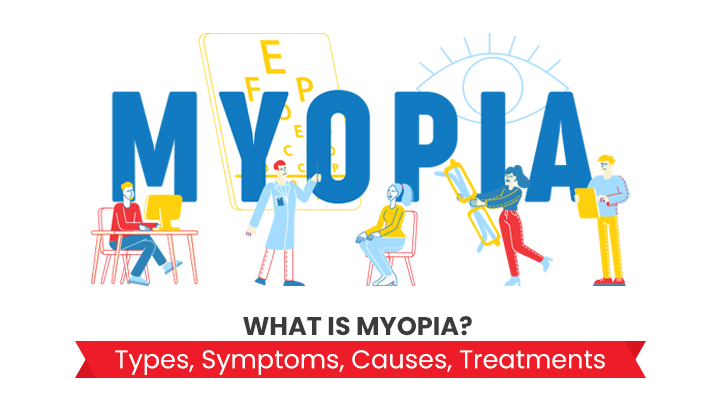
What Is Myopia? Learn Its Types, Symptoms, Causes & Treatments

What is Myopia?

Do you find it difficult to focus on distant objects while the ones close by appearing as clear as day? If yes, then you might have to get your eyes checked for nearsightedness or shortsightedness, also known as myopia. It is a refractive error when your eyes are unable to bend light accurately, thus causing distant images or objects to appear blurry or out of focus.

Myopia is a common condition that can get fixed either with glasses, contact lenses, or eye surgery. It either develops gradually or quickly, magnifying, especially during childhood and adolescence. To make sure you have myopia or not, an elementary eye exam prescribed by the doctor will do the trick.

Today, most people prefer to do away with glasses or contact lenses and opt for refractive eye surgery to correct eye conditions like myopia. Therefore, a brief understanding of this refractive error and its causes, symptoms, and treatment can go a long way in helping you decide if it is for you or not.

What Are Different Types of Myopia?

While myopia can get cured, its development and aggravation depend on the causes. Family history is one of the main factors that tend to cause nearsightedness. However, this tendency aggravates by how a person uses his or her eyes. If you spend a considerable amount of time in front of the screen, reading e-books, or other intense visual work, the chances of you developing myopia increase. However, it does not end at this.

The dependency on other aspects and how they affect your eyes can help the doctors understand the type of myopia that’s affected you and help find its treatment. There are two very distinct types of myopia or nearsightedness. They are:

    1. High Myopia – Usually, if you have mild symptoms of myopia, the doctors categorize it as low myopia. However, if the symptoms are severe, it gets termed as high myopia. In the latter, your eyeballs grow sizeably than usual and tend to become very long from front to back. The downside of this condition is that it could affect your chances of seeing things clearly from a distance and also developing other eye conditions like cataracts, glaucoma, or detached retina.Mostly, high myopia stabilizes between the ages of 20 to 30 years. However, the condition of every individual’s eyes differs, which is why consulting a qualified ophthalmologist helps gauge the extent of eye damage and get immediate treatment.
      1. Degenerative Myopia – This type of myopia is rare and usually inherited from the parents. It goes by other names, such as pathological myopia and malignant myopia. In the case of degenerative myopia, your eyeballs elongate rapidly, thus causing severe myopia. It usually affects teenagers or young adults and can worsen during adulthood. While making it hard to focus on things from a distance, the drawback of degenerative myopia is that it increases your chances of getting a detached retina, abnormal growth of blood vessels in your eyes (also known as choroid neovascularization), and even glaucoma.

What Are Symptoms of Myopia?

Difficulty reading signs while driving, watching a movie, or what’s written on the blackboard is the indication that you may have myopia. As you already know, it usually develops during childhood but can aggravate as you grow into adulthood. Visual stress or health conditions like diabetes may lead to myopia. However, identifying its symptoms can get you the help you need at an early stage. So, let’s take a look at the several symptoms of myopia.

      • Blurry vision when looking at distant objects
      • Squinting when watching TV or reading the board
      • Having the need to sit close to the TV or computer screen
      • The need to sit at the front of the classroom to clearly see the board
      • Holding books close to your eyes
      • Blinking excessively or rubbing your eyes frequently
      • Reduced clarity of vision as compared to others
      • Headaches due to strain on the eyes

Read more: LASEK Eye Surgery: Know All About Surgery, Benefits, After Care

What Are Causes of Myopia?

The cornea and the lens are two vital parts of your eye that focus on images. In the case of commonly shaped eyes, both the cornea and the lens have a smooth curvature allowing the light to bend accurately to make a sharply focused image at the back of your eye, on the retina. When there’s a refractive error, the refraction of light onto your retina does not occur aptly, thus causing nearsightedness and other refractive errors.

There might be other risk factors associated with myopia, and they include:

      • Genetics – Myopia or nearsightedness tends to run in the family. If both or one of your parents gets affected by it, the likelihood of you developing myopia cannot get discounted. The risk is higher if both parents have myopia.
      • Environmental Conditions – Staying indoors, in front of your screens, rather than being outdoors, can increase your chances of developing myopia, according to some studies and researches.

Read more: How to Choose the Right LASIK Hospital in India for Your Eye Surgery?

What Are Treatments for Myopia?

The treatment for myopia gets determined after an elementary eye exam that includes a refraction assessment and an eye health test. The former determines the type of vision problem, while the latter helps the doctor understand the extent of eye damage caused by the eye condition.

The primary treatment approach for myopia is to help correct your vision with the use of corrective lenses or refractive surgery. Apart from treatment, regular monitoring of your eyes to make sure no other condition has developed over time also gets taken into account.

So, what are the different treatment options for myopia? Let’s take a look.

      1. Prescription Lenses – Wearing corrective lenses helps correct the curvature of your cornea, thus helping treat myopia. The two types of prescription lenses include eyeglasses and contact lenses. Depending on what suits your eyes the best, your doctor will suggest either of these two options. If you’re pressed for time or do not want to opt for surgery just yet, this is your best bet.
      2. Refractive Surgery – If you wish to get surgery for your nearsightedness, it is an option. Your ophthalmologist will use a laser beam to reshape the cornea, thus resulting in a decreased nearsighted prescription. There are three different types of refractive eye surgeries that help with the treatment of myopia.
      • Laser-assisted in situ keratomileusis (LASIK)LASIK eye surgery often offers improved vision without the hassle of wearing glasses or contact lenses. In general, there’s an excellent chance of achieving 20/25 vision or better after this refractive surgery. In this procedure, a programmed laser helps reshape those damaged parts of your cornea. However, with each pulse of the laser beam, a small amount of the corneal tissue gets removed.
      • Laser-Assisted Subepithelial Keratectomy (LASEK) – Another form of laser eye surgery, PRK/LASEK, involves separating the epithelial part of the cornea from the stroma. People with thin corneas, dry eyes, or corneal scarring can opt for PRK/LASEK eye surgery.
      • ReLEx SMILEReLEx SMILE eye surgery is the newest advancement in laser eye surgery and involves the use of a femtosecond laser to make a disc-shaped cut inside the stroma. This procedure is less invasive and requires the use of only one laser as opposed to LASIK.

Read more: Nearsightedness: Myopia Diagnosis And Treatment

Does It Get Better Over Time?

Controlling myopia at an early stage, on-time or early detection, a proper diagnosis, and the best possible treatment can help nearsightedness to either disappear or get better over time. Since myopia develops during childhood, the eyes keep changing until your teenage years or your young adult years. Therefore, get your eyes checked annually, and adequate treatment can help curb its aggravation.

Topical treatments like eye drops, refractive surgery, or the use of eyeglasses and contact lenses can considerably reduce the refractive error and help you see things clearly from a distance.

What is Treatment Cost for Myopia?

Treatment cost for any eye surgery depends on several factors. While the expertise of your doctor is paramount, other considerations are technology-used, the type of treatment, the extent of treatment, the type of surgery required, and many more. Many centers across India have varying costs depending on the city, the doctors, and the use of technology.

On average, the treatment cost for myopia can vary from 20,000 INR to 1,00,00 INR. Another variant that needs consideration is if you’re getting treated on one eye or both eyes. The hospital or eye clinic then takes a call on the cost of the treatment along with its duration.

Conclusion

In conclusion, myopia is an eye condition that can get cured. However, to stop its amplification, its early detection and treatment deem paramount. To make that happen, you need to identify its symptoms and consult an ophthalmologist regularly to get the necessary treatment. LASIK, PRK/LASEK, and ReLEx SMILE refractive eye surgeries help correct vision problems like myopia and can potentially reduce the need and dependency on corrective eyewear – eyeglasses and contact lenses.

So, if you wish to get treatment for myopia or other eye conditions, you must find a qualified doctor that offers advanced technology options for treatment. Whether it’s LASIK eye surgery or other surgical treatments for your eyes, the doctors at Dada Laser Eye Institute share their expertise with the best eye care services for people from all over the country. To book an appointment with the expert ophthalmologists at Dada Laser Eye Institute, Pune, you can give us a call at (+91) 992 299 5549 or visit our website for further information.

How to Take Precautions After LASIK Eye Surgery

Precautions After LASIK Eye Surgery – Post Operation Care

Vision problems affect many at some point in their lives. Having a clear vision thereon could seem bleak. However, with LASIK eye surgery, there’s a high possibility of vision correctness and low dependency on corrective eyewear like glasses and contact lenses. Now, preparing for eye surgery forms only one part of the job; the successive precautions say a great deal about the success of the surgery and how well you will be able to see.

So, today we will learn more about LASIK eye surgery, what it entails, and how post-operative care in LASIK makes all the difference in its success. Remember, when it comes to eye care, taking maximum precautions deems vital to prevent any avoidable risks.

What is Lasik Eye Surgery?

LASIK or laser in-situ keratomileusis eye surgery involves the use of lasers to correct vision problems. LASIK solves vision problems like nearsightedness (myopia), farsightedness (hyperopia), or astigmatism. It reshapes the cornea for the light to focus on the retina in the back of your eye.

It benefits those with blurry vision or those suffering from refractive error. Moreover, with very little pain involved, LASIK does not need any bandages or stitches post-surgery. In case of vision changes due to age, your ophthalmologist or eye doctor can adjust the vision at any time. Additionally, any dependency on glasses or contact lenses reduces after getting LASIK done. However, you need to make sure that you are eligible for the surgery and prepare for the risks involved (if any).

Read more: Benefits and Advantages of LASIK Eye Surgery


Post-Operative Care in Lasik Eye Surgery

LASIK eye surgery takes no more than few minutes to perform. However, the recovery process depends on how well you follow the instructions given by your ophthalmologist. Post-operative care in LASIK is of utmost importance given the sensitivity of the area involved in the surgery.

The following precautions will help with the recovery process and determine the success of the surgery.

  • Do not take a shower or wash your hair until the day after the surgery.
  • Avoid showering, washing of hair, etc. with non-sterile water, and do not allow it into your eyes during the first few days after your surgery.
  • Keep soap out of your eye while showering, and avoid using hair spray and shaving lotion for a few days.
  • Do not rub your eyes.
  • In case you need to use eye drops, use the ones prescribed by your doctor.
  • Get your doctor’s OK first before you begin driving again.
  • Do not wear eye makeup for at least a week after surgery to avoid an infection.
  • Your eyes will likely be sensitive to light for some time so, wear dark sunglasses.
  • Avoid dusty and polluted environments for at least a week.
  • Sun rays may cause irritation of the eyes, so wear sunglasses on bright mornings.
  • Call your doctor immediately if you experience any unusual side effects.
  • Follow-up with your doctor to ensure you do not miss out on any vital precautionary measures.

Read more: FAQ About LASIK Eye Surgery


What is The Recovery Time of LASIK Laser Eye Procedure?

As mentioned earlier, the recovery time after LASIK eye surgery depends on how well you follow the doctor’s instructions and take the necessary precautionary measures post-surgery. Follow-up visits with the doctor help monitor your progress and healing time. Most patients get cleared to perform the usual daily activities like driving 24 hours after the procedure. But, it also depends on several other factors such as your original prescription, the technology used for your LASIK eye surgery, and how your body reacts to the surgery. Taking all of this into account, the healing process for your eyes should start immediately, and with a proper post-op schedule, your vision problem should never see the light of the day again.

Read more: How to Choose the Right LASIK Hospital in India for Your Eye Surgery?


Conclusion

The benefits of LASIK eye surgery show that it is a safe procedure and improves your vision to a great extent. It only comes with mild discomfort in some individuals but, with expert guidance, this surgery to correct your vision problems can turn out successful. Remembering to follow the post-operative care measures will help with your healing process, and you will quickly return to your regular daily routine within no time.

Dada Laser Eye Institute’s expert ophthalmologists in India guide you through the entire process, explain the risks involved, share their knowledge, and make sure you find it comfortable to take the plunge and go through with the vision correction process. You can get in touch with the experts and get proper consultation by giving us a call at (+91) 992 299 5549 or visit our website to fill out a form https://ladilaservision.com/.

Benefits and Advantages of LASIK Eye Surgery

Benefits and Advantages of LASIK Eye Surgery

Hazy or blurred vision, trouble seeing movement, or recurrent pain in the eye can get troublesome. The chances of vision problems affecting you may seem slim at the moment but, being aware of what to do on the off chance that you find yourself in such a position is beneficial. Laser-assisted in situ keratomileusis or LASIK eye surgery, a commonly performed laser refractive surgery, helps correct vision problems to a great extent. It is also considered an adequate alternative to glasses and contact lenses.

In case of perfect vision, the cornea bends or refracts light precisely onto the retina. But, in the case of myopia or hyperopia, the light gets angled incorrectly, resulting in blurred vision. While glasses or contact lenses offer a short-term solution, LASIK eye surgery can help provide the necessary refraction to get rid of vision problems on a long-term basis.

Let’s take a further look at the procedure and its benefits and advantages.

What is Lasik Eye Surgery?

As you may have gathered earlier, LASIK eye surgery helps in the correction of vision problems. These vision problems may include nearsightedness (myopia), farsightedness (hyperopia), or astigmatism. Either way, if one chooses to opt for LASIK surgery, the chances to avoid glasses, contact lenses are high. Therefore, a refractive procedure on the eye(s) can help a great deal and even get rid of the glasses altogether. But, before you opt for this procedure, remember to check with the doctor about the risks involved for you. Every individual’s eyesight differs; hence it is of paramount importance that you have the pros and cons of getting eye surgery in place to make an easier decision.

You should know certain health conditions could increase the risks associated with LASIK eye surgery, and in such cases, this refractive procedure isn’t for you. So, check with your doctor about every last detail regarding the surgery procedure.

How does The Procedure Work?

Usually, it takes around few minutes or less for the completion of the procedure. You get placed in a reclining chair, and the doctor gives numbing drops for the eye. An instrument helps hold your eyelids open, and a suction ring gets placed on your eyelid before making the corneal flap. This procedure generally causes a feeling of pressure on the eye, and your vision may become slightly dim.

The next step of the procedure involves the use of a small blade or cutting laser that cuts a small hinged flap away from the front of your eye. This step allows the doctor to access the part of your cornea that needs to get reshaped. Then, the programmed laser helps reshape those parts of your cornea. However, with each pulse of the laser beam, a small amount of the corneal tissue gets removed. After reshaping, the corneal flap gets placed back, and it heals without stitches.

In most cases, if you need LASIK eye surgery in both your eyes, it is scheduled on the same day, so the healing process begins at the same time.

Read more: How to Choose the Best LASIK Eye Surgeon?

Benefits of LASIK Eye Surgery

LASIK eye surgery often offers improved vision without the hassle of wearing glasses or contact lenses. In general, there’s an excellent chance of achieving 20/20 vision or better after this refractive surgery. Certain studies suggest that more than 8 out of 10 people that have undergone LASIK eye surgery do not require the use of glasses or contact lenses for most of their daily activities. Of course, your results depend on your specific vision problem and other factors associated with its success. Nonetheless, people with a low grade of nearsightedness tend to have better success with refractive eye surgery.

Other benefits of LASIK eye surgery include:

  • LASIK corrects vision, and around 96% of patients get their desired vision level after this surgical procedure.
  • Numbing drops used during LASIK eye surgery causes very little pain.
  • You will get the desired results almost immediately or by the day after LASIK eye surgery.
  • After LASIK eye surgery, there’s no need for bandages or stitches.
  • In the case of vision changes due to age, you can get your vision adjusted even years after your LASIK surgery.
  • The dependency on glasses or contact lenses reduces considerably after LASIK eye surgery, and sometimes patients don’t need them at all.

Read more: FAQ About LASIK Eye Surgery

LASEK & RELEX Smile Surgery

Not unlike LASIK, PRK/LASEK and ReLEx SMILE surgery help correct vision problems. All these procedures can potentially reduce the need and dependency on corrective eyewear. They also provide safe surgical options with relatively quick healing times. Your eye doctor or ophthalmologist helps walk you through the different options for vision correction, establishes feasible expectations, and helps determine the type of procedure right for you. Although laser eye surgery may not be for everyone, it can offer significant positive results for many people with vision problems.

Read more: LASEK vs LASIK Eye Surgery: Which is Better Choice?

Benefits of PRK/LASEK Eye Surgery

  • Another form of laser eye surgery, PRK/LASEK, involves separating the epithelial part of the cornea from the stroma.
  • People with thin corneas can opt for PRK/LASEK eye surgery.
  • Lesser healing time than LASIK, after PRK/LASEK surgery, you can return to contact sports without worrying about the dislodgement of the corneal flap.
  • People with dry eyes or corneal scarring can opt for PRK/LASEK/ReLEx Smile eye surgery.
  • Certain studies suggest that 90% of people who undergo PRK/LASEK eye surgery achieve 20/40 vision or better.

Read more: LASEK Eye Surgery: Know All About Surgery, Benefits, After Care

Benefits of ReLEx SMILE Surgery

  • ReLEx SMILE surgery is the newest advancement in laser eye surgery and involves the use of a femtosecond laser to make a disc-shaped cut inside the stroma.
  • ReLEx SMILE procedure is less invasive and requires the use of only one laser as opposed to Femto LASIK.
  • The ReLEx SMILE procedure can treat higher myopic refractive errors.
  • The risk of dry eyes is lower since fewer corneal nerves get severed in this procedure.

Read more: Benefits and Advantages of ReLEx SMILE Surgery

Conclusion

The need for laser eye surgeries arises from vision problems. The dependency on corrective eyewear can get cumbersome for some people hence the need for LASIK eye surgery. Right from correcting blurred vision to recurring pain in the eye due to refractive error, this type of laser eye surgery offers benefits that allow you to see better without causing any hassles in your day-to-day life.

If you one day choose to opt for LASIK eye surgery or other types of laser eye surgeries in Pune, the doctors at Dada Laser Eye Institute offer their expertise with the best eye care services for people from all over the country. LASIK eye surgery, ReLEx SMILE surgery, bladeless cataract surgery, Glaucoma treatment and more, are only a few of the expert eye care services offered here. So, if you suffer from vision problems or need an eye checkup to make sure you have no vision problems, book an appointment with the expert ophthalmologists at Dada Laser Eye Institute, Pune. You can give us a call at (+91) 992 299 5549 or visit our website for further information https://ladilaservision.com/.


How to Select the Right Eye Hospital and Eye Surgeon

How to Select the Right Eye Hospital and Eye Surgeon?

Eyes are one of the most important sensory organs that helps us see this beautiful world. It is also one of the most delicate parts of the body. Hence even a small error can cause irreversible damage. It is important to choose the right eye hospital and eye surgeon to minimize the possibility of error and have a successful surgery.

In this blog, we will share 12 important tips that will help you in choosing the right hospital and eye surgeon for your eye correction surgery.

Top 12 Tips to Choose Right Eye Hospital and Eye Surgeon

Below mentioned are the 12 important parameters that you should keep in mind before finalizing the right eye surgeon and hospital.

  1. Long Term LASIK Fellowship Training

LASIK corrective eye surgery is performed on people with unclear vision who need to wear spectacles or contact lens to see clearly. Since this is a surgery that’s performed on eyes that are considered one of the most delicate parts of a human body, you need a doctor who has a rich experience of 2 years or more from internationally reputed centers along with certified fellowship training for LASIK. Hence when you go to a clinic, don’t forget to ask the doctor about his training credentials.

  1. Board certification

Most doctors have the basic license to practice ophthalmology but it is also important that the doctors practicing LASIK have a certification that specializes in the front portion of the eye that’s called the cornea. A cornea certified doctor who has credentials of LASIK fellowship can perform eye surgery with utmost precision and safety. Also in case of any post LASIK issues, these certified doctors are the best to take care of it.

  1. Scientific Credentials and Hospital Accredited

An ideal LASIK surgeon should be updated with the latest advancements of technology in the field of eye surgery like LASIK, Relex SMILE, etc. The doctor should have an international reputation with credentials of research work published in leading journals and must be credible enough to have spoken on the topic of LAISK and Relex SMILE in medical institutions and to fellow colleagues.

  1. Experience

Experience plays a very important role when it comes to choosing an eye doctor. The eye is the most delicate body part, it needs high precision that comes with years of hands-on experience. Hence the ideal doctor should have at least 10-15 years of experience and must have performed at least 10,000 LASIK surgeries.

  1. Versatile Surgeon

Although you are looking for an eye surgeon, you don’t want a doctor who specializes only in a specific type of eye correction surgery. Not every patient needs a LASIK, hence the doctor should be versatile enough to understand the need of the patient and perform the best-suited surgery which could be LASIK, Relex SMILE, LASEK, epi-LASIK, PRK, Femto LASIK, etc.

  1. Technology

When choosing a hospital, it is important to know if it has the latest technologies that the medical field has to offer. In general, the latest technology tends to be the most precise, least painful, and has a fast recovery time. The center should have excimer laser and femtosecond laser which are used to perform LASIK, Femto LASIK and ReLex Smile laser vision corrections. Currently, Carl Zeiss VISUMAX lasers are one of the best lasers that perform the latest technique like bladeless, flapless, all-laser SMILE techniques.

  1. Infrastructure

The clinic should have a state of the art facility with the great ambiance that’s clean and hygienic with all the facilities available. Do not choose a compromised clinic that’s not hygienic and lacks facilities. Remember, it’s your eyes and it important you give it the best treatment available.

  1. Advertisements

You must have seen a lot of advertisements in newspapers, TV radio, and even social media where the hospitals share their offerings. While advertisements could help you understand the facilities and pricing offered by the hospital, it is still important to physically visit the hospital to understand the reality and if there are any hidden terms and conditions involved.

  1. Reputation

Any institute is known for its reputation that it has accumulated over a period of time. Hence it is important to choose a hospital that has a great reputation in the area, city, or even the state. A reputed hospital means you can be sure about the services and the pedigree of the doctors.

  1. Referrals

Word of mouth is one of the most reliable marketing available to the patients. Hence you should speak to your regular eye care practitioner about the best hospital and doctor available in your area. In case you know a good doctor who is unfortunately not in your area or city, call him/her up and ask for a recommendation. They would very likely know a reputable doctor and hospital in your area.

  1. Reviews

In today’s digital world, understanding the quality of a business or hospital is just one click away. So you must spend some time on the internet searching for hospitals and doctors who have great reviews on Google, Facebook, and medical websites like Practo, etc. You should also be sure of checking not just the rating of the clinic but also the volume of the customers who have given a rating. So a hospital that has hundreds of ratings on the internet is better than a hospital that has just a couple of high ratings.

  1. Raise Your Insurance Concerns

If you have health insurance and have doubts regarding the coverage of eye correction surgery under it, raise the concern with the doctor during your appointment. An ideal hospital for you would be the one that has the facility of accepting your health insurance policy.

So to conclude, it is important that you look for the hospital that has the latest medical technologies, state of the art facility that has the highest level of hygiene. The operating doctor should have rich experience in eye correction surgeries along with global certification and fellowship. If you are looking for further assistance or guidance regarding eye correction surgery, call us at (+91) 992 299 5549. You can also fill your details in the form below and one of our representatives will get in touch with you.