Benefits and Advantages of ReLEx SMILE Surgery - DLEI

Benefits and Advantages of ReLEx SMILE Surgery

ReLEx SMILE surgery is one of the most widely performed surgeries in the world and is used to treat myopia and astigmatism. SMILE stands for Small incision lenticule extraction and earlier, it was known as Femtosecond lenticule extraction (FLEx). The entire method was developed by Carl Zeiss Meditec. ReLEx SMILE surgery has myriads of benefits when compared to traditional eye surgery and involves lesser precautions and is more accurate.

What is ReLEx SMILE Surgery?

The surgery is performed by an eye specialist or an ophthalmologist. ReLEx SMILE surgery is an advanced type of minimally invasive surgery which is bladeless, painless, and stitchless. It is a great alternative to eye traditional surgery methods such as LASEK and LASIK treatment.

In ReLEx SMILE surgery, a top-notch Carl Zeiss VisuMax laser is used which places a series of pulses in the center of the cornea which is affected. The accuracy level is very high in this type of surgery because it utilizes 3D mapping. These pulses form minute bubbles that have a 1/100th width of human hair and are used to outline the tissues that need to be removed because of deterioration. After this, the laser creates a minute tunnel which is used to draw out the damaged tissue.

This treatment demands no flaps and the whole procedure requires only few seconds for completion. The best part of this procedure is that 80% vision is restored within minutes. And after a few days, the patient’s vision will be magnificent and reaches normal level within a few days of time.

Benefits of ReLEx Smile surgery

Because laser is involved in this treatment, ReLEx SMILE is great in terms of accuracy. In this method, there is no chance of the flap moving, shifting, dislocating or folding and the chances of having dry eyes is negligible. Also, the procedure is considered to be a better alternative for the long-term stability of the cornea. The entire process takes place in a closed room and there is no chance for the involvement of external factors like – temperature, draft, dust or humidity.

  1. Flapless Method: ReLEx SMILE surgery has changed the way of refractive surgery is performed. Earlier, an eye specialist has to make a side-cut of approximately 28 mm. But now, a small incision which is lesser than 2 mm is sufficient enough to perform ReLEx SMILE which makes it a micro-incision keyhole procedure.
  2. 100% Femto: ReLEx SMILE surgery is a hi-tech method which utilizes Femtosecond laser for maximum accuracy. In this method of treatment, high-precision ZEISS VisuMax laser is used.
  3. Single-step procedure: ReLEx SMILE brings a lot of factors together which make the process easier to perform and more successful – the complete laser treatment and lenticule access and creation both take place in a single step.
  4. Indication range: ReLEx for myopia and astigmatism

Sphere: -0.50 to -10.00 D

Cylinder: 0 to 5.00 D

Spherical equivalent: -0.75 to -10.00 D

Comparison of ReLEx SMILE and LASIK Surgery

LASIK stands for laser in-situ keratomileusis. This is highly popular surgery and LASIK is used to treat vision problems in people who are suffering from farsightedness, nearsightedness or astigmatism. The procedure works by reshaping the cornea which is present in the front side of the eye, so that light traveling through it is properly focused onto the retina located in the back of the eye.

  • In a survey of 1000 patients, 82% of patients said SMILE is better, faster, and safer than LASIK treatment.
  • LASIK is a method where there is a need to create a FLAP and on the other hand, ReLEx SMILE is entirely a flapless procedure.
  • In ReLEx SMILE, an eye specialist uses only one laser during the procedure and that’s – Zeiss Femtosecond laser. In LASIK treatment, an ophthalmologist uses different brands of excimer lasers to treat eye problems.
  • Recovery time of the SMILE procedure is quicker than LASIK treatment.
  • Research suggests there may be less risk of dry eyes after SMILE, compared with after LASIK.

When it comes to overall advantage, ReLEx SMILE wins over LASIK over a big margin. The entire process is bladeless, flapless, painless, and stitchless. Also, the procedure is highly advanced which uses only Femtosecond laser for better accuracy. The patient does not suffer from dry eyes after the treatment in ReLEx SMILE.

Dr. Jeevan Ladi with his 30+ years of experience in laser eye surgery specializes in the ReLEx SMILE procedure. At Dada Laser Eye Institute, we take care of our patients by understanding their problems thoroughly and then perform highly advanced eye surgeries with utmost diligence.
Difference between Relex Smile and Lasik Laser Procedure

Difference Between ReLEx SMILE & LASIK Laser Procedure

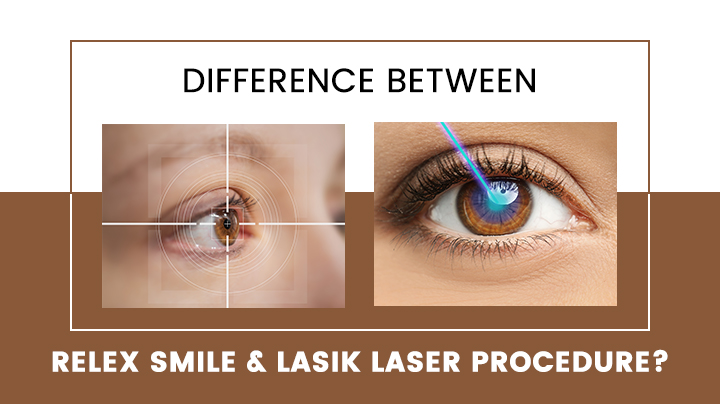
ReLEx SMILE and LASIK are the two most commonly used surgeries in the world that are used to treat myopia, hyperopia, and astigmatism. Both procedures are painless and bladeless and involve the utilization of lasers for gaining better accuracy and fewer complications.  A survey shows us that almost 92-98% of eye patients are happy with the post-surgery results of ReLEx SMILE. In extremely rare cases of LASIK, the patients have to still continue wearing glasses or contact lenses post-surgery because their eye condition is either over- or under-corrected.

What is LASIK laser surgery?

LASIK stands for Laser-Assisted in Situ Keratomileusis and is one of the most commonly performed eye surgeries in the world. The treatment is used to cure myopia, hyperopia, and astigmatism. It is a laser refractive surgery that is used to reform the front part (cornea) of the eye which enables the light to enter and pass through it without the involvement of glasses or contact lenses. LASIK is also a painless method and demands only 15-20 minutes max. to treat both the eyes. A patient can feel the difference soon and vision improvement is imminent and the whole procedure needs only 24 hours to stabilize.

What is ReLEx SMILE?

ReLEx SMILE surgery is one of the most popular and widely used surgeries in the world which is used to cure myopia and astigmatism. SMILE stands for Small incision lenticule extraction and previously, it was known as Femtosecond lenticule extraction (FLEx). The method was pioneered by Carl Zeiss Meditec and the entire process is painless, bladeless, and stitchless. It is at par excellence with traditional eye surgery which utilizes hand-held tools like diamond blades. ReLEx SMILE uses advanced Femtosecond laser for 3D mapping and the process is more accurate and encompasses fewer precautions than the traditional one.

Difference between ReLEx SMILE and LASIK

LASIK requires Flap and ReLEx SMILE is Flapless: In LASIK, an eye surgeon makes a corneal flap with the help of an instrument called microkeratome or with Femtosecond laser. Why flap is required in LASIK? It is because to treat myopia or astigmatism, the eye specialist cannot treat the eyes in its first layer of the cornea because it is very sensitive to external factors. Even a single dust particle is dropped on the 1st layer of cornea, you will feel a burning sensation. They have to go deeper and operate in the internal layers.

With ReLEx SMILE, there is no cut or flap required for the treatment and this treatment method is chosen by those patients who have a fear of having a “cut” in their eyes. The Femtosecond laser makes a small “lenticule”, which is used to treat eye conditions.

Different types of laser used: ReLEx SMILE surgery utilizes a Femtosecond laser developed by Carl Zeiss Meditec and is super accurate for making 3D mapping of the affected eye. On the other hand, LASIK uses Femtosecond laser or different types of excimer lasers.

Different recovery time: The recovery time for ReLEx SMILE surgery is lesser than LASIK because no cut or flap is made during ReLEx SMILE. The total recovery time for ReLEx SMILE is 2-3 hours and the total recovery time for LASIK is 15-30 days. A patient treated with ReLEx can resume their work within a week but the same is not possible for LASIK.

Taking part in outdoor activities: A patient who has been treated with ReLEx SMILE can take part in activities such as cycling, swimming, and exercise just after 2 days post-surgery. But a patient, who has been treated with LASIK will require at least 30 days for taking part in exercises and outdoor activities.

The cost incurred: There is a difference between the cost of LASIK and ReLEx SMILE based on the technology and procedure used in the treatment. Also, it depends upon center to center and the type of laser and accessories used.

So, we came to know that ReLEx SMILE surgery is better than LASIK because ReLEx doesn’t involve any flaps to be made during the surgery and also, ReLEx SMILE procedure’s recovery time is lesser than that of LASIK. A LASIK-patient can take part in outdoor activities after a month, but a ReLEx-patient can resume their work within 2 days, max. The good thing about LASIK is that it is comparatively cheaper than the ReLEx SMILE procedure.

Dada Laser Eye Institute is one of the best eye clinics in India and here, we treat patients with LASIK and ReLEx SMILE according to their choice or preference. Dr, Jeevan Ladi has 25+ years of experience as an ophthalmologist and has been awarded a Gold Medal for his extensive work in laser eye surgery.

Laser Eye Surgery After Care - DLEI

Laser Eye Surgery Aftercare

Aftercare is positively recommended and is a pivotal step in your laser eye surgery treatment. Post-surgery, your eyes are susceptible to light and they become very sensitive. Protecting your eyes is very critical to ensure you reduce the risks of any possible complications and see the best possible results. The aftercare procedures also differ from person to person, such as, for someone, it might take 2 days and for some it might take up to 5 days.

Laser Eye Surgery Recovery Tips & Advice

1. Initial Aftercare
After your treatment, you will be advised to stay in the eye clinic or hospital, until you feel comfortable to make your way back home.During this time period, your eyes are recuperating and getting its strength back. For your information, driving immediately after the surgery must be avoided at all costs. So, you have to organize for your personal transport services or ask a family member or a friend to help you get home.

2. Aftercare During The First 2 Days
You must avoid taking a shower immediately after surgery because there is a small chance that it might hinder your progress in vision. For better results, avoid taking shower for at least 1-2 days post-surgery. It is also advisable that you must not resume your work for 1-2 days after the treatment, following a LASIK, ReLEx SMILE or LASEK. No matter where you work, your eyes will be exposed to different types of strain, so if you do need to venture outside try to stay close to home, just in case you feel any discomfort.

During the initial days of aftercare, you might be asked to attend a follow-up exam where an ophthalmologist will examine your eye health and provide feedback along with any medications if required. On average, most patients will be back on the road within the first few days. However, it is always recommended to wait for few days before exposing your eyes to computer or smart phone screen because they emit nonionizing radiation.

3. Aftercare During the First Week
During the first seven days, it is important that you must reduce the chances of exposing your eyes to irritation. It is recommended to not put any makeup around your eyes and keep your eyes away from any soap products. Also, avoid going to such places that have a lot of smoke and stay away from people who smoke. Don’t rub your eyes during the first week of aftercare because it might create complications.

After 3 days, your eyes will have recovered enough and you can start exercising such as a morning cycle ride or jogging on a treadmill. It is preferable to wait for a week before continuing aerobic exercises or practicing Yoga. If you weightlift, wait for at least two weeks before resuming your exercise routine because weightlifting cause muscle strain including your eyes.

4. Aftercare After a Month
After a month, your eyes will have gained enough strength and you can enjoy sports activities like tennis, swimming, football, snowboarding, and cricket. It is highly advised to stay away from any kind of steam room and sauna for at least a month. If you have an itinerary or you are going for a vacation soon after your laser eye surgery, wait for at least 10 days. When you wait for more, you are actually reducing the risk of any possible complications.

What is The Typical Recovery Time for Laser Eye Surgery?

The recovery time is different for different types of procedures. For example, LASEK requires 5-7 days of recovery time and ReLEx Smile / LASIK has a very quick recovery and takes only 2 days before you can resume your work.

What Should I Expect for Recovery?

Some people might experience improved vision immediately after the surgery, but it is quite common that the patient might feel blurry vision for at least a day or two. You will not have many restrictions during recovery time, but it is very important not to lift any heavy objects or engage in strenuous exercise for one week.

So, now you know everything about laser eye surgery aftercare. Try to take rest for a week or so and do not engage in any activities that cause stress on your eyes. Over time, you will again experience the vision you were looking forward to.

Bladeless Laser Surgery - Dada Laser Eye Institute

Know All About Bladeless Laser Eye Surgery

Many people suffer from various types of eye disease like glaucoma and cataract. Most of the eye patients go to an eye clinic for treatment where an ophthalmologist or an eye specialist take care of their eyes. For cataract, an ophthalmologist will ask you to undergo an operation which might be traditional, or laser-based. Bladeless laser cataract surgery is better than the traditional one because it is accomplished via laser which is very accurate, and the entire procedure is painless and stitchless.

What is Bladeless Laser Cataract Surgery?

If you want that an eye specialist performs an operation with your eyes but you’re afraid of pain, blades or stitches then laser surgery is definitely for you. In bladeless LASIK or Femto LASIK, the surgeon will use two types of lasers for the vision correction procedure. First, an ultra-fast femtosecond laser is utilized to make a thin flap in the cornea which is the clear front surface of your eyes.

Next, an excimer laser will be used to reshape the underlying corneal tissue to treat and correct your vision. After this, the flap will be returned to its original position. The femtosecond laser will eliminate the requirement for a bladed surgical tool which is known as the microkeratome to create the corneal flap in eyes. So, now you know that no surgical blade of any type is needed in all-laser or Femto LASIK.

Know more about What is Laser Cataract Surgery?

Advantages of Bladeless Laser Cataract Surgery

1. Safer Procedure: Femto laser surgery is safer than the traditional oneas there is no chance of any possible human error. The incisions are controlled by laser and are super accurate in terms of depth and architecture.

2. No Cell Damage: A survey shows that not even a single endothelial cell is damaged during the Femto laser cataract surgery. This is good news because endothelial cells are also known as the barometer of our eye health and they preserve the clarity of cornea and they are non-regenerative in nature.

3. Precision Mapping: Beforehand Femto surgery, the laser system permits an ophthalmologist to make a 3D mapping of your eyes which helps in achieving highly precise results.

4. US-FDA Approved: Femto laser surgery is 100% US-FDA approved which shows its credibility. After receiving the accreditation, such laser surgery systems are also made available in India.

5. Improved Vision: Conventional Phaco only addresses the existing cataract problem and it doesn’t have any impact on pre-existing astigmatism. Why? It is due to the abnormal corneal curvature. But on the other hand, Femto laser also corrects the pre-existing cylinder in a patient’s eye, with the help of astigmatic correction module there by resulting in a better outcome as compared to conventional Phaco.

Know more about Benefits of Laser Cataract Surgery?

How is Femtosecond Bladeless Cataract Surgery Different from Conventional Phacoemulsification Surgery?

During conventional phacoemulsification surgery, an eye specialist will make the incision in the cornea with the help of a metallic blade.They also have to manually create an opening in front of the lens capsule to avail access into the cataract affected area which is achieved via a handheld ultrasonic probe. In bladeless cataract surgery, the Femtosecond laser is used to create incisions, make openings into the lens capsule, and divide the lens into fragments. Henceforth, the minute fragments are removed with the help of ultrasonic probe. In the end an intraocular lens is placed inside the eye to replace the natural lens that was removed.

Benefits of Laser Cataract Surgery - DLEI

Benefits of Laser Cataract Surgery

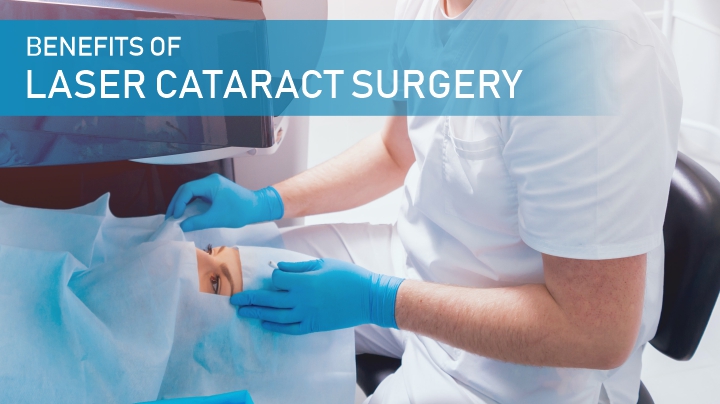
Many people are suffering from eye diseases like cataract and they are constantly looking for best ways to get rid of it. Very few people opt for traditional cataract surgery which is not that great because it lacks precision. On the other hand, majority people choose laser cataract surgery which uses a computer-assisted laser and renders a highly accurate procedure to free your eyes from cataract and it has helped myriads of eye patients to reclaim their vision back.

What is Laser Cataract Surgery?

Laser Cataract Surgery is also known as Refractive Laser-Assisted Cataract Surgery (ReLACS). It is a modern surgical treatment for cataract that uses FemtoSecond laser technology which brings a whole new level of accuracy in the procedure as compared to the old times when the cataract was being treated with the help of hand-held equipment. Laser cataract surgery has mainly 3 steps and those are-

  • The corneal incision
  • The anterior capsulotomy
  • Lens and cataract fragmentation

Now, let us see what role the aforementioned steps play during the process of laser cataract surgery

Corneal Incision:
During regular cataract surgery, the surgeon utilizes hand-held medical equipment which has a diamond or metal blade and is used to make an incision in the exact area where the sclera meets the cornea. This incision permits the surgeon to enter the interior parts of the eye to crack up and remove the cataract.

A cataract clouds the eye lens and makes your vision blurry and generally happens behind the pupil. After that, the surgeon inserts an intraocular lens (IOL) to replace the cloudy lens which is causing blurry vision.

Anterior Capsulotomy:
For your information, the natural eye lens is enclosed by a clear and very thin capsule. During laser cataract surgery the anterior part of the capsule is detached into a step known as capsulotomy. This procedure enables the surgeon to garner direct access to the lens which is affected by cataract.

It is of pivotal importance that the remaining part of the lens capsule which was intact in the eye must not be damaged during the surgery because it should hold the implanted lens for the rest of the life. Various studies and researches have shown that the capsulotomies performed with the help of a laser have more reproducibility and accuracy.

Lens and Cataract Fragmentation:
Once the capsulotomy has been performed, the surgeon can access the cataract to remove it. In traditional cataract surgery, during the phacoemulsification process, there is a high chance that the ultrasound energy can build up heat and damage the incision and can negatively affect the outcome by inducing astigmatism.

But when we are dealing with laser cataract surgery, there are no chances of error. The laser softens the cataract as it tears up. By breaking the cataract into much softer and smaller pieces, a lesser amount of energy would be required to remove the cataract which in turn, boosts the overall accuracy of the entire process.

Know more about What is Laser Cataract Surgery?

Should You Consider Laser Cataract Surgery?

Laser cataract surgery is a safe method for the treatment of cataract and has several other advantages, but this type of surgery is not for everyone. Why? It is because the user of a laser and the utilization of premium lenses are not covered by most of the insurance agencies and a patient will have to burn a hole in their pocket for the treatment.

So, if money is not your concern and you want the best possible treatment for your cataract then you must go for laser cataract surgery. It is safer and has lesser post-surgery care and maintenance.

Benefits of Laser Cataract Surgery

Laser cataract surgery has myriads of advantages over traditional cataract surgery. Firstly, it is safer and requires lesser post-surgery care and maintenance. Apart from this, a patient has a better vision once the laser surgery has been performed. The accuracy of the laser assists a surgeon in giving people clearer vision faster, more consistently, and very often without glasses. The laser’s accuracy matters a lot when a surgeon wants to graft a multifocal lens which resolves close-up and distant vision or Toric lenses that has the capability to correct astigmatism.

Now, let us see the benefits of laser cataract surgery

1. Laser Cataract Surgery Demands Lesser Energy:
Researches say that the laser treatment requires 45% lesser ultrasound energy for achieving successful cataract removal and, during the procedure, the eye surgeons have to perform 45% fewer movements when compared with the traditional surgery. The laser pretreatment adds about five to seven minutes to the usual 10- to 15-minute cataract surgery.

2. Lesser Cell Damage:
A survey tells us that no endothelial cells are damaged during the laser cataract surgery. This is really good because endothelial cells are the barometer of the eye-health as they preserve cornea’s clarity and are non-regenerative in nature. Another survey shows that during the standard treatment there is a huge loss of endothelial cells and it might range from 1 to 7%

3. Precision Mapping:
Before the surgical procedure starts, the laser cataract system allows a surgeon to create a 3D map of your eyes which helps in achieving exceptionally precise measurements for every step during the surgery.

4. Mild Approach:
The laser system is utilized to soften the cataract in the eyes, and it helps to break them into minute pieces which allow the scope for an easier and gentle way to remove the cataract. In traditional surgery, a surgeon used a hand-held surgical tool which has a metal or diamond blade.

5. Laser Accuracy:
During the first step of cataract surgery, a miniature opening is made with the help of a laser that holds the cataract together. For better accuracy, the laser makes the opening as circular as possible so that the new lens can be inserted without any hassle. For your information, the laser can be utilized to create impeccable incisions which can be used to correct astigmatism.

Now, we hope that you know what a laser cataract surgery is and what are its benefits for you. Laser cataract surgeries are safer and can be used to correct astigmatism as well. If you are having cataract then it will be a good option to visit an eye surgeon and get yourself treated as soon as possible.