FAQ About LASIK Eye Surgery

FAQ About LASIK Eye Surgery

A clear vision is very important in today’s digital world where we consume a lot of content on our computers and smartphones. In today’s fast-paced world wearing glasses or lenses could be a daunting task, hence many people undergo eye correction surgery like LASIK to see clearly without any assistance.

In this blog, we would be answering most of the queries and doubts that you might have about LASIK surgery in a simple and understandable way.

What is LASIK Eye Surgery?

LASIK eye surgery is a surgical procedure that uses laser light to reshape the cornea and thereby give a clear vision to the patient. The entire surgical procedure takes 30 minutes or less and you will be able to see clearly in 24 hours.

FAQ about LASIK Eye Surgery?

Below mentioned is the list of frequently asked questions and doubts regarding LASIK Eye surgery

What is LASIK Surgery?

LASIK surgery is a type of surgery that is conducted on patients who have vision issues. The issue could be nearsightedness or farsightedness. In this surgical procedure, laser light is used to remove the bits of tissue to flatten the cornea incase of nearsightedness or steepen the cornea in case of farsightedness. The surgery is also used to smooth out any irregularities in the cornea.

How safe is the procedure?

LASIK is one of the safest eye correction surgery that one can undergo to correct the vision. This surgery is FDA recognized and undertaken by millions of people worldwide. It is conducted with the use of laser light that is controlled by a computer under the guidance of the doctor. Being computer-operated this procedure is super precise and also removes human error to a large extent. However, just like any medical procedure, there is a risk involved in the procedure.There are no known cases of blindness happening due to LASIK surgery, hence it is a safe procedure.

Can LASIK surgery be done twice?

Yes. Generally, a LASIK surgery done once will give you a clear vision but in some rare case to you might need to undergo another surgery to get the desired result.

What is the recovery time?

Most patients recover and start seeing clearly after a day or so of the surgery. However, for some patients, the recovery time might vary. If the vision does not clear in 4-5 days, consult your doctor.

Is LASIK eye surgery painful?

No LASIK eye surgery is not painful as the doctor will administer anesthetic eye drops in the eye before commencing the surgery. Post-surgery there is mild discomfort for a day or so after which the eyes will be fine.

Is LASIK eye surgery Safe?

Yes. LASIK is one of the safest eye correction surgery today with an almost non-existent case of any serious after effect or loss of vision.

Is LASIK Surgery FDA approved?

Yes. LASIK surgery is FDA recognized and is performed by eye surgeons worldwide.

Can LASIK surgery cure astigmatism?

Yes, astigmatism is a type of refractive error that happens due to the presence of dual curvature in front of the eye. LASIK is one of the most effective procedures to cure it.

How does LASIK eye surgery work?

LASIK surgery uses laser light to reshape the cornea thus removing the vision error helping the patient to see clearly without the help of lens or glasses.

What is the cost of LASIK eye surgery?

The cost of LASIK eye surgery depends on a lot of factors. It also depends on the amount of correction required.

Can all refractive errors be corrected with LASIK eye surgery?

LASIK is one of the most popular eye correction surgery and is suggested by doctors for most refractive errors. However, your eye doctor would be the right person to suggest if LASIK is the right procedure for you.

Is there any age limit for LASIK eye treatment?

There is no upper age limit to undergo LASIK eye treatment, however, you need to be 18 years and above to opt for this surgery.

Am I a suitable candidate?

To know if you are the suitable candidate for LASIK, you need to make sure you fulfill the below criteria

  • You have healthy eyes with no glaucoma, severe dry eye, cataracts, infection etc as this can affect the healing process
  • You are 18 years or older
  • You have a stable for atleast a year prior to the surgery
  • You are not pregnant as increased hormone levels can affect the shape of your eyes
  • You do not have any autoimmune or degenerative disease as this can affect the healing process

Why do patients prefer LASIK eye surgery?

Most patients prefer LASIK eye surgery due to a high success rate and minimal pain and recovery period.

Is there any diet restriction?

There is no diet restriction as such but to expedite the recovery post LASIK operation, it is advised to reduce the intake of excessive sugar, salt, refined flour etc and increase the intake of fresh vegetables and fruits. This will help in healing the eye faster.

How much time does the procedure take?

The actual LASIK procedure takes just few minutes but if you include the entire process then you need to spend an hour and a half on the day of surgery at the Laser Centre.

Can both eyes be treated with LASIK eye surgery in the same sitting?

Yes, generally the LASIK procedure is conducted on both eyes in the same sitting as it is comfortable for the patient as well for the doctor. This helps in reducing the recovery time as both eyes heal simultaneously.

How many LASIK eye surgeries are done till date by Dr Jeevan Ladi?

Dr. Jeevan Ladi has performed more than 10,000 surgeries with one of the highest success rates.

Is LASIK eye surgery a permanent treatment?

For most patients, LASIK eye surgery is a permanent treatment and they don’t need to undergo any further procedures in the future. However, in some cases where the patient’s vision gets blurry due to natural changes occurring in the lens inside the eye, a LASIK enhancement needs to be performed.

Is LASIK treatment accurate?

Yes. LASIK treatment is extremely accurate as 94%-100% nearsighted patients get 20/40 vision or better.

What is the success rate of LASIK eye surgery?

The success rate of LASIK eye surgery is around 96% which is considered a very high percentage when it comes to medical surgery.

How soon can I get back to my normal routine after the LASIK surgery procedure?

Generally, you can get back to your normal routine after a day or two after the surgery.

Will my vision be clear immediately after LASIK surgery?

After LASIK surgery has been performed, it takes around six to twelve hours for the eyes to recover from the procedure. The recovery period may differ from person to person but generally, your vision should be clear 24 hours post-surgery.

Will I need to sit in a dark room after LASIK surgery?

No. There is no need to sit in the darkroom post LASIK surgery. Natural or home light is perfectly fine. In case you feel a sensitivity towards light, you should close your eyes and rest for a few hours.

Will I still need to wear reading glasses after LASIK surgery?

LASIK surgery reduces the need to wear lens and glasses to a large extent. However, the result of the surgery may vary from person to person and some people may still have to use glasses while reading for those are above the age of 45 years.

Will I have glare after the LASIK surgery procedure?

After surgery, the patient might experience some amount of glare for a short period of time during recovery. Once fully recovered most patients do not have any kind of glare and have a natural vision.


To conclude LASIK one of the most effective eye correction surgery and gives you a clear vision in a day or so. If you have any other queries regarding LASIK or any other eye surgery you can call us at (+91) 992 299 5549. You can also fill the form below with your details and one of our representatives will connect with you.


FAQs About Squint Eyes

FAQs About Squint Eyes

A common man or eye patients have several frequently asked questions in their mind concerning squint eyes. To be honest, people have very few details about squint and they always want to know more about it. But the real issue is – an eye patient is not getting any trustworthy answers, they try to search for the answers in a magazine, newspaper or even online, but they are always discombobulated.

To help fellow the eye patients know more about the frequently asked questions regarding squint eyes, in this blog, we are going to cover – what squint is, what causes squint eyes, can squint eyes be corrected, are babies born with squint eyes, does squint increases with age, is squint surgery painful, and lot more.

Here is the list of frequently asked questions about Squint Eyes:

    • What Is Squint Eyes?
    • What Causes Squint Eyes?
    • Can a Squint Eye Be Corrected?
    • Is Squint a Disability?
    • Are Babies Born Squint?
    • Does Squint Increase with Age?
    • What Causes a Squint in Adults?
    • Is Squint Surgery Painful?
    • Can a Child Grow Out of a Squint?
    • What Does It Mean When You Squint a Lot?

So, let us start with what is squint?

What is Squint?

Squint is also called as strabismus which is an eye disease where the eyes do not align properly; in the possible simplest terms, both the eyes (oculus sinister and oculus Dexter) never look at the same direction at any time. Whenever a person with normal vision sees a patient with squint eyes they feel like both eyes are looking towards continuously somewhere else. When an eye patient has squint eyes, their one eye might get turned outwards and the other eye will either be downwards, upwards or maybe inwards. This is a condition and squint eyes have to be treated as soon as possible.

What Causes Squint Eyes?

Anyone can have squint eyes and the most common causes are following:

    • Because of heredity issues
    • Because of the eye muscles are weak in nature
    • It can take place in the eyes due to any problem in the nerves
    • Because of damage in the eye muscles
    • Various other common cause of squint eyes are- cataract, glaucoma, corneal scars, optic nerve disease, refractive errors, tumors of the eye, retinal disease etc.
    • A person can have squint eyes if they have suffered any eye injury

Read more about Squint Eye Causes, Symptoms, Treatment, Surgery

Can a Squint Eye Be Corrected?

Squint is an eye disease and it needs to be corrected as soon as possible. Any kind of delay might increase vision complexity and we don’t want that for obvious reasons.

Is Squint a Disability?

No, squint is not a disability. It is just alignment problem that needs to be corrected, that’s it.

Are Babies Born Squint?

Most newborn babies are born with squint eyes but there’s nothing to worry about anything. The squint eyes are only for a first few months and when the baby is 4-6 months old the eyes straighten out in a perfect manner. But of that doesn’t happen even after 7 months they have squint yes or strabismus.

Does Squint Increase with Age?

Most cases of squints eyes develop at some stage during the first 3 years of life. A few people might develop squint eyes in pre-teen and teenagers and in adults. Squint eyes that are developed in the children usually have different causes to those that develop in adults. Squint doesn’t increase with age bit if that is not treated properly an eye patient might develop lazy eyes where the brain already initiates to ignore the signals that are coming from the affected or squint eye.

What Causes a Squint in Adults?

The most common causes of squint eyes in adults are medical conditions such as a stroke, thyroid disease, diabetes, any head trauma or other commonly founded neurological diseases. At times, the adult strabismus or squint eyes can occur even after having a cataract or complex retinal surgery.

Is Squint Surgery Painful?

Squint or strabismus surgery isn’t painful at all. Post-surgery an eye patient might feel uncomfortable but that is quite a common case. After the surgery, the sclera might get red but that goes away after a few days, If it persists, contact your eye surgeon or ophthalmologist as soon as possible.

Can a Child Grow Out of a Squint?

Many parents think that their child can grow out of squint eyes but that’s a myth. Squint eyes needs to be treated and it needs to be done as soon as possible to make your kid stay away from any possible vision blues. As mentioned, if anyone has squint eyes for prolonged time, they might develop lazy eyes and that is not a good thing.

Read more about Myths and Facts Related to Squint

What Does It Mean When You Squint a Lot?

Squinting means to look at something or someone with either eyes or an eye partly closed in an attempt to see more an object more clearly or as a reaction to strong light. If you are squinting a lot then you should try moving farther of closer from the object to which you’re trying to bring into focus. If that doesn’t help then you must have to contact or consult with your eye specialist.

Now, you know all the answers to the most frequently asked questions vis-à-vis squint eyes. If you or any of your friend or family members are suffering from squint eyes then you must advise them to consult an experienced eye surgeon or an ophthalmologist as soon as possible. Delay in squint eyes might cause lazy eyes and we don’t want that.

As said, squint surgery or treatment is painless and there’s nothing you should stress about. A squint surgery generally takes less than an hour for completion and the eye patient has to wait for a few hours in the eye clinic, that’s it.

Squint - Know All About Causes, Symptoms, Treatment, Surgery

Squint Eyes: Know All About Causes, Symptoms, Treatment, Surgery

Squint is a widespread eye disease and right now, millions of people are suffering from this vision problem. There are several myths that is pertaining this eye disease and still, tens of thousands of eye patients believe that this vision blue is incurable but that’s not the case. Thanks to advancement in medical examination methods, a person can easily get rid from this disease and can see well like before.

Talking about the disease in general sense, let us see what is squint, its types, cause, symptoms, treatment, surgery, cost of treatment, eye exercise and more. So, without any further ado, let us delve deeper by knowing what squint is? After completing the basic details about squint, we will move further…

What is Squint?

Squint also known as strabismus is an eye disease where the eyes do not align properly; in layman’s terms, both eyes (oculus Dexter and oculus sinister) do not look at the same direction at any given time. When a human being with normal vision sees the eyes of a squint patient it feels like both eyes are looking somewhere else. When an eye patient has squint their one eye is turned inwards and the other eye will either be upwards, downwards or maybe outwards. This is not normal and needs to be treated as soon as possible.

Types of Squint Eyes

For your information, squint doesn’t have a single type. Basically, there are various types of squint eyes and they all are prevalent in nature. Let us see them in more detail so that we can know more about them.

Types of squint pertaining eye direction

    • When a patient has inwards eyes the type of squint is known as an esotropia.
    • When a patient has outwards eyes the type of squint is known an exotropia.
    • When a patient has upwards eyes the type of squint is known a hypertropia.
    • When a patient has downwards eyes the type of squint is known is called a hypotropia.

Types of squint concerning presence

    • If a patient has squint eyes that is present constantly it is known as constant squint
    • If a patient has squint eyes in sporadic interval of time it is known as intermittent squint

Type of squint when it is seen

    • If the eyes are open and they are being used it is known as manifest squint
    • If squint occurs when the eyes are either shut or covered it is known as latent squint

Types of squint on the basis of severity of squint concerning the eye direction

    • A concomitant squint means that the angle or degrees of both the eyes are in the same direction whenever you look at them.
    • An incomitant squint means that the degree or angles of both the eyes are not in the same direction whenever you look at them.

Types of squint on the basis of onset

    • The squint that is developed in infancy, i.e. in between 1-3 years of age
    • The squint that is developed post 5 years of age or during adulthood

Types of squint on the basis of cause

    • In numerous cases of childhood squint, the cause of squint is unknown
    • The common causes of having squint in the eyes are eyes disorder, eyes muscles, damage in nerves or brain cells.

What are Causes of Squint Eyes?

At times, it becomes very difficult to know the exact cause of squint eyes, especially when it happens to an infant. There are many people who by mistake consider unusual look of the eyes are squint eyes but it is not! Let us see the most common causes of squint in the world

    • Squint can cause because of heredity issues
    • Squint can cause in the eyes because of the eye muscles are weak in nature
    • Squint can also take place in the eyes due to any problem in the nerves
    • It can also cause due to damage in eye muscles
    • Another common cause of squint eyes are- cataract, glaucoma, corneal scars, optic nerve disease, refractive errors, tumors of the eye, retinal disease etc.
    • Squint eyes can also take place if you have suffered any eye injury

Squint Eye Symptoms

The most common symptoms of having squint eyes are following:

    • The single eye or both the eyes tends to point in different directions
    • Any child can have the defective vision in single or both eyes
    • The kids with squint eyes sometimes only close one eye during the time of bright sunlight
    • A child may experience double vision or they can suffer from confusion in visualization.
    • A few children can either turn or tilt their face and head in any particular direction for using their eyes together.

What are Squint Eye Treatments?

The correction of squint does not happen on its own, and its treatment must begin as early as possible for best chances of improvement.

The first step in squint correction is the prescription of glasses. After the glasses have been worn, the doctor reassesses the squint. In case of amblyopia, or lazy eye, the doctor will advise patching of the good eye according to an age-based schedule. Some pediatric ophthalmologists prefer to penalize the good eye with dilating drops. Both these techniques force the eye with a weaker vision to see better and have been proven to be effective in children, especially less than eight years of age.

You must know that the correction or treatment of squint doesn’t take place on its own; you will definitely have to consult or visit an ophthalmologist for treatment. You must begin the treatment as early as possible so that the eye disease doesn’t become that serious in nature.

The first step in treating the squint eyes is the use of prescription glasses. Once a patient wears the spectacles, the eye doctor reassesses the eyes and in case of amblyopia or lazy eyes, an eye specialist might advise patching the good eye to a highly age-based schedule.

A few pediatric eye care specialists might use eye drops for dilating the eyes and in both these techniques, the weaker eye is forced to see well because the problem persists in the weak eye. This method is generally successful for the kids whose ages are in between 4-8 but for adult the treatment is a tad different.

Now, let us see the squint eye treatment in babies and adults in detail.

Squint eye treatment in babies

    • Prescription of prims that are special eye glasses with smaller deviations
    • Eye exercise for strengthening the eye muscles or nerves
    • If the case is severe, the eye doctor might suggest surgery or operation
    • An optimal cosmetic surgery for better vision

Squint eye treatment in adults

    • Eye muscle exercises
    • Eyeglasses containing prisms
    • Surgery of the eye muscles
    • Using an injection in the eye muscles

Read more – FAQs About Squint Eyes

What are Squint Eye Surgeries?

Squint eye surgery is also known as eye muscle surgery, extra-ocular muscle surgery, or eye alignment surgery that is performed in the eyes to rectify squint eyes or strabismus. With more than a few million surgeries around the world every year, it is one of the most common types of eye surgery in the world.

The surgery is generally a 1-day procedure and the patients have to spend a few hours in the eye clinic with minimal post-operative preparations. The duration of the surgeries varies as it depends upon the type of squint eyes and its severity. Once the surgery is done, the patients might experience redness and soreness in the eyes but this doesn’t last for a long time.

The ophthalmologist will give the eye patient with a cover to protect the eyes that will prevent direct light from entering the eyes. A special eyeglass will be given to the patients and it is highly advisable that the patient must wear it at all time to stay from any discomfort that might cause due to the stimulus of the eyes.

What is Cost of Squint Eye Surgery?

The cost of squint eyes differs from place to place and doctor to doctor. If you are visiting a highly experienced eye specialist who is using the latest technology and surgery to cure your squint eyes, chances are high that they will charge more.

But that doesn’t mean that you must not an experienced eye specialist; this is the matter of your eyes and you can’t ever be too safe. The cost of squint eye surgery also depends upon the type of squint eyes and its severity and number of muscles used for correction.

Squint Eye Surgery Exercise

These are the best and most commonly used squint eye exercises and are advised by the expert eye surgeons or ophthalmologists

PS: A few of the activities mentioned below are not exercises but they are must post-surgery

    • Wearing eye glasses
    • Use contact lenses
    • Patch the eye with stronger vision
    • Palming: You will be glad to know that palming your closed eye can relax the eye muscle in and assist it in improving the flexibility of eye muscles. This must be done before going to sleep or after you have worked for long hours for better and best results.
    • Pencil push-ups: Pencil push-ups are an excellent method of treatment for squint eyes. It can be easily performed at home or any place with the assistance of a pencil or any object that has a pointed end. To perform this squint eye surgery exercise, you need to sit up straight and move your pencil outwards and inwards for some time to stay away from the rigidity in your squint eye muscles.

Myths and Facts Related to Squint

Some widespread myths related to squint are

    • Squint will go away on its own
    • Squint in children is not serious
    • It is just a cosmetic problem
    • Squint is incurable
    • Squint surgery will cause eye damage
    • Squint will reoccur after surgery
    • My kid is too young to undergo squint surgery

Read more about Myths and Facts Related to Squint Eyes

Squint Eye Specialist

Dr. Jeevan Ladi is one of the best ophthalmologists in Pune who is highly experienced in the treatment of squint eyes. Doctor Ladi has been conferred a gold medal for his 25+ years of exemplary work in the field of laser eye surgery. He has also been awarded the very prestigious Dr. V K Chitnis Award for his 13 years of work in the field of intraocular lens implementation.

Hundreds of thousands of eye patients who are suffering from squint eyes visit the eye clinic of Dr. Ladi for getting the best-in-class treatment. Dr. Jeevan Ladi utilizes modern equipment in surgery and his success rate is one of the best in India. Also, Dr. Ladi has published various journals and scientific papers that are nationally/internationally recognized.

The staff members are also very skilled in the eye clinic and Dr. Ladi listens to the problems of eye patients with utmost care and then advises the proper treatment method for any eye problem.

So, now you know everything there’s to know about squint eyes. Always keep this point in your mind that squint doesn’t go automatically and you must visit an eye surgeon or an ophthalmologist as soon as possible once you have detected that you have squint eyes. Delaying it might cause vision problems that you definitely don’t want for obvious reasons.

Stay well & healthy. Take care of your eyes all the time as they are the only means for you to see this beautiful world.

LASEK vs LASIK Which is Better Choice

LASEK vs LASIK Eye Surgery: Which is Better Choice?

With the internet and google at your fingertips, you have a lot of information regarding eye surgery and sometimes it becomes overwhelming and confusing to know which surgery is best suited for you. There are also a lot of blogs that give a biased opinion to favor one surgery over the other for personal gains.

In this blog, we will give you unbiased information on LASIK and LASEK eye surgery along with their advantages and disadvantages. This will give you a clear picture and will help you clarify most of your doubts.

Difference between LASEK and LASIK Eye Surgery

LASEK and LASIK eye surgery has a similar approach with some minor changes in the procedure. Both surgeries work on reshaping corneas permanently.
The major difference comes during the treatment of the corneal area. In LASIK eye surgery the corneal flap is created and replaced. In LASEK eye surgery, however, the top layer of the cornea is separated and moved back. Post-surgery the flap is reattached.

Because of this procedure, a patient who has undergone LASEK takes more time to recover with discomfort for three to five days. LASIK patients recover quickly with minimum discomfort.

Procedure Overview – LASEK Eye Surgery

LASEK Eye Surgery – LASEK or Laser-assisted subepithelial keratectomy is a type of photorefractive keratectomy or PRK. The procedure takes a different approach than LASIK. Below mentioned is the procedure

    • With the help of excimer laser, surface ablations are made on cornea instead of creating a cornea flap like in LASIK
    • The outer layer of the cornea is either diluted with alcohol or loosened with the help ethanol
    • The outer tissue is them removed and with the help of laser the stroma is reshaped just like in LASIK
    • While the top layer of the cornea is removed, it is re-positioned or replaced post ablation of the cornea

Benefits of LASEK Eye Surgery

Although LASEK Eye surgery is an older technique compared to LASIK, it definitely has some very important advantages which is why the procedure is still very popular. Below mentioned are some of the advantages.

    • LASEK surgery can be conducted on people with thin corneas
    • The chances of the patient getting dry eyes is significantly less compared to LASIK surgery
    • There is no chance of any corneal flap complications or removal of too much cornea area
    • Post-surgery the vision become 20/40 or even better

Read more: LASEK Eye Surgery – Know All About Surgery, Benefits, After Care

Disadvantages of LASEK Eye Surgery

There are some disadvantages to LASEK eye surgery because of which some people prefer the more advanced LASIK eye surgery. Below mentioned are some of the advantages

    • The healing time post-LASEK surgery is longer compared to LASIK. Patients need at least three to five days to heal and more time to get a clear vision.
    • Patient experience significantly higher discomfort and pain compared to LASIK and it can last for a few days
    • There is a chance of corneal structure compromise due to LASEK surgery which creates a hazy vision.

Procedure Overview – LASIK Eye Surgery

LASIK Eye Surgery – LASIK is one of the most common surgeries undertaken by patients for their vision correction. The full form of LASIK is Laser-assisted in-situ keratomileusis. Below mentioned is the step by step procedure followed in the surgery

    • A femtosecond laser is used to cut the cornea flap and move it back to access the inner stromal tissues at the core. The femtosecond laser is super precise and hence the cut is extremely accurate
    • Once the flap is moved back an Excimer laser is used to change the shape of the stroma with the help of a process called photoablation
    • After the photoablation procedure, the flap is then replaced and the self-healing procedure starts which takes around a day or so

Benefits of LASIK Eye Surgery

LASIK eye surgery is one of the most advanced surgery, hence it overcomes some of the shortcomings of earlier surgical procedures. Below mentioned are some of the benefits of LASIK eye surgery

    • LASIK patients have a super-fast recovery and hence their vision starts clearing within a few hours of surgery. Their eyes heal completely in 24 hours
    • LASIK surgery is a minimally invasive surgery, hence the area around eyes does not undergo any significant changes or alteration.
    • The discomfort post LASIK surgery is very minimum and so is the pain. Hence you can resume your regular work in no time.
    • There are very fewer chances of any kind of complication like a hazy vision from corneal eye integrity.

Read more: How to Choose the Right LASIK Hospital in India for Your Eye Surgery?

Disadvantages of LASIK Eye Surgery

Just like any other surgery, there are some disadvantages of LASIK surgery that you must be aware about. Below mentioned are the disadvantages

    • The most common side effect of undergoing LASIK eye surgery is dry eyes
    • There is a chance of complications occurring in the corneal flap area.
    • There is a high chance of corneal flap getting dislodged from its position in case of a head trauma injury occurring prior to the completion of the healing process.

So to conclude both LASEK and LASIK eye surgery have their advantages and disadvantages and it completely depends on patient’s eye condition and the doctor to finalize which surgery would be best suited. It is strongly advised to consult a doctor before finalizing the procedure. If you are looking for expert consultation on eye surgery,  call us on +91 992 299 5549. You can also fill in your information below and one of the representatives will get in touch with you.

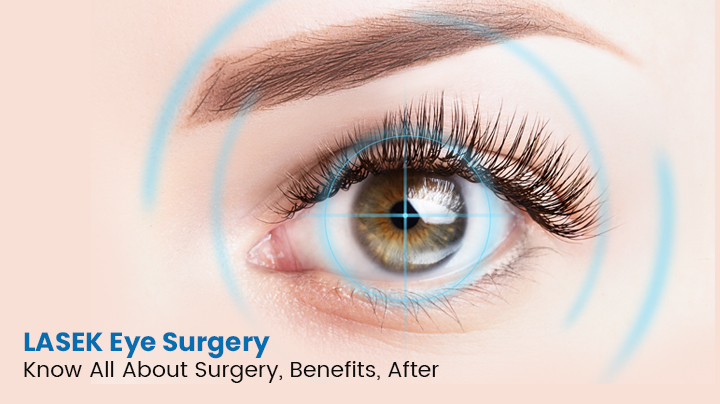
LASEK Eye Surgery - Know All About Surgery Benefits After Care

LASEK Eye Surgery: Know All About Surgery, Benefits, After Care

It is very important to have good eyesight in order to fully enjoy the beauty of the world. However, some people unfortunately have a weak vision for which they need to wear spectacles or contact lenses that are not always comfortable. For such individuals, LASEK eye surgery can offer permanent freedom from glasses and lenses.

In this blog, we are going the understand what exactly is LASEK surgery, its advantages, and disadvantages. We will also understand who should undergo this surgery and what are the benefits of it.

What is LASEK Eye Surgery?

LASEK is a type of eye surgery that is done for the patients who are having nearsightedness (myopia) or farsightedness (hyperopia) or astigmatism.

LASEK is one of the most popular laser eye surgery and is widely preferred by patients. LASEK is a variation of PRK (Photorefractive keratectomy) surgery.

LASEK is similar to other laser refractive surgeries in which the cornea is reshaped with the use of excimer laser. This allows the light that falls on the eye to get a better focus on the retina giving the patient a clearer vision without using glasses or contact lenses.

What Are the Advantages of LASEK Eye Surgery?

LASEK eye surgery is preferred by many patients due to a lot of advantages it has. In this procedure, there are a lot of techniques used to retain a very thin corneal surface layer of cells. This plays a very important role in the recovery of the cornea after the laser sculpting procedure has been performed.

Below mentioned are some advantages of LASEK Eye Surgery

  • This surgery avoids the complications that come while creating and reattaching the flap in the cornea
  • Unlike other eye surgery, After LASEK eye surgery the dryness of the eyes is less frequent

Read more: FAQ About ReLEx SMILE Surgery?

Is LASEK Surgery for me?

It is very important to consult a doctor before finalizing the type of surgery suitable for your eyes. Ideally, a person who has steep or very thin corneas should go for LASEK surgery as it is very difficult for the surgeon to conduct other surgery like LASIK.

Also, the traumatic injury on the eyes that have undergone LASEK eye surgery is less compared to LASIK. So if you are in a profession that inherent risk to the eyes like boxing, mixed martial arts, etc then it is advised to undergo LASEK surgery

If a person is suffering from dry eye syndrome then LASEK surgery is the ideal option as in this surgery corneal nerves responsible for the tearing reflex are not cut.

What Happens During LASEK Eye Surgery?

Before starting the surgery, topical anesthesia is administered directly into the eye. The top layer of cells or epithelium is treated with alcohol for 30 seconds after which it is detached from the underlying tissue.

The layer is then moved back by the doctor in order to access the underlying cornea tissue. This exposed tissue is then operated with the help of laser that is used in other surgeries like LASIK and PRK.

Once the surgery is completed the top layer of cells in reattached and put back at its place.

What Happens After LASEK Eye Surgery?

Just like other surgical procedures, the surgical area needs time to heal. In the case of LASEK surgery, the recovery time is around one week.

The patient needs to wear a specialized contact lens which serves as a bandage for at least four days. In the initial days, the patient will experience irritation in their eye which is perfectly normal.

The patient needs to visit the doctor after one week and three months post-surgery to check the overall progress and status of the eye.

Benefits of LASEK surgery

There are many benefits of LASEK eye surgery which is one of the reasons why it is preferred by millions of patients around the world. Below mentioned are some of the key benefits of this surgery

  • After the completion of surgery, the patient will have a better vision in just one week
  • LASEK surgery is less painful than other surgeries like PRK eye surgery
  • In this surgery, the corneal nerves are not cut and hence are safe which is especially beneficial for patients with dry eye syndrome

Read more: What Are Benefits of LASEK Eye Surgery?
Read more: How to Choose the Right LASIK Hospital in India for Your Eye Surgery?

Disadvantages of LASEK surgery

Just like any surgery, there are some disadvantages of undergoing LASEK surgery. Below mentioned are some of them.

  • When it comes to recovery, LASEK surgery takes a longer period for the patient to recover from the surgery. It takes at least one to two weeks for the eyes to completely heal which is a similar timeline required for a patient who has undergone PRK eye surgery
  • LASEK surgery causes more pain and discomfort when compared to LASIK.
  • A bandaged contact lens is mandatory on the eye post-surgery for at least three to four days. This is done to create protection from blinking eyelids and the operated eye surface.
  • A topical steroid drop needs to be administered for several weeks post-surgery

Cost of LASEK Surgery

The cost of LASEK eye surgery depends on a lot of things. Different cities have a different cost for the surgery, so if you are undergoing the surgery in metropolitan cities then the cost would be high while in other places it would be cheaper.

The cost also depends on the type of clinic and the technology used to perform the surgery. If you are undergoing the surgery in a well-reputed clinic that has the latest medical equipment,  the cost would be higher compared to a newly inaugurated clinic that might have older equipment. The risk factor is also high at a new clinic compared to the seasoned ones as you can always refer to the patient testimonials.

On average the cost of LASEK eye surgery can range anywhere between twenty thousand to one lakh rupees per eye.
Read more: What is The Cost of LASEK Eye Surgery in India?

To conclude LASEK eye surgery is one of the most popular eye surgery options that millions of people prefer worldwide. If you want to know more about LASEK surgery or get your eyes evaluated, give us a call at (+91) 992 299 5549. You can also fill in your information below and one of our representatives will get in touch with you.