How to Choose the Right LASIK Hospital in India for Your Eye Surgery

How to Choose the Right LASIK Hospital in India for Your Eye Surgery?

LASIK treatment is a type of refractive surgery that is done by an eye surgeon or an ophthalmologist so that an eye patient won’t have to wear glasses or spectacles again. LASIK is used to cure hyperopia, myopia, and astigmatism. LASIK treatment is painless, bladeless, flapless, and stitchless.

The best part of LASIK is that the procedure is ultra-safe and meticulous because here, an eye specialist will not use any type of handheld device like a diamond-shaped blade. In LASIK, high-precision lasers are used that create a 3D mapping of your eyes and a small gap will be made in the affected part of the eye so that light can enter properly and you won’t have to face any vision blues on the future.

Many eye patients think LASIK cannot be performed on dry eyes but that’s not the case. Also, the procedure requires only 10-15 minutes per eye for completion; so, you can say 30 minutes is the maximum time for both eyes.  Another great factor of LASIK is the patient recovers very quickly. Some patients can start working to the office and take part in outdoor activities within a week and if you take proper precautions post-surgery then the recovery time will be expedited.

In this blog, we will be covering all details about LASIK surgery including a checklist that will assist you to choose the right LASIK eye surgery clinic without any fuss. So, without any further ado, let us present to you…

The Checklist to Choose the Right Lasik Eye Surgery Clinic

Surgeon Experience

Always check whether the eye surgeon or an ophthalmologist has enough experience or not. There’s no point in going to a naïve doctor’s clinic as they will charge you the same as experienced doctors but you won’t get the same quality. It is always advised to go to a highly experienced doctor. Experienced surgeons are well-versed with the latest technologies and they have received enough hands-on experience on modern tools. Visit an eye surgeon who has at least 20+ years of experience.

Reputation

A few eye patients might think a doctor’s reputation is not important when it comes to treatment; it’s a myth. Before making an appointment with a doctor checks their credentials, memberships, and success rate. If you’re having difficulty asking it to your near and dear ones go online and visit a few websites. You will come to know everything about an eye surgeon. Also, if possible, check online ratings and reviews of an eye doctor so that you won’t go to a specialist that has a bad reputation.

Technology

Using the latest technologies is a must these days to promote safety and accuracy in various eye surgeries including LASIK, LASEK, CATALYS and more. Consult with your friends if they are sure about a particular eye specialist that uses ultra-modern medical equipment while performing surgery. If you’re not sure that a particular eye specialist has all the necessary tools visit their website and check what type of tools they are using during a procedure.

Cost

Cost is an important factor while making any decision but you must pay attention to the fact that you must not skimp on LASIK treatment. The cost varies from an ophthalmologist to an ophthalmologist and place to place. Remember, your safety and the accuracy of the procedure are the main points to keep in mind. The combination of a good eye surgeon, skills, technology, and modern equipment should not cost you more; thanks to cutthroat competition in the present world.

Read more: What is The Cost of LASIK Eye Surgery in India?

What is the Benefit to a Patient?

With LASIK you can stay assured that you won’t have to wear spectacles again. LASIK is used to cure astigmatism, hyperopia, and myopia and the procedure is painless, flapless, stitchless, and bladeless. The amazing fact about LASIK is that it takes only 30 minutes max for an ophthalmologist to operate on both eyes and its recovery time is in between 5-7 days.

Friendly or Family Recommendations

Receiving recommendations from friends and family members are always appreciated. Since LASIK is a very popular eye treatment many people know about this. You can ask about a particular doctor, like – how much experience they have? Are they using the latest tools or not? Is their clinic easily accessible? How the staff members behave in the clinic? And more… If you’re satisfied with the answers make a move.

Financing Options

Many eye clinics have financing options. You can ask or friends or check online whether or not a particular eye clinic has this provision or not. You can also check with your insurance provider if they are covering all the expenses of your LASIK treatment. If that’s not the case, you can look for setting up a Flexible Spending Account (FSA). The money you keep in FSA can be taken out tax-free and it can be used for certain types of medical treatment like – LASIK.

Location

Please check whether or not the clinic you opted for LASIK is nearby you. If not then you will have to take a friend or a family member with you during the procedure; which can be tough at times. So, go for such eye clinics that are near to your home for the sake of your convenience.

Do You Have Testimonials from Previous/Current Patients?

The eye surgeon must have testimonials from previous or current patients. Testimonials guarantee that a particular ophthalmologist is good in treating the patients. Testimonials can be on their website, social media or YouTube. Don’t forget to check every platform and one you’re assured that the testimonials are real; you can book an appointment with the doctor.

Surgeon Commitment

The commitment of the surgeon is a must if you want that the procedure goes by smoothly. Check whether the appointed ophthalmologist has received any accreditations or awards from the government or NGOs. In this case, your friends, family members, and the internet can help you a lot. Visit their website and check every webpage to know whether or not the surgeon is committed to surgery.

What is the Average Recovery Time?

The average recovery time of LASIK is 5-7 days and if taken care of properly, it can be 4 days as well. Don’t indulge in swimming, cycling, exercising just after the LASIK surgery. Consult with your doctor on when can you resume work, when can you sit in front of a computer, when cam you take part in outdoor activities, and more.

How Long Does LASIK Last?

How long LASIK “lasts” will depend on how old you are when you have LASIK and how much your eye conditions progress if they do at all. For the majority of people who have LASIK, they remain happy with their vision after 10 years.

The answer to the question – how long does LASIK lasts depends on how old were you at the time of treatment. It also depends upon the fact that is your eyes healthy or not? For the majority of eye patients LASIK lasts for 10 or more years.

Infrastructure

Infrastructure plays a very important role during the procedure. Ensure that a particular eye clinic has all the amenities and their staff members are good and candid. Check whether or not the eye clinic has a dark room for patients post-surgery. If an eye clinic meets all the needs, it is good to go.

Comprehensive Eye Care

You must ideally choose an eye surgeon who is an all-rounder, i.e. they are not only proficient with a single type of surgery; they must be prolific in LASIK, LASEK, CATALYS, ReLEx SMILE, and more. This guarantees that a doctor is well-versed with all norms of surgery and has rich experience in ophthalmology.

Peace of Mind

Your goal in selecting a clinic lies in the fact that whether or not you’re in the safe hands. You must select an eye clinic that has an amazing roster of eye surgeons or if they have only one surgeon that’s also fine; the point to consider here is to check they have good experience in their respective fields.  We comprehend that any kind of surgery can be daunting so it is a must that the doctor and the staff understand your requirements and act upon it. This will render long-term satisfaction and you will always have peace of mind that you’re in the right hands.

For the best results in LASIK treatment, you will have to adhere to all the aforementioned points. After reading the complete blog if you have any doubts regarding the procedure, fee or anything else, fill-up the form  and someone from Dada Laser Eye Institute will reach out to you within 24 hours. Happy Vision!

Laser Cataract Surgery vs Traditional Eye Surgery

Laser Cataract vs Traditional: Which is Better

A cataract is a type of eye disease which makes your vision blurry and it happens generally due to age, tissue damage or genetic disorder. If anyone has a cataract, it means in their eye(s) a cloud-like substance has formed (in the focusing Lens) and is making the vision hindered. A cataract is the most common reason for vision loss in people who are 40+ and is also the primary cause of blindness in the world!

Cataracts Surgery Techniques

There are two main surgical methods for cataract and one of them uses laser, which has precision and no use of blades! Laser eye surgery is also considered the best for patients who have severe eye conditions such as astigmatism. And the other techniques for cataract surgeries are the traditional surgeries like Phaco and manual small incision (SICS).

Which Treatment is the Best for You?

Without any doubt, laser surgery is the best for you. Just like we mentioned, laser surgery is very accurate and there is no involvement of pain. With laser eye surgery, you can resume your work quickly as well. If you go for traditional surgery, you will have to undergo through the discomfort because traditional cataract surgeries include utilizing a vibrating needle to tear up cataracts, or the cloudy lens. They also use a blade to manually make a small incision inside the cornea via which the cloud-like substances are removed and the replacement lenses are inserted in their place.

How is laser-assisted cataract surgery done?

As the name suggests, the laser-assisted Semi-Robotic surgery involves the use of laser where a surgeon develops a deeper understanding of your eyes and the most specific of all problems. With laser cataract surgery, the incisions are made with the help of laser, which is also used to generate a better and more precise opening into the lens capsule. Moreover, laser energy is used to unstiffen the cataract before removal. After the laser steps, the cataract fragments are removed with the help of the same probe which is used in the traditional surgery and, in both the procedures, an intraocular lens is inserted.

Biggest Difference Between Traditional and Laser Cataract Surgery

The biggest difference between the two surgical methods is precision and the involvement of blades. Let’s understand this in a simpler way when a surgeon or an ophthalmologist performs laser-assisted surgery the chances of human errors are next to zero because most of the procedure is computer-assisted and the precision level is pretty high. There is discomfort at all because a surgeon won’t have to use a blade or any other cold-steel surgical instruments.

Now, let’s talk about- traditional surgery! The traditional surgery for cataract removal involves the use of blade and other surgical instruments. There is no use of Semi-Robotic technology here and the chances of errors are higher than usual. It is recommended to always go for laser-assisted eye surgery for your own good.

Last, but not least, laser-assisted surgery takes only few seconds to minutes per eye and when you compare it to traditional surgery it is was lesser! Also, after laser eye surgery, a patient can resume their work quickly and it involves zero post-medication care. Also, the laser-assisted surgery has a shorter recovery time (due to high precision and no use of blades) as compared to traditional surgery.

Benefits of laser cataract surgery which is absent in traditional cataract surgery

  • Semi-Robotic Computer based online assessment of eye during surgery
  • A laser cataract surgery increases accuracy and precision
  • A laser cataract surgery helps to reduce surgical time
  • Laser cataract surgeries do not require blades for cataract removal
  • Laser cataract surgery offers lesser recovery time

So, with the help of aforementioned references and points, it is not hard to understand now that the laser surgery is far better than the traditional one because the laser-assisted surgery is more accurate, takes lesser operating time, doesn’t need blades for making incisions, yields quicker recovery, and needs minimal post-operation care. Also, a patient can resume their work soon and start enjoying their life back without any possible issues.

FAQ About ReLEx SMILE Surgery?

An eye patient has so many questions to ask when they pay a visit to an eye specialist for consultation or surgery. But sometimes, due to hesitation or non-favorable circumstances, a patient is unable to ask the questions and it leads to confusion and mistreatment. So, it is pivotal to clear all doubts before consulting a doctor and just to help you, we have prepared a listicle of FAQs (Frequently Asked Questions). These FAQs are relevant to laser eye surgery, ReLEx SMILE, and other treatments. So, have a look at these and clear your mind before the consultation.

  1. What is ReLEx Smile Surgery?

ReLEx SMILE is a minimally invasive surgery used to treat myopia, hyperopia, and astigmatism. No stitches, flaps, or blades are involved in this process. A highly advanced Femtosecond laser is used in ReLEx SMILE.

  1. How safe is the procedure?

The procedure is the safest and the USA FDA approved. There is no usage of handheld tools in ReLEx SMILE. A highly advanced Femtosecond laser is utilized for 3D eye mapping and there is no scope of errors in this treatment.

  1. Can ReLEx smile be done twice?

No, ReLEx SMILE surgery cannot be done twice because of the limitations in error correction.

  1. How long does the ReLEx smile take to heal?

Since no blades or flaps are required for ReLEx, a patient can resume work in 2 days. However, it is advised that the patient should not engage in activities where the chances of pressure on the eyes are more.

  1. What is the recovery time?

Most of the patients experience 100% visual acuity within a week. ReLEx SMILE patients can resume outdoor activities after 8-10 days of the total recovery.

  1. Is smile eye surgery painful?

No, SMILE procedure is a painless, stitchless, flapless, and bladeless procedure thanks to the advanced Femtosecond laser.

  1. Is ReLEx Smile Safe?

The procedure is very safe because of the Femtosecond laser which is used to make a 3D map of the affected eye. ReLEx SMILE is also USA FDA approved.

  1. Which is better Lasik or SMILE?

SMILE is better because it has lesser recovery than LASIK. Also, ReLEx is more advanced and safer than LASIK. And remember, in LASIK, an eye surgeon has to make flaps and no flaps are required in ReLEx.

  1. How much does ReLEx Smile surgery cost?

The cost of ReLEx SMILE varies from place to place. The cost also includes numerous consumables such as – patient’s interface and other things. The cost of ReLEx SMILE is generally Rs 50,000 per eye.
Read more about the ReLEx Smile surgery cost

  1. Is the ReLEx smile FDA approved?

Yes, ReLEx SMILE is 100% USA FDA approved.

  1. Can ReLEx smile cure astigmatism?

Yes, ReLEx SMILE can cure astigmatism, myopia, and hyperopia.

  1. How does ReLEx smile work?

In ReLEx SMILE, first anesthetic drops are used to numb the eye. After that, an ophthalmologist will use highly advanced Femtosecond laser for 3D eye mapping which is used to place a series of precision pulses in the center of the cornea for treatment.

  1. Does SMILE procedure hurt?

No, the SMILE procedure is 100% painless.

  1. What is the cost of ReLEx SMILE laser eye surgery?

The cost varies from place to place but generally, the cost of ReLEx SMILE is Rs 50,000 per eye.

  1. Can all refractive errors be corrected with ReLEx SMILE?

ReLEx SMILE surgery can be used to cure myopia, hyperopia, and astigmatism. FYI, presbyopia cannot be treated with ReLEx SMILE.

  1. Is there any age limit for SMILE ReLEx LASER treatment?

Yes. The patient must be 18 years or above during treatment.

  1. Am I a suitable candidate?

An ideal candidate for a SMILE can be –

  • A person who’s 18 years or above.
  • A patient whose eye prescription hasn’t changed in the last year.
  • A person who has myopia between – 0.50 and – 10 diopters (with or without astigmatism).
  • Patient’s cornea needs to be healthy
  • Overall eye health must be good

  1. Why do patients prefer ReLEx SMILE?

Patients prefer ReLEx SMILE because the procedure is painless, stitchless, and bladeless. Also, the recovery time is lesser than any form of laser eye surgery.

  1. Is there any diet restriction?

There’s no diet restriction for ReLEx SMILE.

  1. How much time does the procedure take?

ReLEx SMILE only requires 10-15 minutes per eye. But bring a friend or a relative because you cannot drive immediately post-surgery.

  1. Can both eyes be treated in the same sitting?

Yes, both eyes can be treated in a single sitting.

  1. Will I be awake during the procedure?

Yes, you will be awake during the procedure, only your eye(s) will be numbed via eye drops.

  1. Why is a smile said to be Ultra-gentle on the eyes?

It is because there is no usage of any handheld devices. The entire procedure is assisted with the help of Femtosecond laser which is highly precise. Since there are no flaps involved, ReLEx SMILE is painless, stitchless, odorless, and bladeless.

  1. How many ReLEx SMILE surgeries are done to date by Dr. Jeevan Ladi?

Dr. Jeevan Ladi is a gold medalist in laser eye surgery and has a rich experience of 30+ years as an ophthalmologist. In these years, he has performed several successful ReLEx SMILE surgeries.

  1. Is it a permanent treatment?

Yes, ReLEx SMILE is a permanent treatment.

  1. Is SMILE accurate?

SMILE is 100% accurate because of the highly advanced Femtosecond laser from Carl Zeiss Meditec.

  1. What is the success rate?

If an eye patient fulfills all prerequisite conditions the success rate is almost 100%

  1. Any case reported of Acute, Chronic Infection(s)?

The chances of infection in ReLEx SMILE is absolutely zero because no handheld devices are used here.

  1. What about Dry eye issues?

There are no dry eye issues in the ReLEx SMILE procedure.

  1. When do I need to discontinue wearing contact lenses prior to the procedure?

After 3-4 days of ReLEx SMILE procedure, you can stop wearing contact lenses or glasses.

  1. Is it true if people do ReLEx surgery in the future if they get Farsightedness (hyperopia) it’s not possible to treat them?

After ReLEx SMILE, re-treatment can be done, but this time the eye surgeon might suggest you go for a superficial ablation method like PRK (as a choice) or even LASIK.

  1. How soon can I get back to my normal routine after the ReLEx SMILE procedure?

You can resume your routine work after 2-3 days of post-surgery.

  1. Will my vision be clear immediately after surgery?

Your vision will start improving after a few hours of surgery. Your 100% vision acuity will be restored after 2-4 weeks.

  1. Will I need to sit in a dark room after laser?

No, you won’t have to sit in any type of darkroom after laser surgery.

  1. Is it recommended to avoid T.V, cell phones for 24 hrs? post-procedure?

If you’re feeling comfortable, you can resume watching TV and start using a cellphone after 24 hours of surgery.

  1. Will I still need to wear reading glasses after laser procedure?

Generally, as the person’s age increase, the eye’s ability to focus decreases. So, if you’re having any sort of trouble reading, you can wear reading glasses.

  1. Will I have glare after the procedure?

The chances of daytime glare are slim to none. A very small percentage of eye patients might experience night-time glare during the first few weeks.

  1. Number of Enhancement treatments done post SMILE surgery?

There’s no requirement for any kind of enhancement post-SMILE surgery.

  1. Post ReLEx SMILE laser eye procedure, is there any minimum period post which pregnancy can be planned?

You should maintain a gap of at least 3 months post-surgery before planning a pregnancy.

So, here, we have tried our best to answer almost every question regarding ReLEx SMILE surgery. Before paying a visit for consultation or surgery, go through these questions and know everything there is to know about ReLEx SMILE and clear all the doubts that you have in your mind.

How Much ReLEx Smile Eye Surgery Cost?

The cost of ReLEx SMILE surgery varies from place to place and the types of equipment used. A few ophthalmologists will charge you less and some will charge you more. Before the consultation, make sure that the eye specialist has top-quality medical instruments for your own safety and if everything goes well then you can pay a visit. Here are a few advantages of treating your eyes with ReLEx SMILE:

  • Bespoke treatment with advanced 3D eye mapping
  • 100% faultless
  • FemtoSecond Laser procedure
  • Single-step process
  • Flapless procedure
  • Better, faster, and safer than LASIK
  • Faster recovery than LASIK
  • ReLEx is an odorless procedure
  • Fewer chances of dry eyes

What is ReLEx SMILE Surgery?

ReLEx SMILE is a minimally invasive surgery used to cure myopia, hyperopia, and astigmatism. The treatment is a very good alternative to LASIK and LASEK. The procedure is totally bladeless, stitchless, and painless and requires only 10-15 minutes of operation in a single eye (which means 30 minutes is the max time for ReLEx SMILE). SMILE stands for Small Incision Lenticule Extraction because in this treatment a small lenticule is made in the cornea so that light can enter properly in the eyes. The process is assisted with the help of a FemtoSecond laser which generates a 3D mapping of your eyes with impeccability.

During the treatment, anesthetic eye drops are given to a patient so that it can numb the eye(s). After that, a state-of-the-art laser places a continuous series of short pulses in the middle of the cornea with extreme precision. Those pulses help top create bubbles that are even smaller than the width of human hair. After all this, the procedure outlines the affected tissue and it changes the shape of the cornea.

Know more about Benefits and Advantages of ReLEx SMILE Surgery

Cost of ReLEx Smile Surgery in India

Before we unveil the cost of ReLEx SMILE, you should check whether or not you’re a good candidate for the procedure.

An ideal candidate for a SMILE can be –

  • A person who’s 18 years or above.
  • A patient whose eye prescription hasn’t changed in the last year.
  • A person who has myopia between – 0.50 and – 10 diopters (with or without astigmatism).
  • Patient’s cornea needs to be healthy
  • Overall eye health must be good.

Now, to check if you are a suitable candidate or not, an eye surgeon may perform these tests:

  • Check the eye condition
  • Measure your cornea size
  • Examine pupil size
  • Measure your myopia

The cost also includes various consumables such as – patient’s interface and other things. The cost of ReLEx SMILE surgery in India is approximately Rs 50,000 per eye. It is costlier than LASIK but, the chances of error in this procedure are slim to none.

So, now you know every nook and cranny of ReLEx SMILE procedure including its cost and types of equipment used. With our given parameters first check whether or not you’re a suitable candidate and then book an appointment with an experienced ophthalmologist who will help you get rid of eye related problems including myopia, hyperopia, and astigmatism. Take your time and do a proper research about your eye health and other relevant things such as – age, myopia range, and eye health. Happy Vision!

Benefits of Laser Cataract Surgery - DLEI

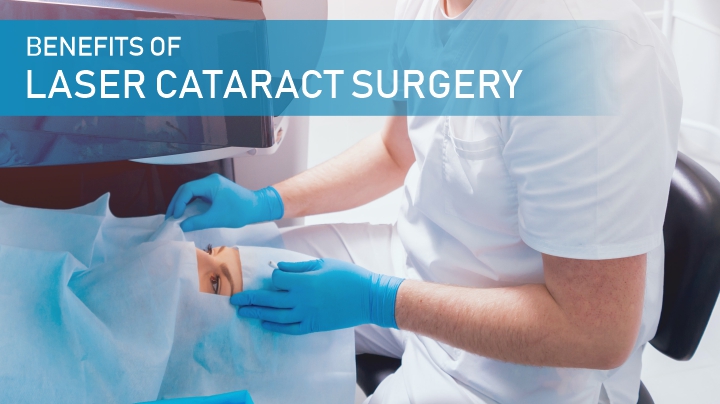
Benefits of Laser Cataract Surgery

Many people are suffering from eye diseases like cataract and they are constantly looking for best ways to get rid of it. Very few people opt for traditional cataract surgery which is not that great because it lacks precision. On the other hand, majority people choose laser cataract surgery which uses a computer-assisted laser and renders a highly accurate procedure to free your eyes from cataract and it has helped myriads of eye patients to reclaim their vision back.

What is Laser Cataract Surgery?

Laser cataract surgery is also known as Refractive Laser-Assisted Cataract Surgery (ReLACS). It is a modern surgical treatment for cataract that uses FemtoSecond laser technology which brings a whole new level of accuracy in the procedure as compared to the old times when the cataract was being treated with the help of hand-held equipment. Laser cataract surgery has mainly 3 steps and those are-

  • The corneal incision
  • The anterior capsulotomy
  • Lens and cataract fragmentation

Now, let us see what role the aforementioned steps play during the process of laser cataract surgery

Corneal Incision: During regular cataract surgery, the surgeon utilizes hand-held medical equipment which has a diamond or metal blade and is used to make an incision in the exact area where the sclera meets the cornea. This incision permits the surgeon to enter the interior parts of the eye to crack up and remove the cataract.

A cataract clouds the eye lens and makes your vision blurry and generally happens behind the pupil. After that, the surgeon inserts an intraocular lens (IOL) to replace the cloudy lens which is causing blurry vision.

Anterior Capsulotomy: For your information, the natural eye lens is enclosed by a clear and very thin capsule. During laser cataract surgery the anterior part of the capsule is detached into a step known as capsulotomy. This procedure enables the surgeon to garner direct access to the lens which is affected by cataract.

It is of pivotal importance that the remaining part of the lens capsule which was intact in the eye must not be damaged during the surgery because it should hold the implanted lens for the rest of the life. Various studies and researches have shown that the capsulotomies performed with the help of a laser have more reproducibility and accuracy.

Lens and cataract fragmentation: Once the capsulotomy has been performed, the surgeon can access the cataract to remove it. In traditional cataract surgery, during the phacoemulsification process, there is a high chance that the ultrasound energy can build up heat and damage the incision and can negatively affect the outcome by inducing astigmatism.

But when we are dealing with laser cataract surgery, there are no chances of error. The laser softens the cataract as it tears up. By breaking the cataract into much softer and smaller pieces, a lesser amount of energy would be required to remove the cataract which in turn, boosts the overall accuracy of the entire process.

Should You Consider Laser Cataract Surgery?

Laser cataract surgery is a safe method for the treatment of cataract and has several other advantages, but this type of surgery is not for everyone. Why? It is because the user of a laser and the utilization of premium lenses are not covered by most of the insurance agencies and a patient will have to burn a hole in their pocket for the treatment.

So, if money is not your concern and you want the best possible treatment for your cataract then you must go for laser cataract surgery. It is safer and has lesser post-surgery care and maintenance.

Benefits of laser cataract surgery

Laser cataract surgery has myriads of advantages over traditional cataract surgery. Firstly, it is safer and requires lesser post-surgery care and maintenance. Apart from this, a patient has a better vision once the laser surgery has been performed. The accuracy of the laser assists a surgeon in giving people clearer vision faster, more consistently, and very often without glasses. The laser’s accuracy matters a lot when a surgeon wants to graft a multifocal lens which resolves close-up and distant vision or Toric lenses that has the capability to correct astigmatism.

Now, let us see the benefits of laser cataract surgery

Laser cataract surgery demands lesser energy: Researches say that the laser treatment requires 45% lesser ultrasound energy for achieving successful cataract removal and, during the procedure, the eye surgeons have to perform 45% fewer movements when compared with the traditional surgery. The laser pretreatment adds about five to seven minutes to the usual 10- to 15-minute cataract surgery.

Lesser cell damage: A survey tells us that no endothelial cells are damaged during the laser cataract surgery. This is really good because endothelial cells are the barometer of the eye-health as they preserve cornea’s clarity and are non-regenerative in nature. Another survey shows that during the standard treatment there is a huge loss of endothelial cells and it might range from 1 to 7%

Precision mapping: Before the surgical procedure starts, the laser cataract system allows a surgeon to create a 3D map of your eyes which helps in achieving exceptionally precise measurements for every step during the surgery.

Mild approach: The laser system is utilized to soften the cataract in the eyes, and it helps to break them into minute pieces which allow the scope for an easier and gentle way to remove the cataract. In traditional surgery, a surgeon used a hand-held surgical tool which has a metal or diamond blade.

Laser accuracy: During the first step of cataract surgery, a miniature opening is made with the help of a laser that holds the cataract together. For better accuracy, the laser makes the opening as circular as possible so that the new lens can be inserted without any hassle. For your information, the laser can be utilized to create impeccable incisions which can be used to correct astigmatism.

Now, we hope that you know what a laser cataract surgery is and what are its benefits for you. Laser cataract surgeries are safer and can be used to correct astigmatism as well. If you are having cataract then it will be a good option to visit an eye surgeon and get yourself treated as soon as possible.