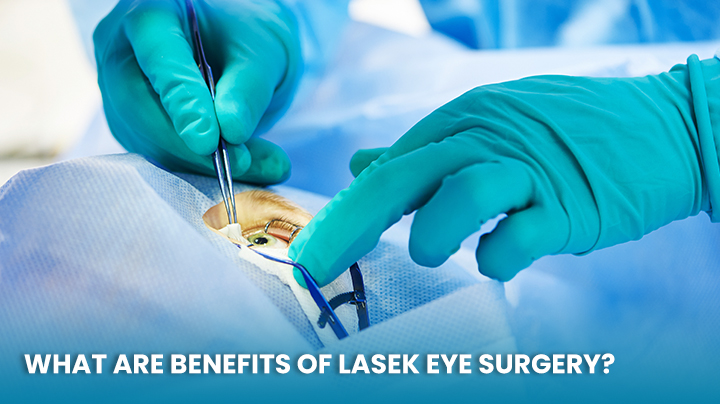
What are Benefits of LASEK Eye Surgery

What Are Benefits of LASEK Eye Surgery

Vision plays a significant role in life. It gives you a chance to live through various adventures and experience them with your own eyes. But, what if someday you find yourself struggling to perform daily tasks due to blurred vision? In such cases, you would often find yourself relying on corrective eyewear like glasses or contact lenses. However, it shouldn’t always be the only solution to the problem.

Laser epithelial keratomileusis (LASEK) helps with vision correction. It treats your eyes in the case of myopia, hyperopia, or astigmatism. It is one of the most effective and safe laser eye surgical procedures and branches out from Photorefractive keratectomy (PRK).

Today, you will learn more about LASEK and its benefits, and the differentiating points between LASEK and other surgical eye procedures.

What Is LASEK Eye Surgery?

If you want complete freedom from glasses or contact lenses, LASEK eye surgery can certainly help you in that regard. If you have nearsightedness (myopia), farsightedness (hyperopia), or astigmatism, you can opt for LASEK. Essentially, this surgical procedure combines the benefits of two other popular eye procedures – LASIK and PRK. LASEK eye surgery allows the light to fall on the eye with a better focus on the retina, giving you a clearer vision without glasses or contact lenses. Since it has plenty of advantages, most patients with vision problems choose LASEK, and more often than not, find themselves independent of corrective eyewear.

Before you understand the benefits of LASEK, you need to learn more about the procedure. In short, LASEK eye surgery uses several techniques, such as the application of alcohol for 30 seconds for detachment from the underlying tissue, to retain the much thin corneal surface layer of cells or the epithelium, which helps with the recovery of the cornea after the surgery. The exposed tissue during the procedure gets operated on with LASIK or PRK, thus benefiting you in every way.

Benefits of LASEK Eye Surgery

Much to everyone’s contentment concerning surgical eye procedures, LASEK eye surgery offers advantages that make you confident to follow through with it. Since cornea recovery remains vital in any given eye procedure, LASEK uses several methods to make sure it is smooth and quick. Considering LASEK eye surgery’s growing popularity, you must know why.

Therefore, the answer to your question lies below, and you can learn more about the benefits of LASEK eye surgery and how it can help with vision correction altogether.

  • You can avoid all the complications associated with cutting and reattaching the corneal flap, such as the case that remains with LASIK.
  • You will find LASEK laser eye surgery to lower the frequency of dry eyes, as is the case with LASIK eye surgery.

Comparison: LASEK, LASIK & ReLEx Smile Eye Surgery

Not unlike LASEK, LASIK and ReLEx SMILE surgery help correct vision problems. All of these eye procedures can potentially reduce the dependency on corrective eyewear like glasses and contact lenses. Moreover, they provide safety and effectiveness with relatively quick recovery times. Since you cannot predict or gauge the extent of eye damage, your ophthalmologist will help determine that and walk you through various options, establish feasible expectations, and eventually narrow down on the best-suited procedure for your eyes. The benefits and process of LASEK, LASIK, and ReLEx SMILE surgery can overlap and even have some distinguishing features the eye doctor’s job rather more critical.

Hence, you need to ask the right questions and get satisfactory answers before you go through with laser eye surgery. After all, your vision will remain one of the most vital aspects of your everyday life. So, to help you understand more about LASEK and other laser eye surgeries, you will find the advantages of all of these surgical eye procedures mentioned below.

LASEK Eye Surgery

:

  • Another form of laser eye surgery, LASEK, involves separating the epithelial part of the cornea and the stroma.
  • People with thin corneas can opt for LASEK eye surgery.
  • After LASEK eye surgery, the recovery time is lesser. It allows you to return to contact sports without distressing about the displacement of the corneal flap.
  • If you have dry eyes or corneal scarring, you can opt for LASEK eye surgery.
  • Some studies and researches suggest that 90% of people who undergo LASEK achieve 20/40 vision or better.

Read More: Benefits and Advantages of LASIK Eye Surgery

LASIK Eye Surgery

:

  • After LASIK, around 96% of patients get their desired vision level.
  • Numbing drops used during LASIK cause very little pain.
  • You will receive the desired results almost immediately or by the day after LASIK.
  • After LASIK eye surgery, you do not need bandages or stitches.
  • If vision changes due to age, you can get your vision adjusted even years after the surgery.
  • The dependency on glasses or contact lenses reduces considerably, and sometimes patients do need them at all.

Read More: Benefits and Advantages of LASIK Eye Surgery

ReLEx SMILE Surgery

:

  • The newest advancement in laser eye surgery, the ReLEx SMILE procedure, involves a femtosecond laser to make a disc-shaped cut inside the stroma.
  • ReLEx SMILE eye surgery is less invasive and requires the use of only one laser.
  • The ReLEx SMILE eye surgery can treat higher myopic refractive errors.
  • The risk of dry eyes lessens since fewer corneal nerves get severed in this procedure.

Read more: Benefits and Advantages of ReLEx SMILE Surgery

Conclusion

The need to treat vision problems at the earliest remains paramount. Moreover, if LASEK allows you to function without glasses or contact lenses, the more beneficial it is to you. It reduces the hassles in your routine life and allows you to see better, thus becoming a win-win situation for you. Apart from lesser complications and lowered frequency of dry eyes post-surgery, you can benefit plenty by opting for LASEK eye surgery. That said, you cannot understate the significance of a certified and qualified ophthalmologist. He/she can offer you their expertise and knowledge and address your concerns.

In that regard, if one day you opt for LASEK eye surgery or other laser eye surgeries in Pune, the doctors at Dada Laser Eye Institute can offer you their expertise with the best eye care services for people from all over the country. LASEK eye surgery, LASIK eye surgery, ReLEx SMILE surgery, bladeless cataract surgery, Glaucoma treatment, and more are only a few of the expert eye care services offered here. So, if you suffer from vision problems or need an eye checkup to make sure you have no vision problems, book an appointment with the expert ophthalmologists at Dada Laser Eye Institute, Pune. You can give us a call at (+91) 992 299 5549 or visit our website for further information.

What Is The Recovery Time For Lasik Eye Surgery

What Is The Recovery Time For LASIK Eye Surgery?

What Is Lasik Surgery?

LASIK eye surgery is a refractive eye procedure that corrects vision problems. These include Myopia (nearsightedness), Hyperopia (farsightedness), and Astigmatism. It helps reshape your cornea that helps bend light and create an image on the retina. If you have any refractive errors, with the use of LASIK, you can improve your vision and most times reduce your dependency on corrective eyewear like glasses and contact lenses.

Advancements in medical technology have helped LASIK become one of the most sought-after refractive eye surgery procedures, and making it one of the safest options. But, how long does it take post-surgery for recovery? That’s what you will learn about today apart from aftercare treatment.

Read more: LASIK Eye Surgery Benefits

Lasik Eye Surgery Recovery Process

Once your LASIK eye surgery gets completed, you will need to give a brief post-op eye exam. It will help your eye doctor determine if the surgery was successful, after which you can go home accompanied by family or a friend, as you cannot drive until after the follow-up visit. The follow-up consultation usually occurs the day after your surgery. Your ophthalmologist will determine if you’re fit to drive the car or not, depending on how well your eyes have recovered.

About a week after your LASIK surgery, you will need to meet with your doctor again to make sure your eyes are healing correctly. In this visit, your doctor can determine if more follow-up visits are necessary. While you can go back to work the day after your procedure, your doctor will recommend that you take a couple of days off to give your eyes some rest.

Moreover, you need to follow a few more aftercare measures to ensure the recovery process goes smoothly.

  • Refrain from strenuous exercise for at least a week after your surgery.
  • Avoid wearing eye makeup for a week.
  • Avoid using hair sprays, and do not allow chemical-based soaps to enter your eyes for at least a week.

If you adhere to these tips, you will find yourself working and performing your daily chores without corrective eyewear.

How Long Does It Take to Recover From Lasik Eye Surgery?

Although you will find yourself in the comfort of your home within no time, since the surgery takes only about 30 minutes, the healing process takes a few more hours or a couple of days. While the risks associated with LASIK do not cause any long-lasting issues, you might experience slight discomfort or itching in your eyes.

In such a case, the aftercare treatment comes handy as it prescribes eye drops and pain relievers (in case of any pain) other than some precautionary measures that you need to follow either way. Post-surgery, you will most likely take at least an hour or two before your vision becomes clear and for your eyes to heal.

Going for your follow-up appointments and not using cosmetics or allowing any chemical-based products to come near your eyes are some more ways you can quicken the recovery process.

Recovery Guidelines

First and foremost, if discomfort lasts for more than 4-5 days, you need to get your eyes checked immediately. In case of an infection, you do not want it to spread and delay the recovery. However, to avoid contamination and other factors that could hamper the healing process, you need to follow a few recovery guidelines that your doctor issues before he/she let you off. Here’s a look at some of them:

  1. Wear a protective eye shield for as long as your surgeon recommends.
  2. Avoid applying pressure on your eyes for at least a week after surgery.
  3. Avoid swimming for at least a week or more after surgery.
  4. Avoid high impact activities, like contact sports, for at least two weeks after surgery.

Although a significant improvement in your vision is a given, recovering from LASIK eye surgery is an ongoing process. Therefore, you need to go for regular eye checkups to ensure that your eyes are on the road to recovery. In the meantime, avoid putting a strain on your eyes and giving your eyes enough time to heal.

Read more: Precautions After LASIK Eye Surgery

Conclusion

In the end, you need your eyes to function at par to avoid running into daily obstacles. So, if you do end up getting LASIK eye surgery, ensure that you give your eyes the time and attention they need to recover and heal correctly. Your doctor will share a set of instructions to follow post-surgery that you need to adhere to for smooth recovery.

When it comes to the experience and expertise of ophthalmologists, Dada Laser Eye Institute will guide you. They will explain the risks involved, share their knowledge, and make sure you find it comfortable to go through with the vision correction process. You can get in touch with the experts and get proper consultation by giving us a call at <992 299 5549> or visit our website to fill out a form https://ladilaservision.com/.

 

What Is LASIK Eye Surgery - A Complete Guide

What Is LASIK Eye Surgery – A Complete Guide

What Is Lasik Surgery?

More often than not, your physical health receives preferential treatment when it comes to a healthy body. However, the health of your eyes gets seldom considered. Nowadays, due to the surge in screen time, most of you will either find yourselves wearing glasses or contact lenses due to vision problems.

When you find it difficult to see and need to rely on corrective eyewear, it’s time for you to opt for refractive eye surgery like Laser-Assisted In Situ Keratomileusis (LASIK). This type of surgery lowers your dependency on glasses or lenses and can improve your vision to a great extent.

In this article, you will learn more about LASIK and what it entails. It will give you an insight into the procedure, the risks involved, eligibility, and why and how it works!

What Is Lasik Eye Surgery Procedure?

Coming down to what the procedure entails, LASIK helps with vision correction. This eye surgery uses a laser to treat any vision problems caused due to refractive errors.

Much like the camera lens, the cornea helps focus light to create an image on your retina. However, sometimes the shape of your cornea and your eye aren’t in sync resulting in an out-of-focus or distorted image. These imperfections or blurred vision gets termed as refractive errors. You will find three types of refractive errors – Myopia (nearsightedness), Hyperopia (farsightedness), and Astigmatism.

If you suffer from any of these refractive errors, you might need to wear glasses or contact lenses to compensate for the blurry vision. However, with the help of LASIK, you can now surgically reshape your cornea and improve your vision, thus ending or reducing your dependency on corrective eyewear.

Read more: Detailed LASIK Eye Surgery Procedure

How Safe Is Lasik Eye Surgery?

When it comes to any surgical procedure, the first question that pops in your head is, “Is this safe?” Unlike any other surgery, you will find LASIK to have some risks. But, these risks rarely lead to loss of vision or other extreme conditions. If your health is at its prime and you find yourself eligible for the surgery, you will, however, have to follow some guidelines and precautionary measures before and after to make sure it works well for you.

Similarly, if you have underlying health issues, LASIK or any other eye surgery may not suit you and could lead to complications. Therefore, you must consult a qualified and certified ophthalmologist to consider your options and work your way forward. As you know, risks come with every invasive surgical procedure, which is why you need to weigh all the pros and cons. Make sure you do everything in your might to minimize the risks associated with LASIK if you wish to get rid of your glasses and contact lenses.

Am I A Suitable Candidate For Lasik Eye Surgery?

Much like other surgeries, your candidacy depends on your overall health. If you have any underlying health problems, it may pose a risk to your eligibility. You might never get considered as a suitable candidate.

Several factors make or break your candidacy for LASIK eye surgery, and you will find them mentioned below. First, you can take a look at the aspects that make you an ideal candidate for LASIK:

  • You should be 18 years or older (ideally, over 21 years old, as the vision most likely stops changing by then).
  • Your eye prescription should be consistent at least for a year.
  • Your refractive error should be treatable with LASIK.
  • Your corneas need to be thick enough and healthy, and your overall eye health should be good.
  • You should set realistic expectations about what LASIK can and cannot do for you.

While these factors make your case, the ones mentioned below might remove you from the list altogether. They include:

  • an unstable refractive error
  • severe dry eye
  • extreme levels of myopia, hyperopia, or astigmatism
  • thin corneas
  • cornea abrasions or disease
  • keratoconus (cone-shaped cornea)
  • a cataract affecting vision
  • advanced glaucoma
  • a history of eye infections
  • uncontrolled diabetes
  • pregnant or nursing women

Either of these factors could keep you from getting LASIK. Therefore, you need to discuss all these aspects with your eye doctor, get your eyes checked, and weigh the options before opting for this eye surgery.

Difference Between Lasik And Relex Smile Surgery? Which Is Better?

The decision of which eye surgery suits you the best lies with your ophthalmologist. Therefore, the only understanding that you as a patient need awareness about is the benefits both LASIK and ReLEx SMILE surgery offer. Primarily, the advancements in medical technology, the procedure, and the risks involved determine the differences between any surgical procedures, including these two.

Here’s a look at the benefits both of these procedures offer, wherein the differences lie. As mentioned earlier, only your eye doctor can determine the correct one for you. So, do not self-diagnose and opt for eye surgery as your vision depends on its efficacy.

Benefits of LASIK eye surgery:

  • It corrects vision, and around 96% of patients get their desired vision level.
  • It causes very little pain due to the use of numbing drops during the procedure.
  • You will get the desired results almost immediately or in a couple of days after the surgery.
  • You do not need to use bandages or stitches post-surgery.
  • If your vision changes due to age, you can get it adjusted even years after your LASIK surgery.
  • The dependency on your glasses or contact lenses reduces considerably, and sometimes you might not need them at all.

Benefits of ReLEx SMILE surgery:

  • Advancement in laser eye surgery with ReLEx SMILE surgery involves a femtosecond laser to make a disc-shaped cut inside the stroma.
  • It is less invasive and requires the use of only one laser as opposed to LASIK.
  • It can treat higher myopic refractive errors, unlike LASIK.
  • You have a lower risk of dry eyes since fewer corneal nerves get severed in this procedure.

As you can see, the difference between LASIK and ReLEx SMILE surgeries lies in their benefits. You can consult with your eye doctor and determine which one works well for your eyes.

Lasik Eye Surgery: Myths Vs Facts

Since the safety aspect deems critical, in the case of surgeries, you will find yourself in a cloud of myths that make their way into your mind as facts. Therefore, consulting your eye doctor becomes paramount in such a case. Today, you will find the most common myths surrounding LASIK debunked to get a clear picture.

Myths Facts
#1. LASIK is painful. It is relatively painless as numbing drops act as anesthesia during the procedure. You can, however, experience slight discomfort after the surgery for a few hours.
#2. Risks associated with LASIK are high. After approval by the FDA, LASIK is considered one of the safest eye surgeries to correct vision problems. The equipment and instruments used during the procedure cause little to no irritation or infection.
#3. Benefits of LASIK are not long-lasting. LASIK reshapes the cornea permanently to treat vision problems like nearsightedness, farsightedness, and astigmatism. Once the surgery gets performed, the effects cannot wear off unless your vision starts to decline as you age. However, with age, you can still get it adjusted with another small procedure.


Deciding to get LASIK is an important decision that needs due consideration. Therefore, getting a full understanding of the procedure and its benefits should take priority. Additionally, consulting a qualified eye doctor will help make your decision easier.

Choosing The Best Eye Hospital For Lasik Surgery In India

Your eyes allow you to function accurately without running into obstacles. Therefore, if you need to get your vision corrected with LASIK, choosing the right hospital or eye care institute becomes imperative.

The primary factors that can help you choose the best eye hospital for LASIK surgery in India are:

  • Quality of medical equipment and technology used for surgery
  • The infrastructure of the hospital or eye institute
  • Qualification and experience of doctors/ophthalmologists
  • Reviews and feedback for the doctors and the hospital
  • Hospital accreditation
  • Insurance procedure and its coverage

So, look for a hospital that has the latest medical technologies, state-of-the-art facilities and that maintains the highest level of hygiene. Moreover, if the doctor in-charge has rich experience in eye correction surgeries along with global certification and fellowship, it’s a win-win situation for you.

Choosing The Best Lasik Eye Surgeon

Other than the safety of LASIK, the doctor’s ability to perform this surgery should take precedence. If you find the ophthalmologist’s qualification to be satisfactory, along with the reviews, you can consult the said person. However, you should know that the final decision of going through with LASIK or any other eye surgery lies with you.

So, to choose the best LASIK eye surgeon, check for reviews and feedback, qualifications and certifications, experience, and association with various hospitals and clinics. It will help you determine whether he/she is best suited for advice or if you should look for someone else.

Benefits And Advantages Of Lasik Eye Surgery

If you have the chance to improve vision without the hassles of wearing glasses or contact lenses, you should opt for LASIK eye surgery. With this refractive surgery, you can achieve 20/25 vision or better. According to some studies, 8 out of 10 people that have undergone LASIK do not require corrective eyewear to function or perform daily tasks. However, the success depends on the extent of your refractive error and other such factors.

Nonetheless, some benefits and advantages of LASIK eye surgery make it a viable option for you. Especially if you have a low grade of nearsightedness. Here’s a look at some of them:

  • LASIK corrects vision, and around 96% of patients get their desired vision level after this surgical procedure.
  • Numbing drops used during LASIK eye surgery causes very little pain.
  • You will get the desired results almost immediately or a few days after the eye surgery.
  • After LASIK eye surgery, there’s no need for bandages or stitches.
  • If your vision changes due to age, you can get it adjusted even years after your LASIK surgery.
  • The dependency on glasses or contact lenses reduces considerably after LASIK eye surgery, and sometimes patients do need them at all.

Therefore, if you do not wish to wear glasses or contact lenses in the future, you can opt for LASIK and reap its benefits.

Precautions After Lasik Eye Surgery – After Care

While the procedure takes 30 minutes to complete, the aftercare or precautionary measures you need to abide by determining its success. You need to ensure that you understand the sensitivity involved and take every step to help with the recovery process.

LASIK Eye Surgery: Precautions & Aftercare

  • Do not take a shower or wash your hair until the day after the surgery.
  • Avoid showering with non-sterile water, and do not let it enter your eyes the first few days post-surgery.
  • Keep soap out of your eyes while showering, and avoid hair spray and shaving lotion for a few days.
  • Do not rub your eyes for at least a month after your surgery.
  • In case you need to use eye drops, use prescription eye drops.
  • Your eyes will likely be sensitive to light for a bit so, wear dark sunglasses.
  • Sun rays could cause scarring of the eyes, so wear sunglasses on bright mornings for at least a year.
  • Call your doctor immediately if you experience any unusual side effects.
  • Follow-up with your ophthalmologist to ensure you do not miss out on any vital precautionary measures.

Your recovery process after-surgery depends on how well you follow these precautionary measures and steps instructed by your eye doctor. So, if you opt for LASIK, remember to ask the right questions to your surgeon and take the plunge only when you’re ready.

What Is The Cost Of Lasik Surgery In India?

The cost of any surgery depends on several factors, and it’s no different with LASIK. Therefore, to determine the total expenses, you need to consider them before you opt for LASIK. Most eye surgeons provide you with a detailed cost analysis in the pre-patient counseling session. Apart from where you get the surgery done, other aspects that get covered in the total cost are:

  • Technology and infrastructure
  • The type of procedure
  • Location
  • Aftercare
  • Hospital size
  • Patient care

If you consider all these factors, the average estimate of LASIK eye surgery in India ranges between 25,000 INR – 45,000 INR.

Read more: What Is The Cost Of Lasik Surgery In India?

Faqs About LASIK Eye Surgery

When you need to get eye surgery, you have plenty of questions that plague your mind and the ones for which you want answers. Most of the queries revolve around the safety of the procedure and its efficacy. Here you will find the topmost commonly asked questions and their answers so you can get well-informed before you go ahead with it.

  1. How Safe is LASIK Eye Surgery?

LASIK is one of the safest eye correction surgeries that one can undergo to correct their vision. It uses laser light that is controlled by a computer and under the guidance of the doctor.

  1. How Long Does It Take to Recover After LASIK?

Most patients start seeing a day or so after the surgery. However, for some patients, the recovery time might vary. If your vision does not clear in 4-5 days, consult your doctor immediately.

  1. Is LASIK Eye Surgery Painful?

No, LASIK eye surgery is not painful as the doctor administers anesthetic, numbing eye drops before commencing the surgery. You might experience mild discomfort post-surgery for a day or so, after which your eyes should recover.

  1. How Does the LASIK Eye Procedure Work?

LASIK eye surgery uses laser light to reshape the cornea, thus removing any vision error, helping you see clearly without the help of contact lenses or glasses.

  1. Is There Any Lower and Upper Age Limit to Get LASIK Done?

While there isn’t an upper age limit to undergo LASIK eye surgery, the minimum age to get LASIK done is 18 years and above as your vision stops changing.

If you have further questions about LASIK, read: FAQs About LASIK Eye Surgery

CONCLUSION

LASIK is one of the safest refractive error correction procedures and offers you a chance to improve your vision without the help of glasses or contact lenses. By administering an anesthetic, the pain remains minimal, and the side effects or risks involved with the surgery aren’t extreme. However, you need to follow the post-operative care measures, which will help with your healing process, and you will quickly return to your regular daily routine within no time.

Dada Laser Eye Institute’s expert ophthalmologists guide you through the entire process, explain the risks involved, share their knowledge, and make sure you find it comfortable to go through with the vision correction process. You can get in touch with the experts and get proper consultation by giving us a call at <992 299 5549> or visit our website to fill out a form https://ladilaservision.com/.


HOW TO SELECT LENSES FOR CATARACT SURGERY IN INDIA

How to Select Lenses for Cataract Surgery in India?

What is a Lens?

As a commoner, when you hear about lenses, you think of those used as an alternative to eyeglasses. But, when it comes to eye lenses, their design is such that it both accepts and bends light. These particles of light then get pushed to the back of your eyes, where the brain converts them into images. However, when factors like age and underlying health issues come to the fore, your eye lens can get cloudy and blurred. Thus, calling for the need for corrective eyewear or surgery.

When it comes to cataract surgery, the ophthalmologist places another lens inside your eyes to sharpen the particles of light as they pass through. You will find most eye doctors using silicone or acrylic lenses for cataracts. They get coated with protective material to shield your eyes from the damage caused by harmful sun rays.

Today, you will learn more about the different lenses and the ones best suited for cataracts.

Best Lens for Your Cataract Surgery

How can you decide the best lens for you? Firstly, an expert opinion on the subject matters as it concerns your eyes and your vision. Secondly, with multiple options available, you can choose a lens that’s best-suited for your eyes. While your eye doctor may suggest the right kind of lens for you, the decision remains personal, and what you need from the eye surgery matters in this case.

You will come across four types of lenses used in cataract – monofocal, multifocal, accommodative, toric – designed to make your eyesight sharper and less blurred. Here, you can take a comprehensive look at all of them.

  1. Monofocal Lens – It is the most common lens used in cataracts. The primary purpose of the monofocal lens is to give you crisper, clearer vision at a predetermined distance range. Therefore, if you need to look closer or farther away from this set distance, you might need your eyeglasses.

In some cases, people who have opted for monofocal lenses can read, knit, or work on a computer without the help of glasses. However, when they need to watch things at a distance, they need to wear their glasses.

  1. Multifocal Lens – In your life, you will find some people who willingly wear glasses if the need arises. However, you will also find people opposed to the idea of depending on any corrective eyewear to help them see clearly. In the latter, the multifocal lens proves beneficial and has appeal too.

A multifocal lens has zones of focus. When your eyes get familiar with these lenses, the brain learns to select the clear-cut vision automatically. However, this lens has its challenges, and you need to consult your doctor to know if this is the right kind of lens for you.

  1. Accommodative Lens – If you’re uncomfortable wearing glasses or with the idea of using multifocal lenses, this is the perfect option for you. It moves or shifts in shape similar to your natural lenses and allows you to see things clearly, whether they’re near or far away.

However, some researchers suggest that eye exercises enhance the workability of accommodative lenses. So, before you opt for them, check with your doctor if you’re eligible.

  1. Toric Lens – In the case of astigmatism, these lenses will work wonders for you. Not unlike an accommodative lens, the toric lens changes shape. But, its design is such that it corrects your specific refractive error.

Some researches and studies suggested that a maximum percentage of people with toric lenses did not feel the need to wear glasses to see clearly at a distance, while others did not need reading glasses.

Conclusion

While the way cataracts get treated nowadays change with every innovation, the procedure remains the same. However, with new lenses to choose from, it gives the eye specialist a range of options that could work well for a particular patient. Whether you pick the lens or trust your ophthalmologist, select one that works well for you.

Remember only to reach out to the most advanced eye-care hospitals and clinics for your cataract. The experts at Dada Laser Eye Institute will guide you through the entire process. The doctors will explain the risks involved, share their knowledge, and make sure you find it comfortable to take the plunge and go through with a cataract. You can get in touch with the experts and get proper consultation by giving us a call at (+91) 992 299 5549 or visit our website.


WHAT IS THE COST OF LASIK SURGERY IN INDIA

What is The Cost of LASIK Eye Surgery in India?

What is Lasik Eye  Surgery?

When it comes to carrying out daily tasks or otherwise, you cannot compromise on your eyesight. So, in case of vision problems, you need to either wear corrective eyewear or get the surgery done to avoid any issues in the present or the future.

Therefore, you can opt for LASIK (Laser-Assisted In Situ Keratomileusis) eye surgery – a refractive eye procedure. It corrects vision problems like nearsightedness (myopia), farsightedness (hyperopia), or astigmatism. If you have blurry vision or suffer from a refractive error in your eyes, you can benefit from LASIK. It helps reshape the cornea for the light to focus on the retina in the back of your eye.

LASIK involves very little pain to none and does not need any bandages or stitches post-surgery. Moreover, your dependency on glasses or contact lenses reduces after getting this refractive surgery done. However, you need to be eligible and prepared for the surgery and the risks involved (if any).

Today, you will learn more about the cost of LASIK surgery in India and the factors affecting its price.

Factors Affecting the Cost of Lasik Surgery in India

Not unlike any other surgery, the cost of LASIK eye surgery in India depends on several factors. You can consider them before determining the total expenses. You will find aspects like the surgeon’s skills, the technology used for the surgery, and the test results holding significance.

If you do opt for LASIK shortly or sometime later, you will receive the cost analysis in the pre-surgery patient counseling session. It will depend on whichever center you decide to get the surgery done. However, here you can take a look at the cost determining factors in brief.

  1. Technology & Infrastructure – If the center is equipped with the latest eye-care technology and dotted with advanced infrastructure, it can affect the cost. The more recent and state-of-the-art equipment, the higher the overall price.
  2. Type of procedure – Even when you opt for LASIK, the type of surgical procedure also determines the cost. If the eye surgeon uses a femtosecond laser, it will cost you more than when he/she uses a microkeratome blade for the surgery.

Read more: How to Choose the Best LASIK Eye Surgeon?

  1. Location – If you live in tier-II or tier-III cities, you can get the surgery done at a lesser price due to the lower administrative costs. So, the location of where you want to get the surgery done also affects its cost.
  2. Aftercare – In case you opt for aftercare services post-surgery, the cost of the treatment will most likely increase.

Read more: Precautions After LASIK Eye Surgery – Post Operation Care

  1. Hospital size – You will find that reputed hospitals, with branches countrywide, might lower the cost due to the large scale operation. However, it lies at the hospital’s discretion.
  2. Patient care – The duration of the surgery and the after-treatment costs can get added to the patient care tab of the total expenses. Therefore, if you need to stay back at the hospital for more hours than expected, it adds to the costs.

How Much Does Laser Eye Surgery Cost in India?

If you consider all the factors mentioned above, in addition to the condition of your eyes, your eye surgeon can determine the total cost. Since it’s the matter of your eyes, getting the best possible treatment is a must. Therefore, you need to consider factors like technology, expertise, infrastructure, and others before surgery.

In India, the LASIK eye surgery cost may range anywhere between ₹25,000 – ₹45,000 on average. You will find some LASIK surgeons charge less if they do not have access to the latest technology or equipment to perform LASIK. Moreover, you need to consult with your doctor about the type of LASIK surgery you need. Depending on the condition of your eyes, your doctor will prescribe either Custom LASIK, Topography-linked LASIK, Bladeless LASIK, ReLEx Smile, or PRK, thus affecting the cost accordingly.

But, when it comes to your health, especially your eyes, you need to make sure you receive top-notch treatment. So, before you decide upon the doctor or the center from which you want to get LASIK done, you need to make sure all the boxes in your list get checked.

Conclusion

The primary benefit of LASIK eye surgery is that you get unclouded vision. Being a safe procedure becomes a bonus. Therefore, considering the benefits you will reap after you go through with the surgery, you can check with the hospital or eye care center concerning the cost. If you reach out to your eye doctor, you can get a comprehensive cost analysis. Several factors form the basis to determine the total expenses of LASIK. However, never compromise on the expertise and the technology and equipment used for the surgery. They are some of the most crucial factors for the success of your eye surgery.

When it comes to the experience and expertise of ophthalmologists, Dada Laser Eye Institute will guide you. They will explain the risks involved, share their knowledge, and make sure you find it comfortable to take the plunge and go through with the vision correction process. You can get in touch with the experts and get proper consultation by giving us a call at
(+91) 992 299 5549 or visit our website.