How To Take Care Of Your Eyes Daily

How To Take Care Of Eyes In The Elderly?

Senior Eye Care Tips

Wrinkles, creaky knees, and grey hair are not the only signs of aging. Consider the numerous age-related eye conditions that can affect you, such as cataracts, age-related macular degeneration (ARMD), and glaucoma. You should know: Although they are more common in people over 50 years, their appearance is not unavoidable.

Eyesight, like other physiological functions of the body, begins to deteriorate as a person ages. It is a natural phenomenon and a common problem with aging, exacerbated by today’s unhealthy lifestyle. Several medical conditions can hasten the deterioration of vision. Early detection and treatment of these conditions can make a significant difference. Maintaining good eyesight in old age requires a lot of consistent effort, but it’s all worth it when we consider the quality of life.

Senior eye care is something that everyone should think about as they get older. It’s no mystery that our eyesight deteriorates as we age, whether it’s hereditary or profoundly affected by our daily activities or environment. Maintaining a vibrant, active lifestyle necessitates keeping your vision sharp.

How To Take Care Of Eyes In The Elderly?

Eye problems can occur at any age but are more common in the elderly. Most eye conditions have a risk rate that rises after the age of 70 or 80. However, many of the eye conditions that develop due to aging are considered normal by many medical professionals. You can even compensate for it. Aging increases the risk of some sight-threatening eye conditions, which is why it is critical to be informed and to have regular eye exams.

As we get older, our vision deteriorates, and our risk of vision problems that can interfere with our lifestyle and independence rises. You will find glaucoma, cataracts, age-related macular degeneration (ARMD), and diabetic retinopathy to be frequent among the elderly. You can’t stop your eyes from aging, but you can slow the damage caused by aging by taking care of your eye health.

Here are a few tips to take care of eyes in the elderly:

1. Have your eyes checked regularly.

Even if you’re a healthy adult with no vision problems, start getting annual eye exams at the age of 40 and have your eye doctor look for signs of glaucoma and retinal damage. People over the age of 40 who have certain medical conditions that increase their risk of eye disorders, such as diabetes or vision problems, should see an eye care professional. Depending on your risk factors and the preliminary results of your exam, ask your eye specialist to recommend efficient screening periods to help maintain clear vision.

2. Put on some sunglasses.

UV (ultraviolet) rays from the sun can harm aging eyes in the same way they can hurt the skin. UV rays can cause cataracts and possibly hasten the progression of macular degeneration. Sunglasses with UV filters are the best way to protect your eyes from the sun. Any color lens will suffice as long as it has UV protection.

3. Put on a hat.

When you’re going to be outside for an extended period, wear a hat with a wide brim. Sunglasses can help, but a hat will provide additional protection. If you’re gardening, golfing, or playing tennis, you’ll want to keep the sun off your face and eyes to protect your skin from melanomas. Melanoma most commonly develops on the eyelid.

4. Savor the garden’s bounty.

Choose fruit and vegetable-rich diet. While definitive evidence is lacking, some studies suggest that adequate intake of the antioxidants – lutein and zeaxanthin – may help lower the risk of aging-related eye conditions like cataracts and macular degeneration. You will find lutein and zeaxanthin in yellow and orange pigmented fruits and vegetables such as corn, squash, carrots, and citrus fruits. You can also find them in dark green leafy vegetables such as kale and spinach.

5. Consume a multivitamin.

Vitamins A (beta-carotene), C and E, and zinc benefit eye health. When you select a multivitamin, make sure it meets all the requirements for your age and stage of life.

6. Quit smoking.

Smoking can contribute to eye diseases by decreasing blood flow to the eyes and increasing the number of toxic substances (such as tar and nicotine) that your eyes absorb. If you have a family history of diabetic retinopathy or macular degeneration, smoking can increase your risk.

7. Let some light in through the windows.

While reading or working in a dimly lit environment will not permanently harm your eyes, it may cause temporary eyestrain, which can lead to headaches and fatigue. Make sure your workspace is well-lit to protect your eyes.

8. Take a breather.

Taking frequent breaks from the computer screen or reading materials is another way to avoid eye strain. Look up or away for 10 seconds every 10 minutes to give your eyes a break. If you’re watching television, take a break by looking away every half hour or so.

9. Get enough sleep.

Overtiredness can aggravate eye strain. Your eyes, like the rest of your body, will be refreshed if you get enough sleep.

10. Do not disregard warning signs.

Many potentially serious vision problems can get treated by eye doctors if they are detected early enough. Consult your doctor if you have blurred or double vision, if your eyesight appears cloudy, if you have eye pain, or if you are bothered by light glare. All these symptoms indicate that you may be developing vision problems that you can get treated by your eye doctor.

There are numerous ways to practice positive senior eye care. Although aging is unavoidable, exercise, a healthy diet, and positive lifestyle changes can help to extend the life of your eyes.

Why Is Taking Care Of The Eyes Critical In The Elderly?

There are a few common eye problems that appear as a person ages. Dry eyes, glaucoma, cataracts, and vision loss are examples of these. During their golden years, the majority of people will experience at least one of these ocular conditions. The severity of these ocular ailments typically worsens throughout a person’s life.

Taking care of one’s eyes in old age is primarily a matter of awareness. The interventions and tools for maintaining a good vision are frequently beneficial, but they are not used optimally due to the inability to identify problems early. The first and most important solution is to have regular eye exams. Because of the irregularity of eye checkups, any corrections in visual acuity, and the resulting modification in glasses, are frequently ignored. Optometrists worldwide recommend having an eye exam at least once every two years, up to the age of 50. After that, you need to get an eye checkup done at least once a year.

The sooner your optometrist detects any symptoms, the easier it is to treat or prevent them. Maintaining good eyesight requires being vigilant about the eyes and any problems that may arise, such as reading difficulties, hazy vision, redness or soreness in or around the eyes, pain, or swelling.

What Are The Common Eye Problems Associated With Aging?

Age can cause changes in your vision and eyes. But there are things you can do to maintain lifelong eye health and overall health. The solution could be as simple as using brighter lights around the house to help prevent accidents caused by poor eyesight or as complex as seeing your doctor more frequently to screen for age-related diseases.

Presbyopia, glaucoma, dry eyes, age-related macular degeneration, cataracts, and temporal arteritis are common age-related eye problems. Maintaining regular eye doctor appointments is especially important if you have diabetes. Whether you have an age-related vision condition or not, there are simple things you can do to improve your vision and keep your eyes healthy. See your eye doctor for comprehensive eye exams regularly, and take extra precautions if you have diabetes or a family history of eye disease.

Summary

Lifestyle choices have a direct impact on vision. Eating a well-balanced diet can help with a variety of eye problems. Green leafy vegetables are well known for their eye-health benefits. Several studies have concluded that a diet high in omega-3 fatty acids and antioxidants can significantly reduce the risk of AMD and cataracts. Tobacco use has its links to an increased risk of AMD, uveitis, and cataracts, among other eye diseases. You should wear sunglasses when going outside to protect the eyes from harmful ultraviolet rays. Other lifestyle factors that you should follow to preserve your eyesight during old age include – regular exercise, adequate sleep, and a stress-free environment.

If you’re above 65 years of age, you will need to follow a schedule that allows you to keep eye-related problems at bay. However, if you or your loved ones do encounter an eye-related issue, remember only to reach out to the most advanced eye-care hospitals and clinics for the problem. The experts at Dada Laser Eye Institute will guide you through the eye problem and suggest the necessary steps for further treatment. The doctors explain the risks involved and share their knowledge about the issue before and after your treatment. You can contact our experts and get a consultation by dialing (+91) 992 299 5549 or visiting our website to fill out a form.

References:

https://www.aao.org/eye-health/tips-prevention/seniors-eye-health-tips

https://www.hopkinsmedicine.org/health/wellness-and-prevention/best-way-to-age-proof-your-vision

https://www.news-medical.net/health/Looking-After-Your-Eyes-During-Old-Age.aspx

https://www.nhs.uk/live-well/healthy-body/eye-health-tips-for-older-people/

https://www.agespace.org/health/health-elderly-illnesses/eyesight-health-tips-elderly

https://www.aoa.org/healthy-eyes/eye-health-for-life/senior-vision?sso=y
How To Take Care Of Your Eyes Daily

Eye Care Tips: How To Take Care Of Your Eyes Daily!

If you’re in your twenties or thirties, you probably don’t give much thought to your eye health. However, now is the time to act to preserve your vision. Blurred vision, halos, blind spots, and floaters are all usual eye problems. Blurred vision gets defined as a loss of sharpness of vision and the inability to see small details. These issues can get caused by damage to the eye, a medical condition such as aging or diabetes, or medication. The majority of vision problems are avoidable with simple healthy habits.

Your eyes are an essential part of your overall health. Most people rely on their eyes to see and understand their surroundings. However, because some eye diseases can result in vision loss, it is critical to identify and treat eye diseases as early as possible. You can get your eyes checked as often as your doctor recommends or whenever you notice any new vision problems. And, just as it is critical to keep your body healthy, you must also keep your eyes healthy.

Eye Care Tips

Every day, our eyes allow us to see the world. They assist us in experiencing all of life’s colors and seeing every single detail. However, we can sometimes take them for granted and stop caring for them, leading to eye problems or, worse, loss of vision. Everyone should make it a point to care for their eyes daily. It aids in ensuring that we do not have any vision problems. If you follow a daily eye care regimen, you will have healthy eyes and overall good health.

Eyeglasses, contact lenses, and corneal modification surgeries are only the beginning and end of vision care. There are numerous other things you can do to maximize and protect your current vision. While going to the eye doctor is an essential step, there are many things you can do daily to improve the health of your eyes.

How to Take Care of Your Eyes Daily?

Your eyes are the windows through which you see the world. That is why it is critical to look after them. Wrinkles, redness, dryness, puffiness, and dark circles can get caused by your lifestyle choices and everyday stress. It can also cause grave problems and result in vision loss. You can follow a few simple daily habits to reduce the likelihood of eye problems and disorders. Continue reading to learn about the best natural eye care tips for your eyes.

Here are a few tips to take care of your eyes daily.

  1. Eat a healthy, balanced diet

Fruits and vegetables, particularly deep yellow and green leafy vegetables, should be abundant in your diet. Consuming omega-3 fatty acid-rich fish such as salmon, tuna, and halibut can also benefit your eyes.

  1. Maintain a healthy weight

Obesity or being overweight can increase your chances of developing diabetes. Diabetes increases your chances of developing diabetic retinopathy or glaucoma.

  1. Exercise regularly

Exercise may aid in the prevention or management of diabetes, high blood pressure, and high cholesterol. These diseases can cause vision or eye problems. So, if you exercise regularly for 30 minutes a day, you can reduce your chances of developing these eye and vision problems.

  1. Wear protective eyewear

To avoid eye injuries, wear eye protection. If you’re participating in sports, working in jobs such as factory work and construction, and performing home repairs or projects, it deems necessary.

  1. Wear sunglasses

Sun exposure can harm your eyes and increase your chances of developing cataracts and age-related macular degeneration. Wear sunglasses that block out 99 to 100 percent of UV-A and UV-B radiation to protect your eyes.

  1. Avoid smoking altogether

Cigarette smoking raises the risk of eye diseases like cataracts and macular degeneration. Tobacco smoke, including second-hand smoke, causes dry eyes as well. Smoking can also increase your risk of cardiovascular disease, indirectly impacting your eye health. So, quit smoking altogether if you want to maintain your eye health.

  1. Learn your family medical history

Many eye diseases are inherited. If a close family member has macular degeneration, you have a much higher chance of developing it as well. If you have a family member with glaucoma, your risk is four to nine times higher than the average. Inquire about the eye conditions of family members. It can assist you and your ophthalmologist in detecting conditions before they manifest. Early detection and treatment can aid in the prevention of vision loss.

  1. Check for other risk factors

Diabetes and high blood pressure, for example, can have an impact on your vision if left untreated. Diabetic eye disease, for example, is one of the most common causes of blindness. Pay close attention to your doctor’s instructions and attend all regular medical appointments.

  1. Prevent eye infections if you wear contact lenses

Check that you are washing your hands, properly storing your contacts, and using a cleaning solution to disinfect them. Sleeping, showering and swimming while wearing contact lenses increases your chances of developing a potentially blinding eye infection. If you experience redness, changes in vision, or pain while wearing your lenses, stop immediately and contact your ophthalmologist.

  1. Rest your eyes every day

If you spend a lot of time on a computer, you may forget to blink, and your eyes may become tired. Try the 20-20-20 rule to reduce eye strain: every 20 minutes, look away about 20 feet in front of you for 20 seconds.

  1. Minimize eye strain at work

If you work in an office, sit at least an arm’s length away from the computer and follow the 20–20–20 rule to give your eyes a break throughout the day. If you work in construction, with chemicals, or enjoy home improvement projects, wear protective goggles. Wearing proper eye protection can prevent more than 90% of eye injuries.

  1. Avoid sports injuries

Without proper eye protection, sports involving a ball or a racquet can result in eye injuries. Wearing eye protection, glasses, or a helmet with a safety visor is the best way to avoid sports-related eye injuries.

  1. Avoid sharing eye makeup

After three months, discard your eye makeup and replace it with new products. Instead of using eyeliners close to your eye, you can apply them outside the lash line. Remove all of your makeup before going to bed. Consult an ophthalmologist if your eyes have an unusual reaction to makeup like persistent pain or redness.

  1. Pay close attention to vision changes if you’re above 65 years of age

You may notice blurry close-up vision around the age of 40. It is known as presbyopia, and it is usual. You might need reading glasses. Blurry vision can sometimes be an indication of a more serious eye condition, such as macular degeneration. Keep an eye out for worsening symptoms and schedule regular eye exams with an ophthalmologist. If you use medications, such as prescription eye drops, make sure to follow the instructions precisely. If you are having difficulty doing so, consult your doctor.

  1. Get your eyes screened during pregnancy

Usual eye changes, such as blurry vision or dry eyes, may occur. Consult your doctor if these symptoms persist after you become a new mother. If you have diabetes and are pregnant, you face additional risks and should have your eyes screened early in the pregnancy.

If you follow these eye care tips, you can maintain your eye health to the best of your abilities. Additionally, getting your eyes tested regularly can help you detect any eye diseases or infections early on, thus assisting with its treatment.

Summary

In general, treating eyestrain entails making changes to your daily habits or environment. Some people may require treatment for an undiagnosed eye condition. Wearing glasses your eye doctor prescribed for specific activities, such as computer use or reading, can help reduce eyestrain in some people. Your doctor may advise you to take regular eye breaks to help your eyes focus at various distances.

We cannot correct our vision without proper guidance and professional assistance, and there’s no quick fix for vision problems. You can, however, help your eyesight naturally and on your own by using tools such as good nutrition and diet. As always, consult with your eye doctor.

If you follow a schedule that allows you to eat healthily, sleep well, and keep your overall health in check, you can avoid any eye-related problems interfere in your daily life. However, if you or your loved ones do encounter an eye-related issue, remember only to reach out to the most advanced eye-care hospitals and clinics for the problem. The experts at Dada Laser Eye Institute will guide you through the eye problem and suggest the necessary steps for further treatment. The doctors explain the risks involved and share their knowledge about the issue before and after your treatment. You can contact our experts and get a consultation by dialing (+91) 992 299 5549 or visiting our website to fill out a form.

References:

https://medlineplus.gov/eyecare.html

https://www.urmc.rochester.edu/encyclopedia/content.aspx?contenttypeid=1&contentid=1874

https://www.aao.org/eye-health/tips-prevention/healthy-lifestyle-now-good-vision-later

https://www.cdc.gov/media/matte/2012/08-healthy-vision.pdf?cid=2012_08_healthy_vision

https://www.nei.nih.gov/learn-about-eye-health/healthy-vision/keep-your-eyes-healthy

Ocular Side-Effects Of Online Classes And Work From Home

Ocular Side-Effects Of Online Classes And Work From Home

Because of virtual education, work from home, video conferences, online entertainment, and video chatting with friends and family, the Covid-related pandemic has resulted in a significant increase in our screen time. The duration of time spent by an individual in activities that involve peering at a digital screen gets referred to as “screen time.” This pandemic has spawned a new pandemic of eye-related problems.

In the light of recent events, all of us have found ourselves confined indoors to maintain social distance. Hence, digital devices have become an essential part of our daily lives. According to reports, online entertainment services have reported an 82% increase in daily screen time. Few studies have suggested that children who attend online classes may have up to a 100 percent increase in screen time.

Computer vision syndrome (CVS) refers to the complex eye problems occurring during or after prolonged use of digital devices. Eye strain from extended screen use can cause ocular health problems and physical discomfort, such as tearing, tired eyes, burning sensations, headaches, blurred vision, redness, squinting, double vision, dryness, or foreign body sensations in the eyes. Secondary issues include stiff neck, backache, vertigo, and general fatigue. The most important thing today to treat or prevent digital eye strain is to develop a good screen schedule. In this article, you will learn more about the ocular side effects of increased screen time.

Ocular Side-Effects Of Online Classes And Work From Home

It is commendable that schools, educational institutions, and teachers are taking new initiatives to ensure that children do not suffer academically due to the pandemic. But it is also critical that they consider the children’s vision needs, educate them about proper screen use, and incorporate eye health strategies that will also protect the children while they benefit from online education.

Online working and lessons have aided in keeping the economy and businesses operating, educational classes not being squandered, medical consultations getting provided, board room conferences getting held, and decisions getting made on a national and global scale. However, just as having too much of something isn’t a good thing, too much screen time isn’t a good thing. We should teach everyone to balance it out so that our health, financial, and social well-being remain customary.

To understand why you need to keep a healthy screen time, here’s a list of ocular side effects of online classes and work from home.

1. Eye Strain

The most common eye problem is eye strain, caused by reading and computer use that today’s work and learn from home demands, usually for long periods and frequently in less-than-ideal lighting and ergonomic environments. Eye strain can cause dry, watery, itchy, red, or irritated eyes. Other symptoms of eye strain include a burning sensation, blurry vision, light sensitivity, and difficulty focusing. Headaches, neck, shoulder, back pain, sleep problems, and general fatigue accompany these symptoms.

If you already have minor, uncorrected vision problems, the situation gets exacerbated. Even those who wear glasses or contacts may tilt their heads or lean toward the screen to see it.

2. Computer Vision Syndrome (CVS)

Digital eye strain is another term for it. It gets defined as a collection of eye and vision problems caused due to prolonged computer, tablet, e-reader, and smartphone use.

A comprehensive eye examination gets used to diagnose computer vision syndrome. Treatment may include computer-specific glasses, vision therapy/eye exercises, and modifying how you view the screen. Adjusting the computer angle, seating position, lighting, adding an anti-glare screen filter, and taking frequent blinking and rest breaks are some examples through which you can aid your eyes.

3. Eye Infections

Bacterial, viral, and parasitic infections are another vital eye concern in online classes and work-from-home scenarios. Conjunctivitis, also known as the Pink Eye, occurs when the infection affects the surface of your eye and the inner surface of your eyelids as well. The eyes become red, swollen, inflamed, and sore, and they may discharge.

Viral and bacterial conjunctivitis remains highly contagious and can get transmitted through close personal contact, through the air by coughing and sneezing, or by touching an object or surface which has germs on it and then touching your eyes. (The third type of conjunctivitis, allergic conjunctivitis, is not contagious.)

4. Blurry Vision

Blurry vision can get categorized as one of the symptoms of eye strain. If you continuously sit in front of a screen for work or online classes, it is possible that after a while, your vision becomes blurry. To avoid it, you can adopt the 20-20-20 method, where you opt for a break after every 20 minutes for about 20 seconds and look further away at something 20 feet away from you. It will relax your eye muscles and increase blood circulation to your eyes, neck, and back. It will even solve your blurry vision problem if you do it regularly.

5. Minimized Focus

Due to the unscheduled long working hours, you may end up working more, but it can lead to a lack of concentration and focus and decreased work output. It can seriously hamper your productivity and cause anguish. Moreover, the effects these long work hours have on your eye health can get drastic. Therefore, you need to cut down on those long hours and work effectively to ensure your overall output does not get affected. It will help keep your eye health in check as well as your work life going smoothly.

Summary

Though the current generation is fortunate to have these connecting devices and technologies at their disposal, they must also be wise enough to use them sensibly and not as slaves. It is the responsibility of the parents to give clear instructions about the screen time duration and follow them. You, as parents, can use parental controls and use this lockdown to encourage communication and build a healthy relationship between you and your children.

On the other hand, if your work from home keeps you locked in front of the screen all day, you need to break the habit. It will allow you to take a break from screen time and spend quality time with your close ones. Moreover, it will help you keep your ocular health in check and avoid any aggravating side effects of increased digital screen time.

If you follow a strict screen schedule, you can keep eye-related problems at bay. However, if you or your child do encounter an eye-related issue, remember only to reach out to the most advanced eye-care hospitals and clinics for the problem. The experts at Dada Laser Eye Institute will guide you through the eye problem and suggest the necessary steps for further treatment. The doctors explain the risks involved and share their knowledge about the issue before and after your treatment. You can contact our experts and get a consultation by dialing <Number> or visiting our website to fill out a form <Link>.

How To Protect Your Child’s Eyes During Online Classes

How To Protect Your Child’s Eyes During Online Classes?

As countries globally continue to unite in their fight against the highly infectious contagion, there has been a massive shift in work culture and educational institution operations globally. Students and teachers have moved online to continue their education, so classrooms have become virtual. The abrupt move to screen-based learning for children, on the other hand, is not exactly good news for parents, who have long struggled to combat excessive screen time for young children.

Children forcefully need to spend long hours in front of a screen since educational institutions began to operate digitally. If the necessary steps do not get taken promptly, this may have an impact on their vision. You must be very vigilant and active in managing your child’s screen time. Today, you will learn how to perform this daunting task and protect your child’s eyes during online classes.

Take Care Of Your Child’s Vision During Online Classes

As your children begin the virtual school year, you must consider their physical health when it comes to online classes, particularly their vision. While not a new issue, eye strain has become more prevalent due to the COVID-19 pandemic and the shift from in-person to online classrooms. You and your children may end up spending hours staring at a computer screen with few breaks in between, which can be excruciating if you do not know how to manage it. More time spent in front of screens for your kids, whether for school or entertainment, can cause eye strain, headaches, and even hearing loss. Fortunately, there are a few easy ways to keep your child’s eyes and ears safe while learning online.

Here are ten tips to take care of your child’s vision during online classes.

1. Minimize Display Glare

Position the laptop screen to avoid glare if possible; for example, try to angle it away from the window. Alternatively, if you have fluorescent lights above you, you may discover that they are causing overhead glare. In those cases, replacing the bulbs with a desk lamp can help to reduce the effect. Just make sure to tilt your desk lamp in a way that reduces glare as well. Alternatively, an anti-glare/matte screen protector can assist you in banishing glare to a distant land.

2. Magnify

Fit the pages your child needs to see to the screen by zooming in on them. Use a second monitor if possible to spread out the pages they need to view. All of these adjustments can help you reduce the strain on their eyes.

3. Check Your Child’s Eyeglasses Prescription

If you believe your child’s prescription is no longer adequate, you should get a new one and wear glasses to avoid blurry vision and headaches. If it helps, see if you should (and can) get eye drops, which are known to help replenish the moisture your eyes require.

4. Adjust Screen Display

Check that your screen’s luminosity and contrast are in the Goldilocks zone. If the white background on your screen resembles a light source, it is too bright; otherwise, it is too dim. When the contrast between the text and the backdrop is stark, your eyes will strain (dark text on light is a safe bet).

5. Follow the 20-20-20 Rule

Every 20 minutes, take a 20-second break from screen use and focus on something 20 feet (6 meters) away for 20 seconds. Consider affixing a poster of your child’s favorite idol or cartoon to a distant wall as an added incentive.

6. Mind the Posture

To begin, make sure your child does not hold the phone too close to his eyes, as this can cause strain and fatigue of the eye muscles. When using a laptop or a desktop computer, make sure the monitor is at eye level and prop it up with books.

7. Make Sure they Blink Regularly

It is not only vital to take regular breaks according to the 20/20/20 method (take a 20-second break from the digital device every 20 minutes and look at something 20 feet away), but it is also essential that your children blink frequently. To prevent itchy, dry eyes, teach them to slowly open and close their eyes at least ten times every 30 minutes. Also, you can remind your children to blink whenever they are engrossed in a gadget.

8. Limit “Entertainment” Screen Time

Too much screen time is harmful to your brain! Make it a point for your children to spend 30-60 minutes outside each day. Natural light is essential for healthy eyes because it slows the progression of myopia (nearsightedness).

9. Give Your Kids Healthy Meals

What you eat has a massive impact on how healthy your eyes are. Incorporating fish, vegetables, nuts, seeds, and, of course, water into your child’s diet will help keep their eyes healthy! A diet like this provides you with the variety of nutrients you need to keep your eyes healthy.

10. Make Sure they Get Enough Sleep

One of the most important ways for your child’s eyes to get the rest they need is to close them and remove them from light sources. As a result, ensure that your child gets at least 8-9 hours of uninterrupted sleep each night.

These essential tips will ensure that your child’s eyes stay protected, despite the increased screen time due to online classes.

Summary

Let us all agree. COVID-19 has changed our lives in unimaginable ways. And, the young population is dealing with significant changes in their world, that of how they study. The new academic year has begun. And, in India and around the world, the indefinite closure of primary educational institutions and higher-level universities has shifted knowledge transfer and acquisition away from traditional classroom settings and toward entirely virtual gatherings.

Aside from these tips, students should try to sit in an ergonomic position that reduces eye strain. An ergonomic position requires them to sit with their feet flat on the floor, shoulders relaxed, lower back supported, and arms at a right angle so that forearms rest in a straight line on the keyboard.

The eyes are responsible for sight, thus playing an essential role in all living systems and is a priceless gift to humanity. It is therefore critical to begin caring for your eyes at a young age. It helps maintain optimal vision, especially in the current challenging circumstances of lockdown and continuous online courses.

However, if your child does encounter an eye-related issue, remember only to reach out to the most advanced eye-care hospitals and clinics for the problem. The experts at Dada Laser Eye Institute will guide you through the eye problem and suggest the necessary steps for further treatment. The doctors explain the risks involved and share their knowledge about the issue before and after your treatment. You can contact our experts and get a consultation by dialing (+91) 992 299 5549 or you can fill out an online contact form.

Frequently Asked Question - FAQs About Glaucoma

Frequently Asked Question (FAQs) About Glaucoma

Glaucoma refers to a group of eye diseases that cause damage to the optic nerve (the bundle of nerve fibers that transmits information from the eye to the brain), resulting in vision loss and possibly blindness. Optic nerve damage is most commonly associated with high eye pressure; however, it can occur with normal or even lower than normal eye pressure.

People with a family history of glaucoma, high blood pressure, or high blood sugar levels may be at a higher risk of developing the disease. Adjusting to life with glaucoma can be difficult, as it is with any illness or medical condition. Glaucoma, on the other hand, does not have to take over your life. As with any medical diagnosis, if you get diagnosed with glaucoma, it may raise several concerns.

In this article, you will get answers you seek to questions in your mind regarding glaucoma and your overall eyesight.

What Is Glaucoma?

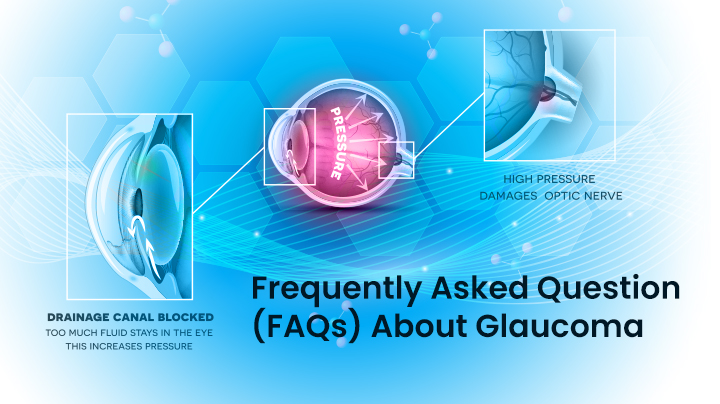
Glaucoma is a broad term that encompasses a range of eye disorders that cause damage to the optic nerve. It is the most common type of optic nerve damage that results in vision loss. In most cases, fluid accumulates in the front of the eye. This extra fluid puts pressure on the eyes, gradually causing optic nerve damage. It is known as intraocular pressure (IOP), also known as eye pressure. Some people with normal eye pressure develop glaucoma. Glaucoma can cause severe and lasting loss of vision and blindness if left unchecked or poorly controlled.

Glaucoma is a common age-related eye condition. It is the second leading cause of blindness in the world, after cataracts. Glaucoma can affect people of all races and genders, but the risk increases as one get older. African Americans and Latinos are much more likely than other races to develop glaucoma, and they catch the disease at a younger age. Asian and Inuit populations are also predisposed to a type of glaucoma known as angle-closure glaucoma. People who have diabetes are twice as likely to develop glaucoma.

Now let’s get to the questions you may have on glaucoma and get some answers to them.

Frequently Asked Question (FAQs) About Glaucoma

You will have achieved your goal when you recognize that the more people are aware of glaucoma, the better equipped they will be to find treatment for this condition. As a result, with the answers to frequently asked questions provided below, you can find the assistance you require to preserve your vision.

  1. How common is glaucoma?

Glaucoma remains a common eye problem, which affects people over a certain age. Studies suggest that over three million Americans get diagnosed with glaucoma. On the global scale, glaucoma finds itself second, after cataract, to be the leading cause of blindness or vision loss.

  1. Who might get glaucoma?

Glaucoma can affect people of all races and genders, but the risk rises with age. African Americans and Latinos remain far more likely than other races to develop glaucoma, and they can acquire it sooner than others. Angle-closure glaucoma is a type of glaucoma that affects Asian and Inuit populations. People with diabetes are twice as likely as non-diabetics to develop glaucoma.

  1. What are the different types of glaucoma?

There are two main types of glaucoma – open-angle and closed-angle – that affect most people. However, other types of glaucoma include normal-tension glaucoma and congenital glaucoma. The causes may differ, and therefore the treatment method may vary as well.

Read more: What Is Glaucoma? Causes, Symptoms, Treatment, Surgery & Prevention


  1. How does glaucoma damage my eyes?

Glaucoma is harmful to vision because it damages the optic nerve. Everything you see gets transmitted to the brain via the optic nerve. Any damage to it reduces the quality and quantity of information your brain receives, resulting in vision loss.

  1. What are the stages of glaucoma?

The different stages of glaucoma determine the severity of the condition, and the diagnosis and treatment get administered accordingly. Primarily, there are three stages of glaucoma – mild or early-stage glaucoma, moderate-stage glaucoma, and severe-stage glaucoma.

  1. Who is at risk of glaucoma?

Glaucoma is the most common cause of blindness in African Americans and Hispanics. African Americans have three times the rate of glaucoma as Caucasians and four times the rate of blindness. Glaucoma is fifteen times more likely to cause blindness in African Americans than Caucasians between 45 and 64 years. People over the age of 60 are at a higher risk of developing glaucoma than those under 60 years.

  1. How do eye doctors check for glaucoma?

Simple eye pressure tests and a microscopic examination will usually alert your doctor to any problems that may indicate glaucoma. If glaucoma is suspected, a nerve fiber analyzer may get used to determine whether the optic nerve has been damaged, as well as a visual field test to determine the amount of peripheral vision loss.

  1. How do eye doctors treat glaucoma?

There are several effective glaucoma treatments available that can slow the progression and damage to the optic nerve. Prescription medications or eye drops are among the treatments available. In some cases, you may require Laser Trabeculoplasty to open drainage holes in the eye, allowing fluid to flow more freely and potentially eliminating the need for daily eye drops.

  1. How to treat glaucoma with medicines?

Eye drops and, in rare cases, pills are the most commonly used treatments for glaucoma. Eye drops get classified into several types, but all get used to either reduce the amount of fluid (aqueous humor) in the eye or improve its outward flow. Doctors will sometimes prescribe a combination of eye drops. Based on the individual case of glaucoma, medical history, and current medication regimen, a doctor can determine which medications are best suited for a patient.

  1. How to treat glaucoma with laser surgery?

Although laser surgery can help control glaucoma symptoms, no treatments are currently available to cure the disease. Several laser surgery techniques can aid in draining fluid from the eyes or reduce the amount of fluid produced. These techniques help to maintain normal eye pressure and reduce the risk of further optic nerve damage.

Read More: What Are The Causes Of Glaucoma?

  1. How to treat glaucoma with surgery?

If medications are ineffective or the patient is unable to tolerate them, a doctor may recommend surgery. The goal of surgery is usually to reduce the pressure inside the eye. Trabeculoplasty, filtering surgery, and drainage implants are all possible interventions.

  1. How to live with glaucoma?

When you are diagnosed with glaucoma, you might face lifelong treatment, regular checkups, and the possibility of progressive vision loss. Meeting and talking with other people who have glaucoma can be very beneficial, and there are many online support groups and resources available. Find out about local groups and meeting times by contacting hospitals and eye care centers in your area.

  1. How to take eye drop medications?

Prescription eye drops are the most commonly used treatment for glaucoma. It reduces the pressure in your eye and helps to protect your optic nerve. They cannot cure glaucoma or reverse vision loss, but they can prevent it from worsening. If your doctor prescribes eye drops, you must use them daily. Depending on the medication, you may need to take it once, twice, or up to four times per day.

  1. Can glaucoma be cured?

Glaucoma is incurable, and you cannot restore lost vision. It is possible to slow or stop further vision loss with medication, laser treatment, and surgery. Because open-angle glaucoma cannot get cured, it must get monitored for the rest of one’s life. The first step toward preserving your vision is a diagnosis.

  1. What is the latest treatment for glaucoma?

There are numerous glaucoma surgery options available. However, only use one if your doctor recommends it. Your eye doctor or ophthalmologist can usually treat glaucoma with prescribed eye drops and medication.

Read More: What Is Glaucoma? Diagnosis And Treatment Options

  1. How can glaucoma be treated permanently?

While there is no permanent cure for glaucoma, your eye doctor can treat its symptoms and make sure the condition does not worsen. If your glaucoma condition gets detected early, the treatment prescribed by your doctor can slow down its progression.

  1. Can glaucoma be cured if caught early?

In general, you can avoid glaucoma-related blindness with early detection. Patients with glaucoma may go undiagnosed because they exhibit few to no symptoms. As a result, if detected and treated early, your eye doctor may be able to prevent permanent vision loss and blindness.

  1. Is there hope for glaucoma patients?

Early detection and treatment remain vital for patients with glaucoma. If your eye doctor can diagnose and treat your glaucoma early, they can prevent its progression and avoid blindness or vision loss altogether. So, yes, there is hope for glaucoma patients. Remember, regular eye checkups can help you detect any eye-related condition.

  1. How can I lower my eye pressure fast?

Your eye doctor may prescribe eye drops to lower your eye pressure quickly. However, if you want your eyes to remain healthy over a longer time, you need to follow a few natural methods. You can start by eating a wholesome diet, regular exercise, staying hydrated, and reducing your screen time to ensure your eyes have normal pressure.

  1. How long does it take to go blind from glaucoma?

Fortunately, for the vast majority of patients, the answer is no. Blindness does occur due to glaucoma, but it is a relatively rare occurrence in approximately 5% of glaucoma patients. However, vision impairment is more common, affecting around 10% of patients. The vast majority of glaucoma patients will get stabilized with proper treatment and follow-up. Working with your doctor to manage your glaucoma will result in a positive outcome.

  1. What foods to avoid if you have glaucoma?

A high trans fatty acid diet can cause damage to the optic nerve. To avoid worsening your glaucoma, avoid foods such as cookies, cakes, and donuts, as well as fried items such as French fries and stick margarine.

  1. What should I avoid if I have glaucoma?

Glaucoma is a silent thief of sight. The symptoms may not appear before the disease’s effects are felt. Regular eye exams are essential for detecting and controlling glaucoma. However, there are some things you can do to reduce the onset and impacts of glaucoma, such as limiting your intake of trans fat, saturated fat, caffeine, and simple carbohydrates.

Considering the questions and concerns you may have regarding glaucoma, this article has tried to address as many as possible. You can take this knowledge as a way to get your eyes checked regularly and seek treatment at the earliest.

Conclusion

Glaucoma is a common eye condition that affects people as they age. It occurs when the fluid does not drain from your eyes, increasing eye pressure and the risk of optic nerve damage. In the early stages of glaucoma, you may not find any symptoms, but it can lead to vision loss. If you get your eyes checked regularly, it can aid in the detection of any changes that will allow your eye doctor to begin treatment, usually with eye drops. Eye drops have the potential to slow or stop the progression of the disease.

Remember only to reach out to the most advanced Eye-care Hospital for your Glaucoma Treatment if you have other health issues or even otherwise. The experts at Dada Laser Eye Institute will guide you through the entire process. The doctors explain the risks involved and share their knowledge about glaucoma before and after your treatment.