1. Skip to Menu
  2. Skip to Content
  3. Skip to Footer>

When it comes to vision correction procedures, none have perhaps had as much press as Lasik eye surgery. The fact of the matter is that Lasik eye surgery is one of the most common ways to correct your vision, and has also been one of the most effective. However, there are a number of other procedures that are used to correct vision. Here are some of the ways you can get your vision corrected without having to have Lasik eye surgery:

Surface ablation (wavefront PRK): Also known as “wavefront-guided photorefractive keratectomy,” this is actually a procedure that was around well before Lasik eye surgery. PRK is increasing in popularity, largely because doctors are able to use new technologies to be more precise with the surgery.  The advantage to doing this method as opposed to Lasik is that it doesn’t cut a flap in your cornea the way that Lasik eye surgery does. That cut is usually thought to be the most risky step of the Lasik procedure.

CK. Conductive keratoplasty: is a way to correct either farsightedness or astigmatism via a process which beams RF waves around the edge of the cornea.
Phakic intraocular lenses. This is the process whereby a hard plastic lens is actually implanted into the eye via a small incision. It’s useful for cases where the nearsightedness is too severe to be treated either by Lasik eye surgery or via PRK. The lenses refocus the light that enters the eye, and this procedure also allows patients to see up close as well because the natural lens remains.

Refractive lenses: These lenses actually replace the natural lens of the eye with an artificial one. It’s similar to cataract surgery. This is ideal for people who aren’t good candidates because of extreme vision problems, and these lenses can come in multifocal versions that help both with distance vision and reading.

However, Laser Eye Surgery is one of the most efficient method of treating eye problems.

One of the worries that many folks have when they’re considering vision correction procedures such as Lasik eye surgery is the risk that something will go wrong and, rather than being able to see better, they’ll wind up blind. The good news is that Lasik eye surgery is extremely safe, and the odds that you’ll go blind from getting the procedure are almost zero.

There are plenty of other things to worry about that can make you go blind. According to the National Federation of the Blind, around 50,000 people go blind each year in the United States. Around half of those are over the age of 65, and have to do with age-related causes.

Here, then, are some of the most common causes of blindness (you’ll notice that Lasik eye surgery doesn’t even make the list):

Cataracts: This is the leading cause of blindness in the world. A cataract forms when proteins from your eye create a layer on your lens, making it cloudy. It isn’t known for sure, but it’s believed that cataracts are connected to aging. Other elements, such as exposure to UV radiation and diabetes, can contribute to the risk of cataracts.

Glaucoma: When you go to the optometrist to get your eyes checked, you always start with that little machine that blows air into your eyes. This is a check for glaucoma. Glaucoma happens when the fluid that normally circulates in the eye doesn’t drain the right way, causing a pressure build-up. Glaucoma can be managed via medications in most cases.

Macular Degeneration: This is when the cells in one part of the retina (known as the “macula”), experiences cell death. This is the part of the eye that sees fine details, and macular degeneration can lead to blindness. This is one of the top causes of blindness for folks over 60 years old.

Accidents: If Lasik eye surgery causes blindness for someone, it’s because an accident occurred. However, most of the time that a person becomes blind due to an accident is from an object striking the eye or from blunt trauma hitting the optic nerves.

If you suffer from nearsightedness, farsightedness or an astigmatism (a curved cornea resulting in blurry vision) and prefer not to wear glasses or contacts, consider Lasik eye surgery.  It’s simple and effective. It’s been done globally since 1990. About 20 million procedures have been performed worldwide. Each year, over one million Americans choose Lasik surgery to improve their vision.

Basic information about Lasik Laser Eye Surgery

An outpatient surgical procedure, Lasik (laser in situ kertomileusis) refers to the procedure where an eye doctor or ophthalmologist uses a laser to reshape the cornea. The cornea is the transparent tissue that covers the iris (the colored part of the eye) the pupil (the dark middle of the eye) and the anterior eye chamber.

It’s as smooth and clear as glass. It’s as tough and durable as plastic. Reshaping it with a laser helps improve vision. In fact, more than 90 percent of Lasik patients realize somewhere between 20/20 and 20/40 vision without glasses or contacts.

(Note: Lasik cannot correct the age-related diminishing of close-up focusing ability)

How do you know if it’s for you?

Lasik surgery is an option if you:

  • Are 18 years old or over
  • Are In good health
  • Have adhered to a stable vision prescription for at least a year
  • Have no eye disease
  • Possess sufficient corneal thickness
  • Can take a few days off work for recovery

Although prices have somewhat stabilized (from about $1500 to $2500 per eye) for Lasik surgery, make sure you can afford it. In fact, since cost can be a major obstacle, many ophthalmologists offer financing plans for Lasik surgery.

Visit Your Eye Doctor

If you think you might be a Lasik candidate, it’s time to visit an eye surgeon to verify it. After a thorough eye exam, have a frank conversation with your doctor covering the following points:

  • Whether or not you’re a good candidate
  • Benefits
  • Risks
  • Side effects
  • What to expect before, during and after surgery
  • Whether the laser is FDA approved
  • Ask how many Lasik procedures the doctor has done and what the outcomes were

Benefits of Lasik Laser Eye Surgery

As suggested, Lasik surgery can significantly improve vision. While no national database for Lasik surgeries currently exists, results of many individual studies are available and the reports suggest that:

  • 55.3 percent of Lasik patients achieve 20/20 vision (some studies place this figure as high as 85 percent)
  • 92.6 percent of Lasik patients achieve 20/40 or better vision and do not have to wear corrective glasses or contact lenses
  • Worldwide satisfaction rates among Lasik patients is 95.4 percent

Risks and Side Effects Lasik Laser Eye Surgery

The Eye Surgery Education Council (ESEC) places serious, vision threatening problems at less than one percent of Lasik surgeries. Other complications include eye infections, chronic dry eye and Lasik cornea flap problems. Most of these can be remedied by medications.

There can be some side effects from Lasik:

  • Blurry vision
  • Night vision difficulties
  • Scratchiness
  • Dry eyes
  • Glare, halos or starbursts around light
  • Light sensitivity
  • Discomfort or pain
  • Pink or red patches on the white of the eye

If these symptoms don’t disappear or don’t respond to treatment, a re-treatment, or a second surgery may be required. This is necessary in about 10.5 percent of cases.

How to prepare yourself for the surgery

If you decide to go forward with Lasik surgery, prepare as follows:

  • Stop wearing hard contacts four weeks prior to your baseline evaluation; three weeks for rigid lenses and two weeks for soft contacts. Contacts alter the cornea’s shape.
  • Stop using creams, lotions, makeup, and perfumes the day before surgery
  • Arrange for a ride to and from the surgeons office

How Lasik Surgery is done

Each Lasik laser pulse removes less than one hundred-thousandth of an inch to alter the cornea’s shape. This occurs in about 12 billionths of a second. The whole procedure takes 15 to 30 minutes for both eyes.

  • As the patient reclines under a Lasik Laser the eye is numbed with drops of a topical anesthetic.
  • An holder is placed between the eyelids to keep the eye open and prevent blinking
  • A suction ring keeps the eye still (You may feel pressure from these devices. It’s similar to having a finger pressing on the eyelid.)
  • When the cornea is flattened, a hinged flap is created with a microsurgical tool. It’s lifted then folded back.
  • While you look at a special pinpoint light, the ophthalmologist sculpts the cornea with the laser
  • The surgeon then re-adjusts the flap. It sticks to the main cornea in two to five minutes, eliminating any need for stitches.

Things to do after Surgery

  • To help protect the healing cornea from an accidental rub, you may be asked to wear a transparent eye shield for a short time.
  • Your eye may itch or burn. It may feel like there’s something in it. You may experience mild discomfort, pain, blurry vision, light sensitivity, halos, glares or blotches of pink or red in the eye.
  • These symptoms should subside considerably within the first few days after surgery.
  • See your doctor in the next 24 to 48 hours. He’ll remove the eye shield, examine your eye and test your vision.  Consult regularly for the next six months for instructions on any activity you’re permitted or not permitted to do.

While looking for the laser eye surgery costs in India, most of us would get confused by the varying accounts offered by people who have undergone the procedure themselves. The reason for this trend is that there is no one single price for this complex surgery. The prices that you will pay for this procedure depend on a number of factors, including factors like the surgeon the select, the equipment he/she uses, the quality of the laser equipment put to use, and time required for successful completion of the surgery, your prescribed deficient, and the type of procedure being performed.

Prices
Following are some of average prices that men and women in India can expect to be asked for this treatment. The prices mentioned are in Indian rupees, and are for both eyes, unless mentioned otherwise.

  1. Aspheric C: 30,000
  2. C-Lasik (Wave Front Guided Lasik): Upwards of 25,000
  3. Aspheric E- Lasik: 30,000
  4. E – Lasik (Lasek): 24,000
  5. Simple Lasik Laser: 18,000
  6. ICL (Implantable Contact Lens) – Staar Surgical, Switzerland Spherical: 44,000 per eye
  7. ICL Toric: 54,000 for one eye
  8. Iris Claw (Indian): 18,000 for a eye
  9. Refractive Lens Exchange (RLE), with monofocal lens: 13,500 per eye
  10. RLE Tecnis Multifocal (AMO-USA): 54,000 for one
  11. RLE Acrysof Restor Multifocal (Alcon -USA): 54,000 for one

Another common misrepresentation in advertising campaigns is that of announcing the price of only undergoing the procedure on one eye, instead of the usual case where people require it done for both. Given the growth of this surgery in India, the laser eye surgery costs in India have dropped significantly over the years. Here are some of the factors that determine the costs involved for those men and women who opt for this surgery:

Price of the surgeon
The fees that is charged by the surgeon performing the operation constitutes a major portion of the amount that is paid for the entire process. A surgeon who has undergone extensive training, and has specialist-status experience in the field, would charge much higher than someone who doesn’t specifically deal in such procedures. Rather than looking for the most inexpensive surgeon, find out about the credentials that a doctor possesses.

Equipment required
A good deal of the prices for such surgeries tend to vary simply because there are a number of different components that may, or may not be used for a patient. The equipment used depends largely on the nature of the patient’s condition. Always inquire about the laser system that your doctor intends to use, and also about whether it is FDA approved. There are a number of differences, ranging from minute to major, between the different machines and technologies used for this surgery. Getting the procedure done with the best-suited equipment is essential to the success of your eye treatment, and also prevents you from being charged for unnecessary procedures. Most of the equipment used for these procedures are quite expensive to purchase and maintain, which is why the base price for this laser eye treatment is significantly high. A heavily discounted price should be a cause for worry, because it generally means that the laser equipment being used is sub-standard and maintained badly.

Time required
Another important factor that contributes to the costs for this eye surgery is the time required for the entire procedure to be successfully completed. The fees generally also includes the amount of pre- and post-operative testing that is required. Most of the risks involved with this eye operation can be avoided by finding a dedicated surgeon who takes the time to test and screen you accurately. A surgeon should charge you extra for informing you about the risks, potential complications, post-operative care, etc., after you have already paid for the surgery. Always inquire if the totals costs also includes general checkups after this laser operation. Most prominent surgeons in India provide patients with an all-inclusive price that covers everything from the tests, checkups, operation – before and after the treatment with lasers.

Prescription
The type of corrective treatment you require is another major factor that determines the cost of this operation in India. The more correction that need to be done, the costs tend to increase too.

Procedure involved
The final price will also depend on the nature of the procedure that you need. As it obvious, traditional treatment costs significantly lesser than when it needs to be customized specially for a patient.

Reference: http://www.iambeautiful.in/1112/laser-eye-surgery-costs-prices-india.html/

1. Which Doctor should I consult for LASIK Eye Surgery?
You should consult an Eye Doctor or Ophthalmologist who has experience with the surgery.

2. Can both eyes be done at the same sitting?
Yes, most surgeons do perform LASIK procedure on both eyes at the same time. However some surgeons prefer to wait a week before they do the other eye.

3. Is LASIK Eye Surgery Safe?
LASIK Surgery is a safe procedure approved by FDA of USA. Minor complications are about 3%. There is no known case of blindness after LASIK surgery. Serious problems happen in less than 1% of cases.

4. Will LASIK Eye surgical procedure hurt?
No the procedure will not hurt. Local Anesthetic drops are used for the procedure with mild sedation. Patients may feel itchy for a day or two and may say that they feel as if there was sand in the eye.

5. Will I need glasses or contact lens after LASIK Surgery?
People over 45 years who undergo the surgery will still need reading glasses If there is some over or under correction - glasses may be needed. However this will be of much lower power. Contact lens should be avoided after LASIK Surgery.

6. Can LASIK Surgery be recommended for mountain climbers and divers?
The cornea is thinner and slightly weaker after the LASIK Surgery. Due to decrease or increase in the atmospheric pressure, mountain climbing and and diving can potentially have an affect on the weaker tissues of the body. There are no documented complications in people who climb mountains or undertake diving. However if the patient is worried, it is best to avoid such activities after LASIK Surgery.

7. Will The Health Insurance Company cover the procedure?
No usually the procedure is not covered under the health insurance in any country.

8. How expensive is the LASIK procedure?
This will vary from country to country. India it will on an average between Rs. 20,000 to Rs. 30,000. The Zyoptix or the customized LASIK procedure would cost anywhere between Rs. 30,000 to Rs. 36,000. In the USA the procedure costs close to Rs. 2 lakhs.

9. Does the cheaper cost of LASIK Treatment means - can I come to India for the treatment?
Yes, many foreigners are coming into India for the treatment as the surgery is expensive overseas. India does have qualified and experienced surgeons.

Myth
Laser Vision Correction is new and there is little long-term experience.

Fact:
Laser Vision Correction is over 15 years old. There are millions of people who have had it done with a very small number of serious complications. The founding principles on which Laser Vision Correction was built are nearly 50 years old.


Myth
Laser Vision Correction is not really surgery.

Fact:
Laser Vision Correction is one of the most delicate surgeries known. Surgical skills as well as excellent pre & postoperative care enhance your chance for an excellent result.


Myth
The more cases a surgeon has done, the better chance of a good result.

Fact:
Experience is important. However, once a physician has passed the learning curve (400-500 cases), what becomes of greater importance than the quantity of surgery performed is the quality of surgery. In other words, individualized, personal care by a meticulous surgeon is extremely important. Laser Vision Correction is surgery and should be looked upon as such just as you would for any other surgery. Dr. Jeevan Ladi is one of the most experienced Laser Vision Correction specialist in India.


Myth
All laser lasik (Intralase) is the safest laser procedure.

Fact:
All Lasik procedures involves making a corneal incision that creates a corneal flap. Flaps that are made utilizing a laser (Intralase) or newer fourth generation Microkeratomes have a very good safety profile in general. Making a flap however introduces a degree of risk not seen with PRK. In addition, the Intralase may infrequently cause a poorly understood syndrome of severe light sensitivity termed "GAPS" While GAPS is uncommon it can persist for up to months.


Myth
All lasers are the same.

Fact:
Each laser used in Laser Vision Correction has its own strengths. Certain lasers, as well as ancillary equipment, however, offer significant advantages over others. This is one of reasons costs of treatment can vary.


Myth
Once our eyes are treated, they can never change.

Fact:
Once your eyes are treated they can still change although they rarely revert back to where they started. We generally look for a stable glasses prescription prior to performing laser to ensure there will be little change in the years to come. Enhancement may be easier with PRK 2-3 years after surgery than Lasik if it may be needed.


Myth
Laser Vision Correction removes the need for reading glasses.

Fact:
A "mono-vision" treatment can reduce the dependency on reading glasses after the age of 40 if they are the appropriate candidates. However, most patients after this age use reading glasses.


Myth
If the FDA approves, it must be OK.

Fact:
While the FDA approves a certain range of Laser Vision Correction, the fact is for some patients keeping in those guidelines can be deleterious. A good surgeon knows the limit of what can be done safely.


Myth
Laser Vision Correction is superior in large cities, foreign lands or exotic locations.

Fact:
The reality is nearly 99%+ of all technologies are available on a global basis. What sets the USA apart is clinical trials which are reliable to help objectively define what is good or bad practice. The whole world looks to our trials.


Myth
All patients have glare and haloes post operatively.

Fact:
With today's laser and techniques, significant haloes and glare are uncommon if proper procedures are adhered to.


Myth
Dry eyes are temporary after Laser Vision Correction.

Fact:
With Lasik, a drier eye is common after surgery and usually permanent, although mild for most patients. PRK however causes significant less dryness. (See our comparison chart).

We all know that eyes are very important for us but why do we tend to take them for granted. We have been to busy taking care of our skin, hair, and other parts of our body but we have put aside eye care most of the time.

From today, make a resolution to take better care of your eyes, after all they are the only ones you have.  Here are some Eye Care Tips to follow:

Tip 1 – Enough Rest
The most used part of our body is the eyes. For all the work that it does, provide adequate rest for them and this is achieved through logging enough shut eye every night.  Health advisers recommend at least 6 hours of sleep, 8 hours is ideal.

Tip 2 – Proper Diet
Fruits and vegetables are a great diet in taking care of your eyes. Usually yellow fruits and vegetables are the best ones. These fruits and vegetables are very rich in beta carotene. Example are papaya, mangoes, squash, and spinach can be a great source of beta carotene. These types of food can help improve and maintain good health for your eyes.

Tip 3 – Drink Lots of Water
The skin around our eyes is very thin and underneath it is full of blood vessels. Drinking lots of water can prevent puffiness around our eyes. Do you know why our eyes become puffy at times? Our body has defense mechanism that every time we are dehydrated our body retains some water thus resulting to puffiness. Drinking eight or more glasses of water a day can help detoxify our body.

Tip 4 – Eye Exercise
Yes! There is also some form of exercise for the eyes. Exercising your eyes can supply enough oxygen and can make them function much better. Close your eyes for 30 seconds then I move your eyes around while your eyes remain closed.  Move your eyes left to right and then up and down.

Tip 5 – Avoid Excessive Rubbing
Our eyes are one of the most sensitive parts of our body. The best thing you should do in taking care of your eyes is to avoid rubbing them. This action will only make your eyes more irritated. The best thing you should do is to blink them. If some alien matter comes into your eyes, it is best to wash them with milk. Milk is a natural cleanser that will not cause further irritation in your eyes.

Tip 6 – Use Sunglasses
During the day wear sunglasses to protect your eyes. This will help shield your eyes from the harmful rays of the sun, sometimes even on cloudy days the sun’s rays can still penetrate through and cause damage to your eyes.

Tip 7 – Treat Your Eyes
Putting cucumber slices or tea bags under your eyes can help prevent dark circles and wrinkles from appearing around your eyes.

Tip 8 – Protect Your Eyes
Always remember to wear protective eye gear to protect your eyes when engaged in contact sports, such as racquetball, skiing or when working with equipment such as a table saw or handling hazardous chemicals.

Tip 9 – Consider Lasik
If you wear contacts, think of the germs that is constantly transferred between your hands to your contacts and then into your eyes.  Imagine life without contacts or glasses.  There are several Lasik options to treat a variety of eye conditions, consult with a professional Lasik center to learn more or contact us at DLEI.

The blurry stop sign illustrates a very common vision problem. Many people have some degree of astigmatism. In fact, it is rare to find a perfectly spherical eye. Astigmatism appears to run in families and is often present from birth. If you have astigmatism, chances are good your children will have it also. It may worsen slowly over time but may remain fairly stable throughout life. Astigmatism often occurs with other vision conditions such as nearsightedness (myopia) and farsightedness (hyperopia.)

What is it?

Astigmatism can be caused by the lens of the eye but it is most often described as resulting from an irregular curvature of the cornea of the eye. The cornea is the clear covering over the lens and the iris. It helps to transmit light through the eye and provides a large portion of the eye’s light focusing power.  You may have heard astigmatism described as a condition in which the cornea resembles the shape of a “football” more than it does the shape of a basketball. When the cornea is more oval than round, light does not focus properly on the back of the eye (retina).   If your eyeglass prescription has three parts rather than one, you have some degree of astigmatism. A prescription with three parts might be: -2.00 -1.00 x 90. The first part (-2.00) indicates your nearsightedness; parts two and three indicate the amount and orientation of your astigmatism.

Symptoms

The most common symptom of astigmatism is blurred vision. Some people describe it as double vision but in only one eye. As a result of trying to focus on near or distant objects, a patient may develop eyestrain, squinting and headaches.  Children with astigmatism may be too young to notice or describe astigmatism. They may frown, squint, or pull objects close in an effort to get a clearer picture. They may also tilt or turn their head. This extra effort can lead to eyestrain, fatigue or reduced reading efficiency.

Remedies

Glasses are an option for treating astigmatism. If treating a large amount of astigmatism, the doctor may not totally correct the astigmatism. The new prescription in the eyeglasses may initially make the floor appear to tilt, thus making it difficult for the patient to accept a full correction. The tilting often disappears after the new glasses have been worn exclusively for more than a few days.  Switching back and forth between the new and an older pair of glasses can often increase the time required to adjust to the new prescription.  It is also possible to correct astigmatism using certain types of contact lenses. Patients who prefer contact lenses can generally be helped. Both gas permeable rigid and soft toric contacts are possible choices.

Refractive procedures are a great alternative to glasses or contacts, especially for people who have dry eyes or other conditions that prohibit them from wearing corrective lenses. The most common type of refractive procedures used to correct astigmatism is LASIK (laser in situ keratomileusis). DLEI offers LASIK to correct astigmatism in addition to myopia (nearsightedness), hyperopia (farsightedness), and even presbyopia.

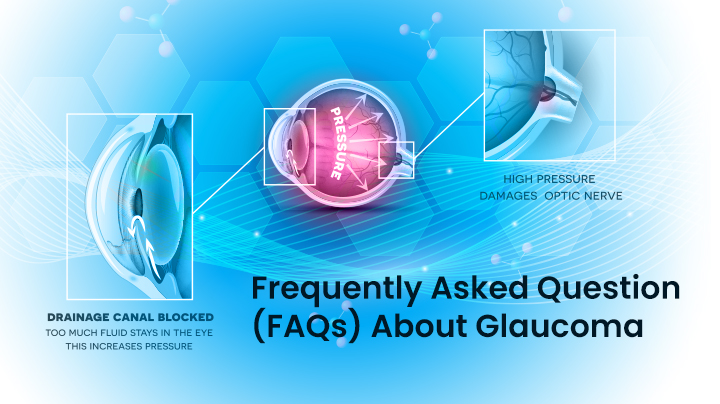
Nearly 3 million people in the U.S. have Glaucoma.  Glaucoma is a condition in which the internal ocular pressure (IOP) of the eye is elevated, causing damage to the optic nerve.  Individuals can be diagnosed with a thorough eye examination although the most common type of Glaucoma will show no symptoms until loss of vision has started.  Those who have high blood pressure, diabetes, smoke, family history of Glaucoma, individuals of African descent, advanced age, use corticosteroids, and previous ocular trauma are at a higher risk for Glaucoma.  Glaucoma can be treated with medicated eye drops, laser surgery, and/or conventional surgery.

When a patient has Glaucoma, aqueous humor drains too slowly out of the anterior chamber. As this fluid builds up, the pressure inside the eye rises. If the eye pressure is not controlled, damage to the optic nerve may occur, which will lead to vision loss and eventually blindness if not treated.

Different types of refractive procedures can accommodate patients with pre-existing Glaucoma conditions. Individuals with Glaucoma may not qualify for conventional or custom Wavefront Lasik, All-Laser Lasik, or Epi-Lasik.  Procedures such as PRK, LASEK, NearVision CK, P-IOL, or RLE should be considered for Glaucoma patients considering vision correction.  Glaucoma should be treated and stabilized before considering refractive surgery. A qualified ophthalmologist can provide further recommendations based on an individual’s condition.  PRK, LASEK, CK, P-IOL, and RLE do not require a microkeratome and do not dramatically raise a patient’s IOP during their refractive procedure which is why these techniques are preferred over others.

If you have been previously diagnosed with Glaucoma or are a member of a Glaucoma risk group, be sure to bring this up with your Ophthalmologist. Although the majority of Glaucoma patients can still safely undergo LASIK most good Ophthalmologists will conduct a thorough analysis of not only your vision health but your general physical health as well before confirming if you are a candidate for LASIK.

Laser in-situ keratomileusis, or LASIK, is a popular surgery used to correct vision in people who are nearsighted, farsighted, or have astigmatism.

All laser vision correction surgeries work by reshaping the cornea, or clear front part of the eye, so that light traveling through it is properly focused onto the retina located in the back of the eye. LASIK is one of a number of different surgical techniques used to reshape the cornea.

Advantages of LASIK Eye Surgery

LASIK has many benefits, including:

  • It works! It corrects vision. Around 90% of patients will have their desired vision after LASIK. An enhancement can further increase this number.
  • LASIK is associated with very little pain.
  • Vision is corrected nearly immediately or by the day after LASIK.
  • No bandages or stitches are required after LASIK.
  • Adjustments can be made years after LASIK to further correct vision.
  • After having LASIK, most patients have a dramatic reduction in eyeglass or contact lens dependence and many patients no longer need them at all.

Potential Side Effects of LASIK Eye Surgery

Some patients experience discomfort in the first 24-48 hours after LASIK eye surgery. Other side effects, although rare, may include:

  • Glare
  • Seeing halos around images
  • Difficulty driving at night
  • Fluctuating vision
  • Dry eyes
Page 1 of 2
casus telefon
casus teleon
casus telefon